
Vehicular Homicide Defense | Miami and South Florida
Charged With Vehicular Homicide? Understand the Process From the Start
Patrick Wilson Law focuses on criminal defense across Miami-Dade, Broward County and the Florida Keys. We can explain where your case stands and what the next steps look like.
By Patrick David Wilson · Published November 19, 2026
If someone you care about was arrested after a fatal crash, you likely have many questions at once. Here’s the short answer: in Florida, an arrest comes first, and the state then files the formal charge either by information or by grand jury indictment. Sentencing comes after that and depends on the charge’s degree and a sentencing scoresheet.
What Florida’s vehicular homicide statute covers
Vehicular homicide is a death caused by reckless driving. Under Florida law, vehicular homicide is the killing of a human being, or the killing of an unborn child by any injury to the mother, caused by the operation of a motor vehicle by another in a reckless manner likely to cause the death of, or great bodily harm to, another.
The base offense is a second-degree felony. The statute makes it a first-degree felony in two situations. The first is when the driver knew, or should have known, that a crash happened and did not give information and render aid as section 316.062 requires. The second is when the driver has a prior conviction covered by the statute. The text quoted here reflects the 2026 amendment in chapter 2026-14.
If someone you love was arrested after a fatal crash, you don't have to sort out the charges alone, and we're glad to talk through their situation with you. Talk it through with our team — the first consultation is free, confidential, and carries no obligation.

What happens after arrest and first appearance
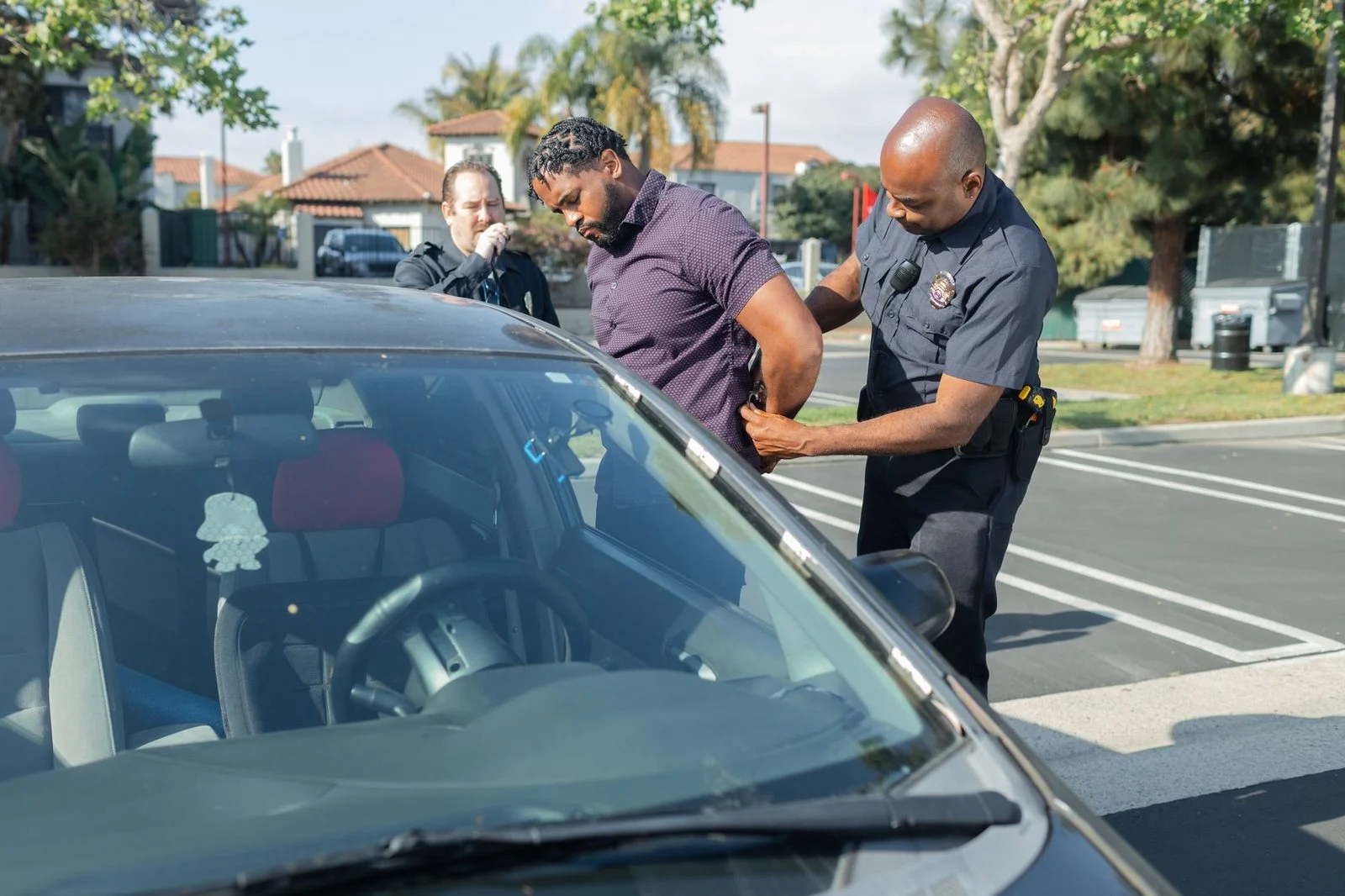
After an arrest, the next court step is a first appearance, and an arrest is not a conviction. When a person is in custody, a judge must hold a nonadversary probable cause determination within 48 hours. That is not required if a judge already found probable cause and issued a warrant for that offense. Fla. R. Crim. P. 3.133
Probable cause means the state has enough reason to believe a crime happened and this person committed it. At first appearance, the judge must state the charge and give the person a copy of the complaint. The judge must also explain that the person does not have to say anything, and that anything said can be used against them. Fla. R. Crim. P. 3.130 The judge also decides whether the person qualifies for appointed counsel and sets release conditions.
Those warnings matter most during police questioning. Under Dickerson v. United States, whether a statement made during custodial interrogation can be used depends on whether police first gave the four Miranda warnings. The right to a lawyer is one of them. Saying the wrong thing at the scene can shape the case that follows.
Information or grand jury indictment: how the state files the charge
The state files a vehicular homicide charge either by information or by grand jury indictment. An information charging a felony is a written charge that the state attorney or a designated assistant state attorney signs under oath, stating good faith in instituting the prosecution and certifying that he or she has received testimony under oath, and it states that the appropriate prosecuting attorney makes the charge. Fla. R. Crim. P. 3.140 Fla. R. Crim. P. 3.140 Rule 3.140 gives a defendant the right, on application to the clerk, to a copy of the indictment or information and the endorsements on it, at least 24 hours before being required to plead, if a copy has not already been furnished. Fla. R. Crim. P. 3.133 Separately, for a person in custody, a judge decides whether probable cause exists at a nonadversary determination held within 48 hours of arrest, unless a judge already made a probable cause determination before the arrest.
Fla. R. Crim. P. 3.140 An indictment states that the defendant is charged by the grand jury of the county. Either way, each count must recite the official or customary citation of the statute, so the charging document shows the law being used.
Timelines differ from case to case. Once a charge is filed, reviewing the charging document and its statute citation is one of the first tasks.
Which is worse: vehicular manslaughter or vehicular homicide?
Neither label is automatically worse, because the degree of the charge decides the exposure. People often say “vehicular manslaughter,” but the charge is filed under a specific statute. The main charge here is § 782.071. General manslaughter is § 782.07, which covers a killing caused by an act, or by culpable negligence, without lawful justification.
| Vehicular homicide (§ 782.071) | Manslaughter (§ 782.07) | |
|---|---|---|
| Conduct | Reckless operation likely to cause death or great bodily harm | An act, or culpable negligence, causing death |
| Base degree | Second-degree felony | Second-degree felony |
| Heavier version | First-degree felony under the leaving-the-scene or prior-conviction terms | — |
Both base offenses are second-degree felonies. The first-degree vehicular homicide version is heavier than base manslaughter; manslaughter also has first-degree aggravated versions when the death is caused by culpable negligence and the person killed is an elderly person or disabled adult, a child under 18, or an officer, firefighter, EMT or paramedic performing duties within the course of his or her employment. For a deeper side-by-side read, see vehicular manslaughter vs. vehicular homicide.
Can you go to jail for accidentally killing someone in a crash in Florida?
Yes, a crash can lead to a felony charge, because the law looks at how the driving was done. Many people assume that a crash with no intent to hurt means no felony. It asks whether the driving was reckless and likely to cause death or great bodily harm, and an accident can still meet that test.
A felony is punished as provided in § 775.082, which sets the penalties, including prison terms. Fines for a first- or second-degree felony can reach $10,000 under § 775.083, or a higher amount equal to double the pecuniary gain from the offense or double the pecuniary loss to the victim. § 782.071
Whether a person faces prison depends on the facts and the scoresheet discussed next.
Florida sentencing for vehicular homicide: degree, ranges, and scoresheets
Florida sentencing starts with the felony degree, then a scoresheet sets the lowest permissible sentence. The Criminal Punishment Code worksheet adds up sentence points. Fla. Stat. § 921.0024 If total points are 44 or less, the lowest permissible sentence is any nonstate prison sanction, unless the judge decides a prison sentence is appropriate. Fla. Stat. § 921.0024 reads: “The lowest permissible sentence is any nonstate prison sanction in which the total sentence points equals or is less than 44 points, unless the court determines within its discretion that a prison sentence, which may be up to the statutory maximums for the offenses committed, is appropriate.”
The permissible range runs from that lowest sentence up to the statutory maximum in § 775.082. The maximum is the high end of the range. It is not a prediction for any case.
The state attorney prepares the scoresheet. Defense counsel reviews it for accuracy unless the judge directs otherwise. § 921.0024 The scoresheet must cover all offenses pending before the court, but separate scoresheets are prepared when felonies were committed under more than one version of the guidelines or code. Fla. R. Crim. P. 3.704
Prior convictions can change the degree. Likewise, under § 782.071, vehicular homicide is a first-degree felony if the person has a prior conviction under § 782.071, § 316.193(3)(c)3., § 327.35(3)(a)3.c., or § 782.072. § 782.071
Not sure what your next step is?
Talk it through with our team — the first consultation is free, confidential, and carries no obligation.
How the facts shape the charge and the defense
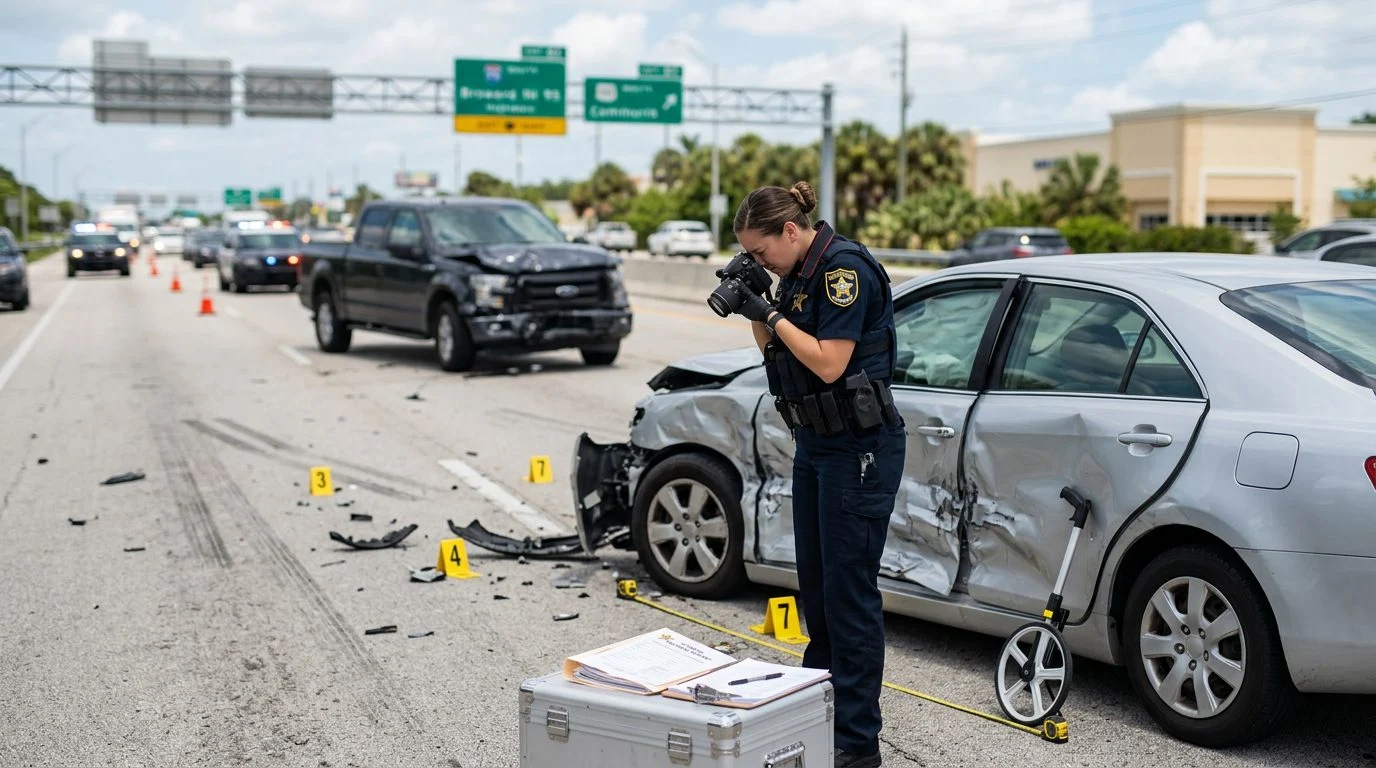
The facts of the crash, and the driver’s conduct afterward, decide which statute and degree apply. Investigators and prosecutors look at speed, road conditions, signs of impairment, phone records, witness accounts, and whether the driver stopped. The same crash can lead to different charges depending on what the evidence shows.
Phone evidence has its own rules. Police generally need a warrant before searching the digital information on a cell phone seized in an arrest. Riley v. California states: “Our holding, of course, is not that the information on a cell phone is immune from search; it is instead that a warrant is generally required before such a search, even when a cell phone is seized incident to arrest.”
The details of the crash, from the driving to the scene, become the focus of that review.
Talk through your situation with Patrick Wilson Law
If a family member was arrested after a fatal crash, you’re probably trying to learn the charge and what happens next. The route the state picks and the degree of the charge both shape what comes next, and the details of the crash matter.
Patrick Wilson Law, PLLC is a Miami criminal defense firm that defends people across South Florida, from Broward County to the Keys. Patrick David Wilson is the lawyer responsible for this page. The initial consultation is free, confidential, and carries no obligation to continue.
If someone you love was arrested after a fatal crash, you don’t have to sort out the charges alone, and we’re glad to talk through their situation with you. Call 786-761-1719 or leave a message on our contact page.
How Patrick Wilson Law Approaches These Cases
Focused Defense
Patrick Wilson Law focuses on criminal defense for people facing serious charges, including vehicular homicide, across South Florida.
Plain-Language Answers
We explain each stage of the process, from arrest through charging, so you know what is happening and why.
Early Attention
Acting early gives counsel more time to review the arrest report, the charging documents and the evidence.
Confidential Support
Our team treats every conversation as confidential, so you can share the details of your situation openly.
Speak With Counsel Before Speaking With Investigators
Statements made after a fatal crash can be used later in the case. Talk with a defense attorney before you give a statement, sign documents or discuss the crash on social media.
Questions to Bring to Your Consultation
The Arrest Paperwork
Ask what the arrest report says, which agency made the arrest and whether you have received a copy of the charging documents.
The Charging Document
Ask whether the state filed by information or by grand jury indictment, and what degree of charge is listed.
The Evidence
Ask what crash reconstruction, toxicology, witness statements and vehicle data the state may rely on.
The Sentencing Picture
Ask how the charge level and the sentencing scoresheet could affect your case, so you can plan with accurate information.

