
Vehicular Homicide Defense | Miami, FL
Facing a Vehicular Homicide Charge? Get A Clear Defense Plan
Patrick David Wilson focuses his criminal defense practice on serious traffic-related charges across South Florida, from Miami-Dade and Broward Counties to the Florida Keys. Your free, confidential first consultation comes with no obligation to continue.
By Patrick David Wilson · Published October 14, 2026
Vehicular homicide is a Florida felony for causing a death by driving a motor vehicle in a reckless manner. Under Florida’s vehicular homicide statute, the base charge is a second-degree felony. Some facts can raise it to a first-degree felony. This guide explains the charge, what the state generally must prove, the penalties at stake, the evidence and the defenses. It also explains how a vehicular homicide defense attorney in Miami approaches these cases. Results depend on the facts of each case and applicable law.
What Vehicular Homicide Means Under Florida Law
Vehicular homicide is a killing caused by another person’s reckless operation of a motor vehicle. The vehicular homicide statute describes the killing of a human being caused by operating a vehicle “in a reckless manner likely to cause the death of, or great bodily harm to, another.” The focus is on how the vehicle was driven. A fatal crash does not, by itself, decide the charge.
The statute also covers the killing of an unborn child caused by an injury to the mother. The base level is a second-degree felony. That means the charge is a felony, not a misdemeanor. The actual sentencing range depends on the facts and applicable law.
The charge can become a first-degree felony in certain situations described in Fla. Stat. § 782.071. The first applies when the person knew, or should have known, that the accident occurred and failed to give information and render aid as the law requires. The statute says this does not require proof that the person knew the crash caused injury or death. The second applies when the person has a prior conviction under specific driving or homicide statutes listed in the statute.
Similar names can cause confusion. The comparison of vehicular manslaughter and vehicular homicide explains how the terms differ.
Not sure what your next step is?
Talk it through with our team — the first consultation is free, confidential, and carries no obligation.

What the State Must Generally Prove
Under Fla. Stat. § 782.071, vehicular homicide is the killing of a human being, or the killing of an unborn child by any injury to the mother, caused by the operation of a motor vehicle by another in a reckless manner likely to cause the death of, or great bodily harm to, another. How each element applies depends on the facts of the case.
Causation is a central question. The state must connect the driving to the death. Whether the conduct caused the death depends on the evidence. That evidence can include crash timing, vehicle positions, road conditions and medical findings. A defense lawyer tests whether the evidence supports that link.
Whether the state meets its burden depends on the evidence in the specific case.
The “reckless manner” element is often the most disputed. Speed, following distance, signals, weather, road design and impairment evidence can all bear on it. Each factor depends on the facts. None of them decides the case alone.
Penalties and Sentencing Exposure in Florida
A second-degree felony is the base level for vehicular homicide. The penalty depends on the facts and applicable law. Florida’s penalties statute, § 775.082, sets the sentencing framework for felonies. The felony classification statute, § 775.081, sorts felonies into degrees.
Fines are a separate question. The fines statute, § 775.083, says fines for a first- or second-degree felony “shall not exceed $10,000,” subject to the statute’s other provisions. Other provisions can allow higher amounts in some cases.
The statute also says that, in addition to any other punishment, the court may order 120 hours of community service at a trauma center or hospital. The word “may” matters. This is a court decision, not an automatic term.
The offense severity ranking chart applies to each felony offender. The Criminal Punishment Code worksheet rules compute sentence points for felony cases.
Exposure in any case depends on the charge, the facts, any prior record and applicable law. Check the current text of each statute, because the law can change.
Vehicular Homicide, Vehicular Manslaughter and DUI Manslaughter Compared
These are different charges, and the statute’s exact language and the facts decide which one applies. Florida’s offense is called vehicular homicide in § 782.071. Other states and some general sources use “vehicular manslaughter” for similar conduct. The name matters less than the charging document and the facts.
DUI manslaughter is a separate charge with its own statutory language. This page does not apply DUI-specific rules to a non-DUI vehicular homicide case. The DUI manslaughter comparison covers how the charges differ.
Readers often ask which charge is worse. The honest answer is that severity depends on the charge, the facts and applicable law. No charge is always worse than another. A lawyer reviews the exact charge and the record before comparing exposure.
Evidence That May Matter in These Cases
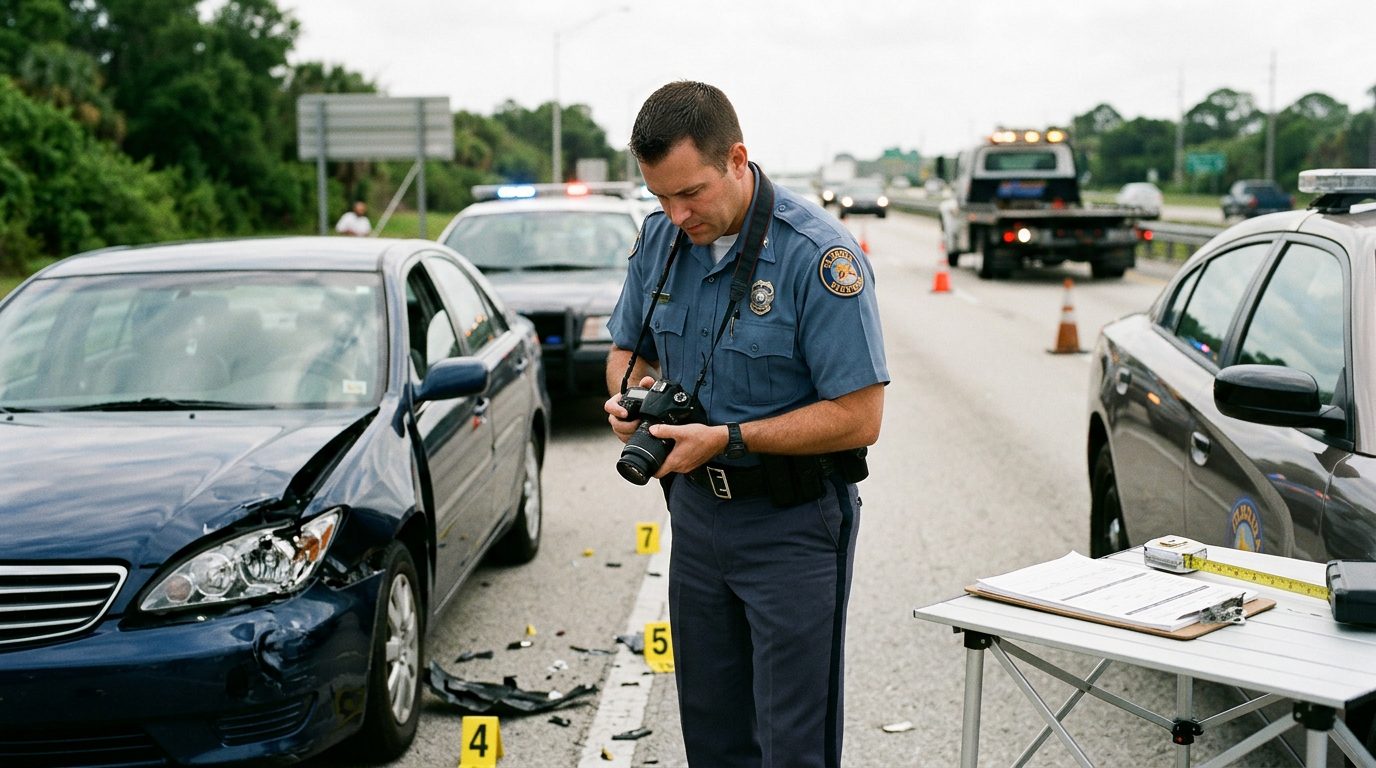
Evidence in these cases can include crash reconstruction, vehicle event data, toxicology results, scene measurements, witness statements and video. Crash reconstruction estimates speed, path and timing. Vehicle event data may record braking, speed and other driving details. Toxicology results show what was in the blood. Each category depends on how it was collected and tested.
Blood testing has its own rule. The blood test statute, § 316.1933, says that when an officer has probable cause to believe an impaired driver caused a death or serious bodily injury, the officer shall require a blood test. The statute allows reasonable force if needed.
Discovery is the process of sharing evidence. The Florida discovery rule, Rule 3.220, says the prosecutor must disclose material that tends to negate guilt “as soon as practicable” after the charging document is filed. What is disclosed depends on the case.
Preserve what you have. Do not repair, alter or discard the vehicle or its records. Keep insurance papers, repair bills and any notices. Read any court order you received. Its contents depend on your case, so check your own order rather than relying on general descriptions.
Defenses That May Apply, Depending on the Facts
Defenses depend on which elements the state can prove and on the facts of the crash. A defense is built after the evidence is reviewed, not before. No defense can be promised in advance.
Common lines of inquiry include causation, the level of recklessness, the method used in crash reconstruction and the reliability of testing. Each one asks whether the state’s proof holds up under scrutiny. The answer depends on the record.
Some defenses apply only when the facts support them. An intervening cause, a mechanical failure or a sudden emergency may be examined if the evidence points that way. A dispute over who was driving can also matter. Whether any of these theories applies depends on the facts and applicable law.
A defense lawyer also looks at the reliability of the evidence. That includes how the scene was measured, how the vehicle data was pulled, and how the samples were handled. Gaps in the evidence can matter. Whether they change the case depends on the facts.
Not sure what your next step is?
Talk it through with our team — the first consultation is free, confidential, and carries no obligation.
First Steps After an Arrest or a Fatal Crash
The first decisions after a fatal crash can shape the case. Whether and how to speak with police depends on the circumstances and applicable law. Talking with a lawyer before giving a detailed statement can help you understand your options.
Statements made at the scene, to police, or to insurers can affect the case. Be careful about what you say and to whom. Do not discuss the crash publicly or on social media.
Duties at the scene are set by law. The crash duty statute, § 316.062, requires a driver in a crash involving injury to give name, address and registration information. It also requires reasonable assistance to an injured person. Those duties and the charges tied to them depend on the facts.
Leaving a fatal crash is a separate offense. The crash involving death statute, § 316.027, describes a willful violation causing death as a first-degree felony. Under s. 316.027, penalties for leaving the scene of a crash can be more serious when the crash caused a death. The applicable penalty depends on the facts of the case and applicable law, including the statute’s specific requirements and triggers. Whether that statute applies depends on the facts and applicable law. The leaving-the-scene page covers that charge in more detail.
How Patrick David Wilson Approaches South Florida Vehicular Homicide Defense
Patrick David Wilson focuses on criminal defense across South Florida, from Broward County to the Florida Keys. The practice is based in Miami. It also handles DUI, domestic violence, sexual battery and traffic homicide matters.
The approach starts with the charging documents, the evidence and the client’s goals. Patrick David Wilson reviews what the state has and what it must prove. Then options are discussed in light of the facts and applicable law. No outcome is promised.
The practice has support staff, including assistants and office staff. Patrick David Wilson is the lawyer responsible for each matter. This page does not claim familiarity with specific judges, prosecutors or local procedures.
The initial consultation is free, confidential and carries no obligation to continue.
Cases Involving Licensed Professionals, Non-Citizens and First-Time Offenders
A vehicular homicide charge can raise separate questions for licensed professionals, non-citizens and first-time offenders. The answers depend on the facts, the disposition and applicable law. Each group has its own page in this series: criminal defense for licensed professionals, criminal defense for non-citizens and first-time offender defense.
For non-citizens, federal law lists classes of deportable aliens. The federal deportation law lists classes of deportable aliens. Whether any class applies depends on the facts, the disposition and applicable law. A non-citizen should not assume any result.
For licensed professionals, licensing questions may arise. Their outcome depends on the profession, the licensing body’s rules, the facts and the final disposition. No licensing result follows automatically from a charge.
For first-time offenders, record questions still depend on the facts. Eligibility to seal or expunge a record depends on the case and applicable law.

Frequently Asked Questions and Next Steps
Each answer below depends on the facts of the case and applicable law.
What sentence could apply for vehicular homicide?
The sentence depends on the charge, the facts, any prior record and applicable law. No general sentence applies to every case.
What is the minimum sentence for vehicular homicide in Florida?
Minimums depend on the charge and the facts.
Is vehicular manslaughter worse than vehicular homicide?
Florida’s offense is called vehicular homicide in § 782.071. Severity depends on the charge, the facts and applicable law, so neither is always worse.
What about the Louisiana penalty question?
This page covers Florida law only. It does not answer questions about penalties in other states.
If a fatal crash has left you or someone you love facing a possible vehicular homicide investigation or charge, the next step is a free, confidential initial consultation with no obligation to continue. Call 786-761-1719 or use the contact page.
Confidential First Meeting
Your initial consultation is free, confidential and comes with no obligation to continue. You can discuss the facts of your case before deciding on next steps.
South Florida Coverage
The practice serves clients from Miami and Miami-Dade County through Broward County, Fort Lauderdale, the Florida Keys and surrounding communities.
Review of the Facts
Every case turns on its own facts, evidence and applicable law. Patrick David Wilson will review the details of your situation with you during the consultation.
Speak With a Lawyer Before Giving a Statement
Investigators may ask for a statement at the scene or afterward. Contact Patrick David Wilson before you answer questions. How any statement affects your case depends on the facts and applicable law.
Understanding a Vehicular Homicide Charge
What the Charge Involves
Whether a charge applies depends on the conduct alleged and the facts of the incident.
Possible Penalties
Penalties depend on the specific charge, the facts of the case, any prior record and applicable law. No single sentence applies to every case, and your court documents should be reviewed for the exact allegations.
Early Defense Steps
Evidence such as crash reports, witness accounts, vehicle data and medical records may matter. Preserving information early can be important, and Patrick David Wilson can advise on the steps that fit your facts.
Collateral Consequences
Outcomes such as driver's license action, employment impact or other collateral effects depend on the facts and applicable law. These consequences are discussed case by case during the consultation.

