
Miami Criminal Defense | Miami-Dade, Broward and the Florida Keys
DUI Manslaughter or Vehicular Homicide? Know the Difference Before You Talk to Anyone
Here is how to tell them apart.
By Patrick David Wilson · Published November 15, 2026
The short answer: two Florida charges for deadly crashes
DUI manslaughter turns on impairment. Vehicular homicide turns on reckless driving.
Vehicular homicide is defined in Fla. Stat. § 782.071 as the killing of a human being, or of an unborn child by any injury to the mother, caused by the operation of a motor vehicle by another in a reckless manner likely to cause death or great bodily harm. The statute does not mention alcohol or drugs.
The DUI side comes from Fla. Stat. § 316.193, the driving under the influence law. It covers driving while affected by alcohol or drugs to the extent that normal faculties are impaired. The state brings DUI manslaughter charges when that impairment is tied to a death.
The first step is seeing which statute the state relies on. The sections below explain what each one asks the state to prove.
If a deadly crash has you or someone you love facing one of these charges, we can talk through the facts with you. Talk it through with our team — the first consultation is free, confidential, and carries no obligation.
What the state must prove for vehicular homicide
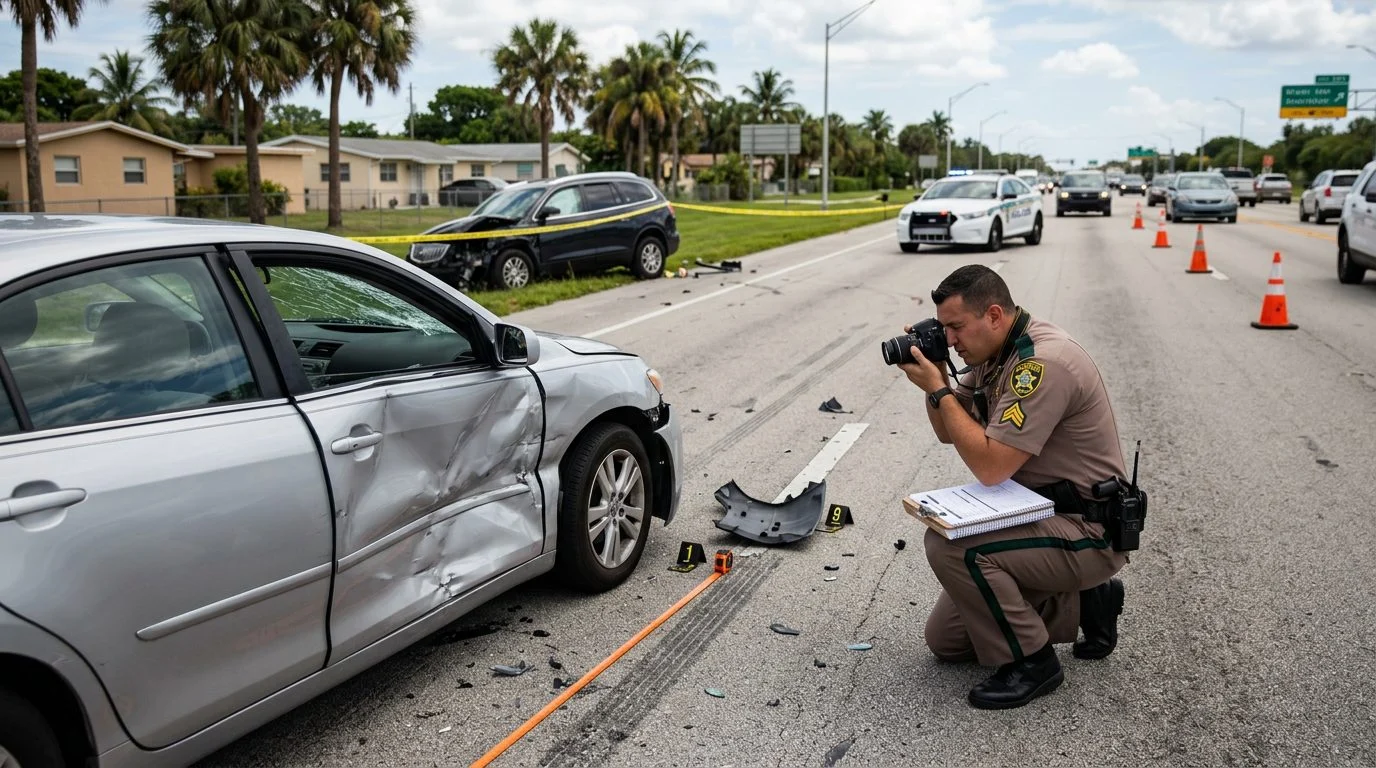
The state must prove a death, that the defendant was operating the vehicle, and that the driving was reckless. The driving must be likely to cause death or great bodily harm. Recklessness is the heart of this charge.
Prosecutors look at how the car was driven. They focus on speed, lane changes, following distance, and similar conduct. Those facts tell the story of the crash.
Impairment is part of the DUI definition in § 316.193: the person must be driving or in actual physical control of a vehicle within this state while under the influence of alcohol, a chemical substance, or a controlled substance, when affected to the extent that the person’s normal faculties are impaired. Alcohol or drug evidence can still matter, because it may bear on how the vehicle was being operated. Whether it does turns on the evidence in the case.
The base offense is a second-degree felony. The charge rises to a first-degree felony in two situations written into the statute. The first applies when the driver knew or should have known the accident occurred and did not give information or render aid as required. The statute adds that this does not require proof the driver knew the crash caused injury or death. The second applies when the driver has a prior conviction under listed statutes.
What the state must prove for DUI manslaughter
The state must show the driver was impaired and that the impairment led to a death. Under § 316.193, impairment means the driver was affected by alcohol, a chemical substance, or a controlled substance to the extent that normal faculties are impaired.
Breath and blood numbers carry real weight. Under § 316.1934, a blood-alcohol or breath-alcohol level of 0.08 or higher is prima facie evidence of impairment. That means the number counts as proof of impairment on its face. Levels between 0.05 and 0.08 get no automatic presumption. They are weighed with other evidence.
After a death or serious bodily injury, § 316.1933 requires an officer with probable cause to require a blood test. Fla. Stat. § 316.1933 reads: “(1)(a) If a law enforcement officer has probable cause to believe that a motor vehicle driven by or in the actual physical control of a person under the influence of alcoholic beverages, any chemical substances, or any controlled substances has caused the death or serious bodily injury of a human being, a law enforcement officer shall require the person driving or in actual physical control of the motor vehicle to submit to a test of the person’s blood for the purpose of determining the alcoholic content thereof or the presence of chemical substances as set forth in s. 877.111 or any substance controlled under chapter 893.” The officer may use reasonable force if needed.
Families often assume a test number settles the question. It doesn’t. The same statute requires that a test be performed substantially under approved methods and by an individual possessing a valid permit issued by the department for this purpose, but insubstantial differences between approved methods or techniques and actual testing procedures do not render the test or test results invalid, so how and when the sample was collected matters.
Penalties side by side: which carries more exposure?
Base vehicular homicide is a second-degree felony. Florida sorts felonies into classes, and § 775.081 lists them. Fines for a first- or second-degree felony are capped at $10,000 under § 775.083, unless another statute specifically authorizes a higher amount or the fine is double the pecuniary gain derived from the offense by the offender or double the pecuniary loss suffered by the victim. Prison terms are set under § 775.082.
The vehicular homicide statute also lets the court order 120 community service hours at a trauma center or hospital that regularly receives vehicle crash victims. The court may order this in addition to other punishment.
DUI penalties follow their own rules. The Florida DUI suspension laws page from the Florida Department of Highway Safety and Motor Vehicles describes fines, imprisonment, and license consequences. Those vary with offense classification and crash outcome.
So which is worse? The starting felony level is the same.
Can the same crash lead to either charge?
Yes. Which one the state files turns on what the evidence shows about the driving and about impairment. The label on an arrest report is not the final word. The elements the state must prove define the case.
Charging can shift as evidence comes in. Crash reconstruction, toxicology, and witness statements can all change how the state sees the case. Prosecutors make the charging choice. The defense then tests each element of whichever charge is filed.
A third charge can also apply. Under § 316.192, reckless driving means driving in willful or wanton disregard for the safety of persons or property, and fleeing a law enforcement officer in a motor vehicle is reckless driving per se. A driver who causes serious bodily injury through that operation can face a third-degree felony under the same statute.
Related terms: vehicular homicide charges
Florida’s general manslaughter law covers a killing of a human being by the act, procurement, or culpable negligence of another, without lawful justification according to the provisions of chapter 776 and in cases in which such killing shall not be excusable homicide or murder. It is a second-degree felony under § 782.07. Culpable negligence is the term the statute uses for this kind of fault.
Under § 782.03, a homicide is excusable when it happens by accident and misfortune during a lawful act by lawful means with usual ordinary caution and without unlawful intent, or by accident and misfortune in the heat of passion, upon any sudden and sufficient provocation, or upon a sudden combat without any dangerous weapon being used and not done in a cruel or unusual manner. That act must be done with usual ordinary caution and without unlawful intent.
The crash-death statute is titled “Vehicular homicide.” People often say “vehicular manslaughter,” but the statute uses the homicide label.
Not sure what your next step is?
Talk it through with our team — the first consultation is free, confidential, and carries no obligation.
If you’re facing one of these charges, talk through the facts
Reading statutes after a deadly crash is hard. It’s harder when the charge is against you or someone you love. You’re reading them to understand what happens next, and that is a fair thing to want.
Patrick Wilson Law, PLLC is a criminal defense firm in Miami. Patrick David Wilson is the lawyer responsible for this page. Our team defends people across South Florida, from Broward County to the Florida Keys, including DUI and traffic homicide matters.
If a deadly crash has you or someone you love facing one of these charges, call 786-761-1719 or use our contact page to talk through the facts. The first consultation is free, confidential, and carries no obligation to continue.
Is vehicular homicide a felony in Florida?
Yes. The base charge is a second-degree felony, and the statute can make it a first-degree felony in listed situations, under § 782.071.
What is the fine for vehicular homicide in Florida?
For a first- or second-degree felony, fines are capped at $10,000 unless another statute specifically authorizes a higher amount or the fine is double the pecuniary gain derived from the offense by the offender or double the pecuniary loss suffered by the victim, under § 775.083.
Which is worse, vehicular homicide or manslaughter?
Both are felonies. Manslaughter under § 782.07 is a second-degree felony, and so is base vehicular homicide.
Why Talk to a Defense Lawyer Early
Charges move quickly
Early decisions about bond, statements and evidence can shape the path a case takes, so timing matters.
Your rights come first
Our team focuses on protecting clients from the first contact with investigators through every court date.
Built for licensed professionals
Many of our clients have careers, licenses and families at stake, and we keep those concerns in view from the start.
Do Not Wait to Get Answers
If you or someone you love is facing a DUI manslaughter or vehicular homicide investigation, the first conversations matter. Speaking with a criminal defense lawyer before giving a detailed account can help you understand your options.
Common Questions About These Charges
Which charge applies?
The answer depends on the facts of the crash, including whether impairment was alleged and how the death is connected to the driver's conduct.
What happens at the first hearing?
Bond, the formal charges and the next court date are typically addressed early, and a lawyer can explain each step as it happens.
Can these cases be reduced?
Every case turns on its own evidence. We review the record closely to identify the issues that matter most to your situation.
What should I bring to a consultation?
Bring any paperwork you have, including arrest or citation documents, bond papers and court notices, along with a timeline of events.
Talk to Patrick Wilson Law About Your Case. The Initial Consultation Is Free, Confidential and Without Obligation to Continue.
Related practice areas
- Vehicular Homicide Defense Attorney in South Florida
- CDL Driver Charged With Vehicular Homicide in Florida

