
Vehicular Homicide Defense | Miami, Florida
What to Say to Police After a Fatal Crash in Florida
Stay at the scene, cooperate with the basics, and speak with a Miami criminal defense attorney before you answer questions about how the crash happened.
By Patrick David Wilson · Published October 25, 2026
By Patrick David Wilson, responsible lawyer, Patrick Wilson Law, PLLC, Miami, Florida
That is the short answer to what to say to police after a fatal crash Florida drivers face. You still have clear legal duties at the scene, and those duties are different from answering questions about fault.
Many drivers feel they must explain everything right away. That feeling is understandable, but it often works against the driver. This guide walks through the three places where police may speak with you: the roadside, the hospital, and the police station.
The Short Answer: You May Stay Silent and Ask for a Lawyer
Fla. Stat. § 316.062 requires a driver in a crash involving injury, death, or damage to any vehicle or other property that is driven or attended by any person to give a name, address, and vehicle registration number. It also requires showing a license on request, if one is available, and giving reasonable help to anyone hurt.
The same statute says the duty to give information to a law enforcement officer making a written report about the crash does not reach information that would violate your privilege against self-incrimination. That privilege protects you from being forced to help build a case against yourself.
Statements made at the scene are often among the State’s most important evidence. They are made while the facts are fresh. Officers often write them down or record them, so your words can be used later.
If you were driving in a crash that killed someone and police or a prosecutor want to talk with you, we can help you understand your options before you answer more questions. Talk it through with our team — the first consultation is free, confidential, and carries no obligation.
Why Your Words at the Scene Carry Such Weight
Your words at a fatal crash scene can become evidence in a criminal case. Officers at a death scene are not only writing a traffic report. They may be gathering facts for a possible vehicular homicide or DUI manslaughter charge.
Fla. Stat. § 782.071 defines vehicular homicide as the killing of a human being, or of an unborn child by any injury to the mother, caused by another person operating a motor vehicle in a reckless manner likely to cause the death of, or great bodily harm to, another. Words about speed, distance, or where you had been can be used to argue what you knew and how you drove.
Common mistakes include a quick apology, a guess about speed, or a remark about having had a drink. People often say these things out of sympathy or shock. Later, those words can be quoted exactly.
A statement made in shock still counts. Shock does not erase what was said.
The safer habit is a short, calm answer. Give the required information, then stop talking about the crash. Each case turns on its own record, so no single remark has the same effect in every case.
The Roadside: What You Must Provide and What You May Decline
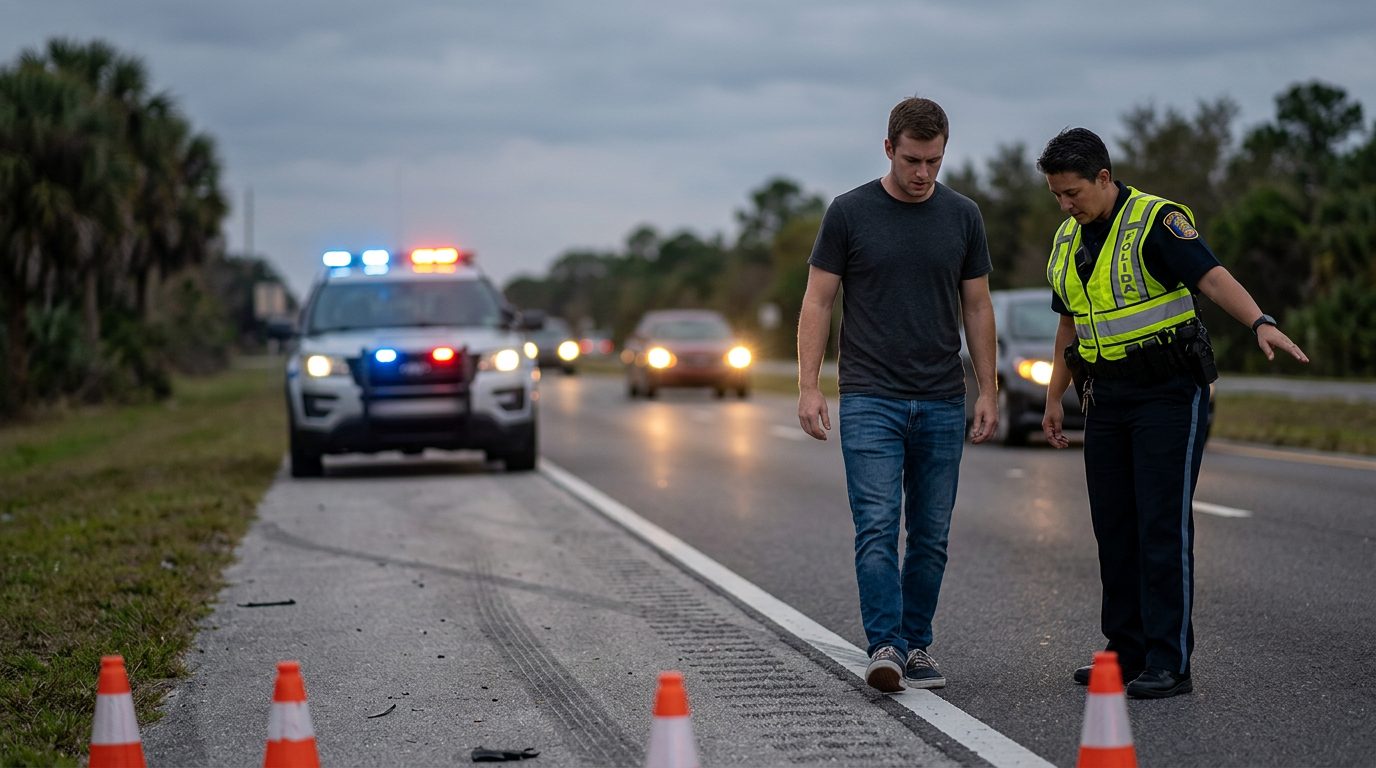
At the roadside, you must give identifying information and help injured people. Knowing what to say to police after a fatal crash Florida requires starts with separating these two duties.
In a death crash, Fla. Stat. § 316.027 adds a stricter rule.
Officers can make arrests at the scene. Fla. Stat. § 316.645 lets an investigating officer arrest a driver with reasonable and probable grounds to believe a traffic offense was committed in connection with the crash. An arrest is serious, but it is not a conviction.
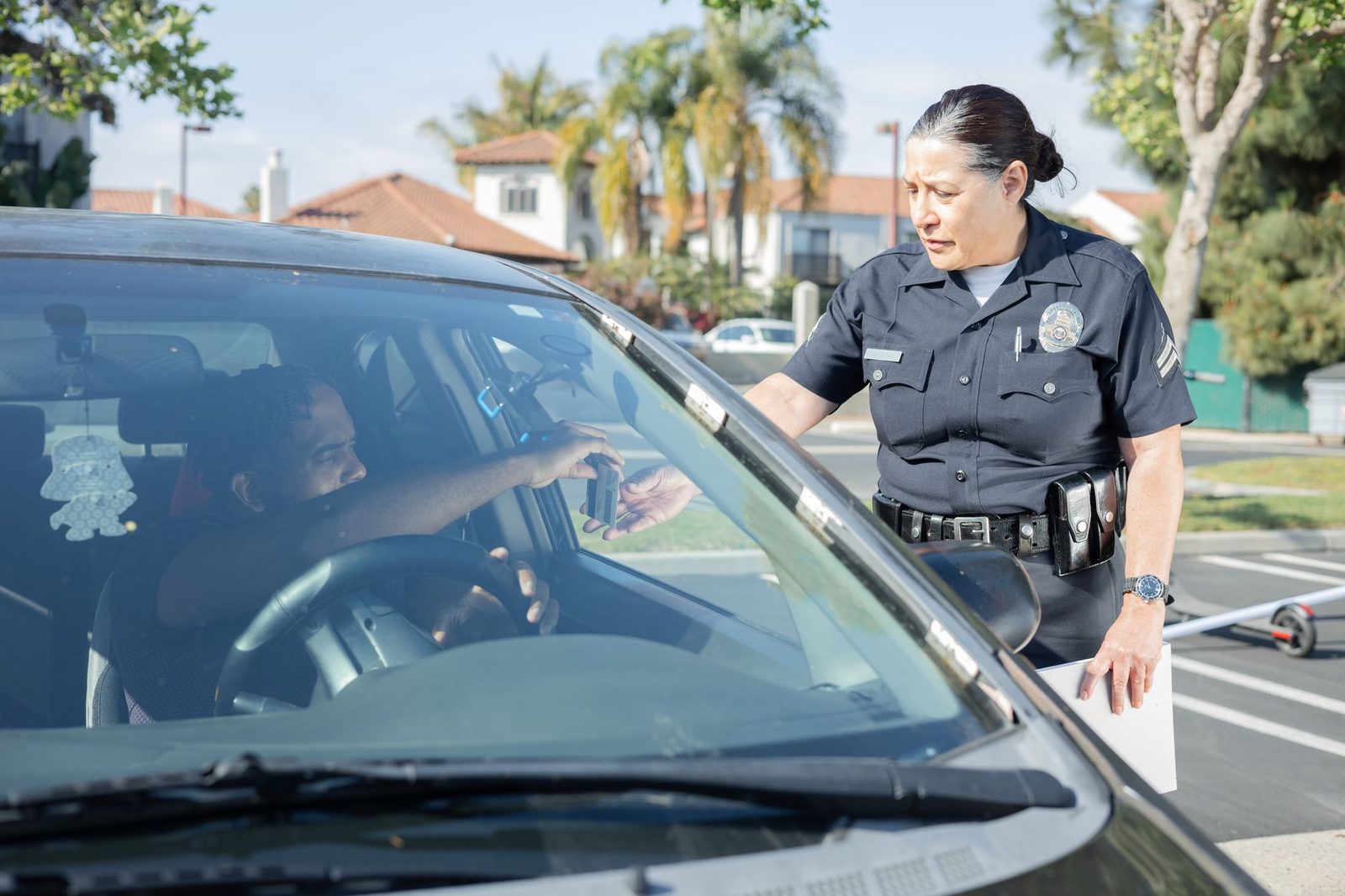
Here is the line to draw. Give your name, address, registration number, and license when asked. Help anyone hurt. Then say you want a lawyer before you answer questions about how the crash happened, who was driving, or what you drank.
Declining questions is a right. Florida’s hit-and-run safety resource explains that drivers must remain at crash scenes.
Whether a particular request is required depends on the facts. Examples include whether the officer is asking for identification or asking about fault.
At the Hospital: Medical Staff, Blood Tests and Implied Consent
At the hospital, a blood test can be required, and what you say to staff can reach police. Fla. Stat. § 316.1933 says an officer with probable cause to believe a impaired driver caused a death or serious bodily injury must require a blood test. Fla. Stat. § 316.1933 reads: “If a law enforcement officer has probable cause to believe that a motor vehicle driven by or in the actual physical control of a person under the influence of alcoholic beverages, any chemical substances, or any controlled substances has caused the death or serious bodily injury of a human being.” The officer may use reasonable force if needed.
Only certain people may draw that blood at an officer’s request. They include physicians, certified paramedics, and registered nurses. Blood drawn for medical care can still be used, even if the officer never asked for it.
Florida’s implied consent rule works this way. Under Fla. Stat. § 316.1932, a driver who accepts the privilege of driving in Florida is deemed to consent to an approved chemical test or physical test, including a breath test, after a lawful arrest for an offense allegedly committed while driving under the influence of alcoholic beverages. Refusing has its own penalty. Under Fla. Stat. § 316.1939, a person who refused a breath or urine test when requested by a law enforcement or correctional officer commits a second-degree misdemeanor for a first refusal, or a first-degree misdemeanor for a second or subsequent refusal. This applies only if the officer had probable cause, the person was lawfully arrested for a qualifying violation, and the person was first informed of two things: that refusing would suspend their driving privilege for 1 year (18 months for a second or subsequent refusal), and that refusing is a misdemeanor.
A North Miami Police Department DUI document describes how officers request blood or urine after serious or fatal crashes. Read the process as an officer would explain it, not as a script for you.
Tell the officer you want a lawyer before you answer questions about drinking or medicine. Stay polite. Do not physically resist lawful medical treatment.
The Station Interview: Custody, Miranda and the Right to Counsel
You should not sign a written statement until you speak with one. That step protects you before you say anything more.
The FBI legal digest on Miranda summarizes the core rules.
Custody matters.
They also protect your right to a lawyer. Many people choose to speak with a lawyer before answering questions from police.
A calm script works well. Say, “I want a lawyer, and I will not answer questions until I speak with one.” Then stop talking. Staying silent is not an admission of guilt.
Afterward: Insurers, Social Media, Family Conversations and Evidence
After the crash, talk about what happened only with your lawyer. Avoid posting about the crash, the victim, or your own conduct online. Posts can be read as statements.
Insurance adjusters may call quickly. Speak with a lawyer before giving any recorded statement.
Vehicle evidence matters. Do not repair, sell, or alter the vehicle before a lawyer has reviewed it.
Crash reports come later. Under Fla. Stat. § 316.066, the long-form report must be completed and submitted to the department within 10 days after the investigation is completed for a crash that resulted in death of, personal injury to, or any indication of complaints of pain or discomfort by any of the parties or passengers involved. Crash reports that reveal personal information about the parties are confidential for 60 days after the report is filed, under Fla. Stat. § 316.066(2)(a). During that period, the report may be made available to the parties involved, their legal representatives, and the others listed in § 316.066(2)(b).
Civil claims are also possible. Under Fla. Stat. § 782.071, a right to civil damages exists for all deaths described in the section.
Write your own timeline, privately and for your lawyer only. Include the route, the time, what you saw, and every person you spoke with. Memory fades fast.
Not sure what your next step is?
Talk it through with our team — the first consultation is free, confidential, and carries no obligation.
How Patrick Wilson Law Approaches Fatal Crash Cases
Patrick Wilson Law, PLLC is a Miami firm. It focuses on criminal defense across South Florida, including vehicular homicide, DUI, and leaving the scene of an accident. Patrick David Wilson is the responsible lawyer for this page.
The firm has more than one lawyer. A matter may be handled by a different lawyer at the firm. Our lawyers review roadside and station statements, the blood test and implied consent steps, and any vehicle data.
We explain each option in plain language so you can decide what comes next. We represent people and families across South Florida, from Miami and Broward County to the Florida Keys.
If you were driving in a crash that killed someone, and police or a prosecutor want to speak with you, you do not have to face that alone. Leave a message at 786-761-1719 or use our contact page to set up a free, confidential, no-obligation first consultation.
Frequently Asked Questions
What to say to police after a fatal crash Florida?
Then say you want a lawyer before answering questions about how the crash happened.
Do I have to answer police questions after a fatal crash in Florida?
No. You may decline questions about how the crash happened, but you must still stop, stay, and give the required information.
What if I already spoke to police at the scene?
Tell your lawyer exactly what you said, when you said it, and to whom. That detail helps a lawyer evaluate what the State may use.
How long does the crash report take in Florida?
The investigating officer must submit the long-form report within 10 days after the investigation is completed for a crash that resulted in death of, personal injury to, or any indication of complaints of pain or discomfort by any party or passenger, or that meets another listed condition, under Fla. Stat. § 316.066.
Your priorities at the scene
Stop and stay
Leaving the scene of a fatal crash creates separate and serious charges. Remain where you are until the investigation is complete.
Give required information
Provide your name, address, registration and license as Florida law requires. Keep these exchanges short and factual.
Ask for a lawyer
Say clearly that you want to speak with a lawyer before answering questions about how the crash happened.
Stay calm and courteous
Be respectful with officers and other people involved. Politeness does not require you to explain what happened.
Call a criminal defense attorney
Contact Patrick Wilson Law, PLLC as soon as possible so your statements are handled with care from the start.
Warning: avoid guessing or admitting fault
Do not guess about speed, distractions, or who caused the crash, and do not apologize for what happened. A short statement made at the scene can be used later, even if it seems harmless.
How a criminal defense attorney can help early
Protecting your statements
A lawyer can advise you on what to say, what to decline to discuss, and how to communicate with investigators.
Dealing with the investigation
Our team can help coordinate contact with police, prosecutors, and other parties so your rights are respected at every step.
Reviewing the facts
We look closely at the crash report, available evidence, and the timeline to understand the charges you may face.
Planning your next steps
Patrick Wilson Law, PLLC explains your options in plain language so you can make informed decisions during a difficult time.

