
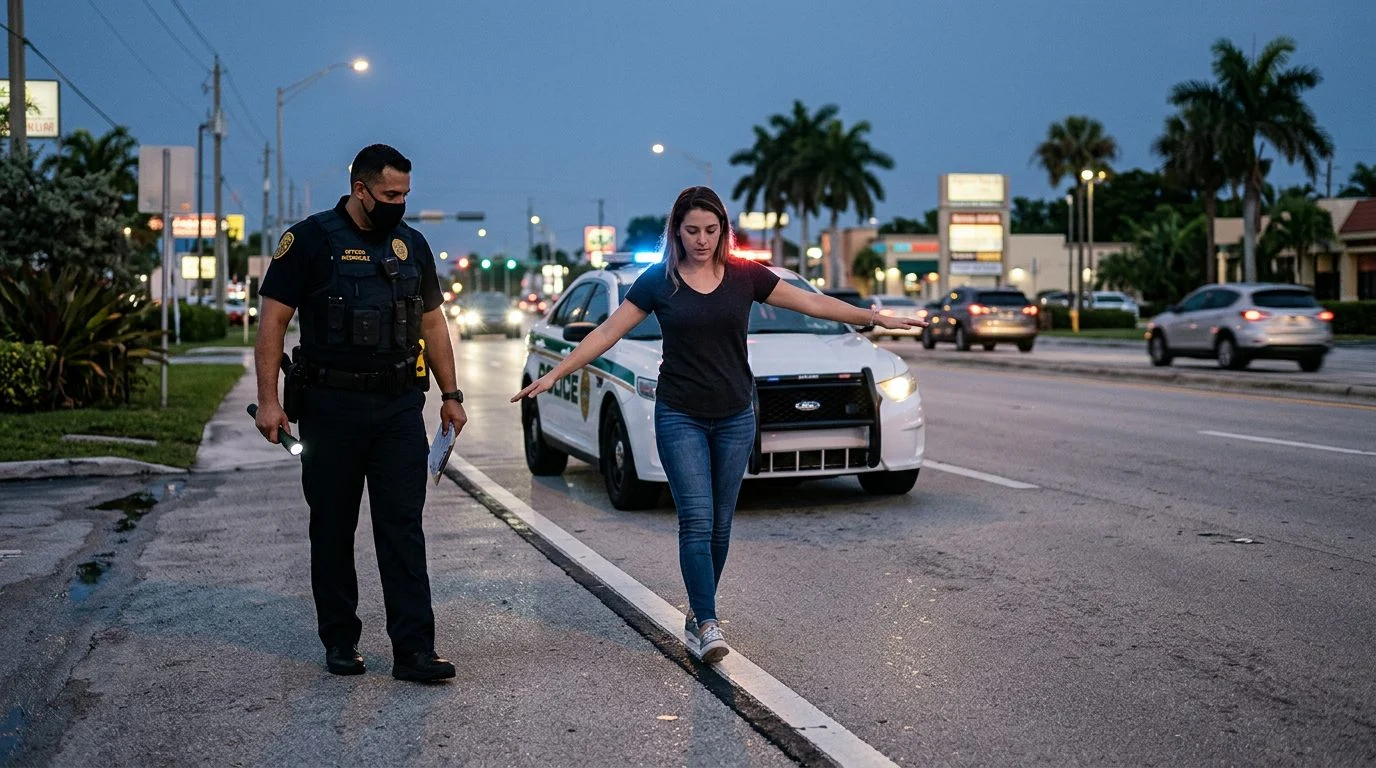
First-Time DUI | Miami and South Florida
First-Time DUI in Florida: Know What Is at Stake
Patrick Wilson Law, PLLC, a Miami criminal defense firm, focuses on DUI defense for first-time offenders from Miami-Dade and Broward to the Florida Keys.
By Patrick David Wilson · Published November 13, 2026
A first DUI charge can leave you wondering how bad things could get. It can bring jail time, fines, a required DUI program, and a driver license penalty.
The sections below explain each part and the law behind it.
What Are the Penalties for a First-Time DUI Conviction in Florida?
A first-time DUI conviction in Florida can bring jail time, fines, probation of up to 1 year with a requirement to participate in public service or a community work project for a minimum of 50 hours, and a driver license penalty. Under Fla. Stat. § 316.193, the penalties come in ranges. The final result is not one fixed number. Punishment is set by subsection (2) of § 316.193, and other subsections can raise it, including a 0.15 or higher alcohol level or a person under 18 in the vehicle at the time of the offense.
The state also runs a separate license track. The Florida Department of Highway Safety and Motor Vehicles publishes Florida’s DUI administrative suspension laws, which can run alongside the criminal case.
This page covers Florida state law for a first offense. For broader context on how these cases work, see our DUI defense attorney page.
If a first DUI charge has you or someone you care about worried, we can talk through what these penalties could mean for your situation. Talk it through with our team — the first consultation is free, confidential, and carries no obligation.
What Counts as a DUI Under Florida Law?
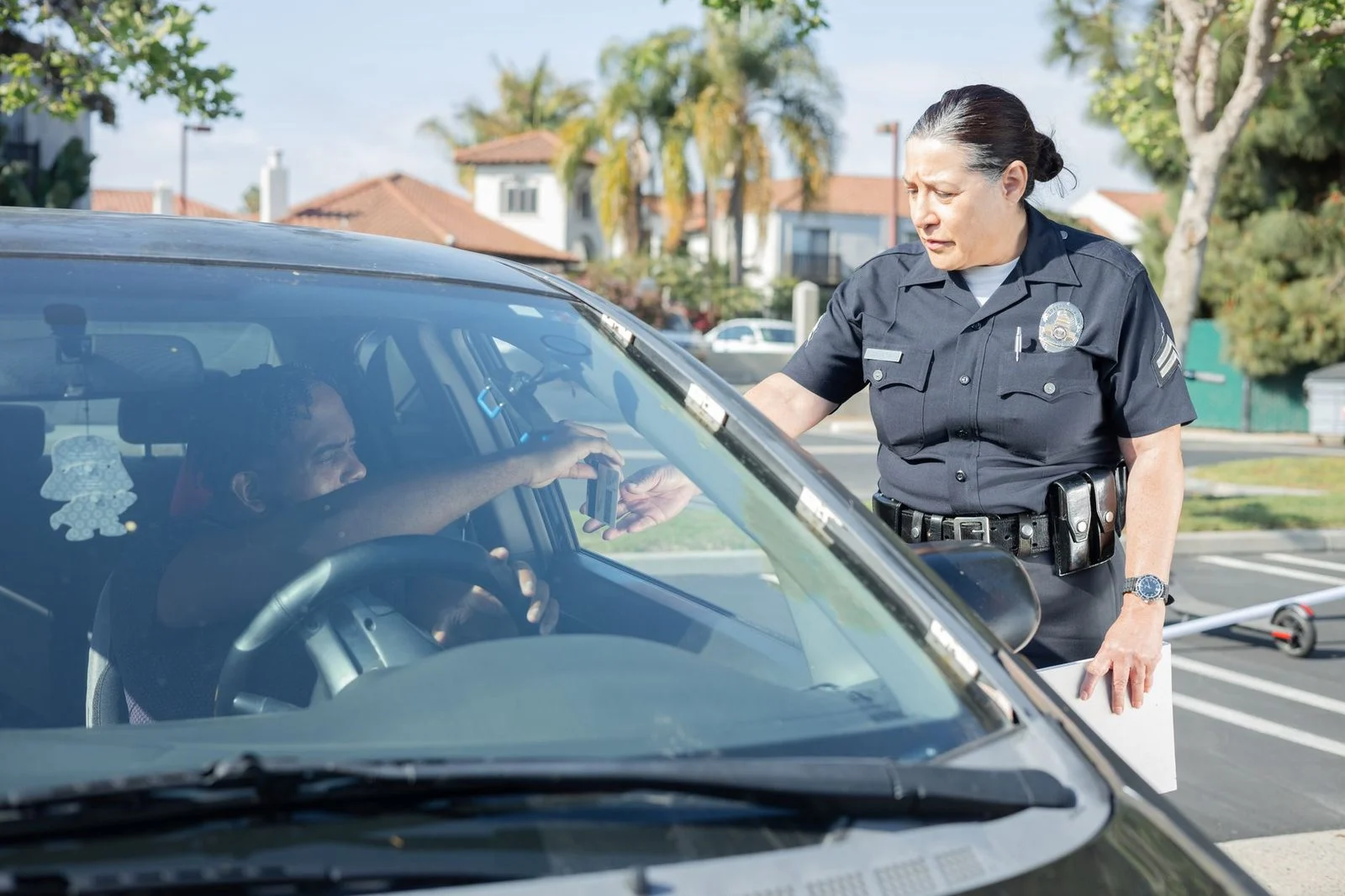
Florida treats DUI as driving or being in actual physical control of a vehicle while impaired. It also treats driving with a blood or breath alcohol level of 0.08 or higher as an offense. The § 316.193 statute sets out both paths.
Impairment means your normal faculties are affected to the extent that they are impaired. Those faculties include the ability to see, hear, judge distances, and make judgments. § 316.1934 also sets presumptions. A level of 0.08 or higher is prima facie evidence of impairment, which means it counts on its own, though it can still be challenged. A level of 0.05 or less creates a presumption that you were not impaired.
Refusing a breath or urine test is handled on its own track. Under § 316.1939, a first refusal is a separate second-degree misdemeanor. The criminal case and the license case can move on different timelines.
Is a First-Time DUI a Misdemeanor or a Felony in Florida?
Some facts raise the level of the charge. Under § 316.193, a DUI that causes damage to the property or person of another is a first-degree misdemeanor. It carries up to one year in jail.
A DUI that causes serious bodily injury to another person is a third-degree felony, punishable as provided in § 775.082 or § 775.083, and fines for designated crimes shall not exceed the amounts set in § 775.083.
It becomes one when serious injury to another person is part of the case.
How Much Jail Time Can a First DUI Carry?
Under Florida Statute § 316.193(2)(a), a first DUI with no aggravating factors can carry up to 6 months in jail. Penalties for a DUI conviction in Florida depend on the facts of each case and on the sentencing provisions of Florida law.
A judge looks at the circumstances of the traffic contact, the test result, and the defendant’s record. For a first DUI, section 316.193, Florida Statutes, sets the fine range separately from the maximum jail term, so the fine and any jail time are two distinct parts of a sentence. It does not tell you what any single case will produce.
Many people ask about the most common sentence. No one can promise a specific sentence, and no lawyer should.
The same state statute applies whether the arrest happened in Miami-Dade, Broward County, or the Florida Keys.
What Fines and Court Costs Apply to a First DUI?
At a blood-alcohol or breath-alcohol level of 0.15 or higher, or with a person under 18 in the vehicle, a first conviction carries a fine of not less than $1,000 or more than $2,000, under § 316.193.
The general fine caps for misdemeanors appear in § 775.083. They are $1,000 for a first-degree misdemeanor and $500 for a second-degree misdemeanor. Court costs are separate.
A plea of guilty or no contest counts as a conviction for fine purposes, even if the judge withholds adjudication. The same statute defines it that way.
The fine is not the whole bill. The DUI program charges a $15 assessment at enrollment, under § 322.293, and second and third offenders are also assessed $15 on each subsequent anniversary date while in the program. Under § 322.293, each DUI program assesses $15 against each person enrolling, and this section does not set a charge for education, evaluation, or treatment. Add every fee before you compare costs.
Probation and the DUI Education Program
The court may instead order a fine of $10 for each hour otherwise required only if it finds that the defendant’s residence or location, or employment obligations, would create an undue hardship. The court must also require a substance abuse course, under § 316.193.
The course is run by a DUI program licensed by the state. It must include a psychosocial evaluation, which looks at a person’s background and substance use.
If the program refers you to treatment, finishing that treatment is also a condition of probation. You pay the reasonable costs of the education, evaluation, and treatment.
Not sure what your next step is?
Talk it through with our team — the first consultation is free, confidential, and carries no obligation.
Driver License Suspension and Other DMV Consequences
A DUI conviction leads to a license revocation or suspension. The length depends on the conviction and on your history.
Under § 322.28, the state generally may not suspend a license for more than one year, unless another statute says otherwise. A DUI revocation follows the rules in that section.
Before a revoked license can be reinstated, § 322.291 requires proof of enrollment in a state-approved course. For a DUI conviction, that is either a department-approved advanced driver improvement course or a substance abuse education course from a licensed DUI program.
Some drivers can ask for a hardship hearing. Under § 322.271, a person may request a hearing, and on the driver’s request the department may waive it if the driver has enrolled in or completed the applicable driver training course or the DUI program substance abuse education course and evaluation, but may not waive it for suspensions or revocations that involve death or serious bodily injury, multiple convictions, or a second or subsequent suspension or revocation.
Ignition Interlock and Enhanced Penalties at Higher BAC Levels
Under § 316.193, in addition to the other penalties, the court may order placement of an ignition interlock device, at the convicted person’s sole expense, for at least 6 continuous months on all vehicles that person individually or jointly leases or owns and routinely operates, if at the time of the offense the person had a blood-alcohol or breath-alcohol level of .08 or higher. The offender pays for it, under § 316.193.
The device is installed so the vehicle will not start if the driver’s blood alcohol level is above 0.025 percent. The court can set a different level. Separately, § 316.1937 allows the court, in addition to any other authorized penalties, to require that a person convicted of DUI under s. 316.193 operate only a vehicle equipped with a functioning ignition interlock device certified by the department, installed so the vehicle will not start if the operator’s blood alcohol level is in excess of 0.025 percent or as otherwise specified by the court.
Whether a device is ordered, and for how long, depends on the test result and the facts of the case.
Can a First DUI Be Dismissed or Reduced in Florida?
Some first DUI cases end without a conviction, and some are reduced. No outcome can be promised.
Outcomes often turn on the evidence. Under § 316.1934, breath and blood tests must follow approved methods. Minor technical differences do not automatically make a result invalid.
Other questions matter too. These include how the officer made contact with the driver, what the officer recorded, and how the test was given.
A conviction is what triggers the penalties in this guide. Until then, the criminal case and the license case may still be moving.
One mistake can turn a criminal case into a license problem. Under § 322.28, a bail bond forfeited in a DUI case to the extent of depriving the defendant of normal faculties, and not vacated within 20 days, is treated as a conviction for the purposes of that paragraph’s license revocation. A proper motion contesting the forfeiture, filed within those 20 days, prevents that result.
Other Consequences of a First DUI Conviction
A first DUI conviction is a criminal conviction. It can come up later in background checks and applications.
It can also reach work, professional licenses, travel, and immigration status for non-citizens. How much it matters depends on the person’s job, licenses, and status. Licensed professionals can read more on our criminal defense for licensed professionals page.
A common mistake is treating the license case and the criminal case as one problem. Under § 316.1939, the outcome of one does not decide the other.
Is a first DUI a felony in Florida?
Usually not.
How much is the fine for a first DUI in Florida?
Penalties and costs vary with the specific charge and the facts of each case. It rises to $1,000 to $2,000 at a 0.15 level or higher, or with a minor in the vehicle.
Can a first DUI be dismissed in Florida?
Some cases end without a conviction, but no outcome can be promised.
Talk With Patrick Wilson Law About Your First DUI Charge
If you are reading this after a first DUI arrest, or because someone you love was arrested, the list of possible penalties can feel overwhelming. Florida’s criminal statutes can be complex, and a free, confidential initial consultation with Patrick Wilson Law can help you understand how they may apply to your situation.
Patrick Wilson Law, PLLC is a Miami criminal defense firm. It handles DUI matters across South Florida, from Broward County to the Florida Keys. Patrick David Wilson is the lawyer responsible for this page, and the firm’s lawyers include Sahara Fonseca.
Your first consultation is free, confidential, and comes with no obligation to continue (Spanish: consulta inicial gratuita, confidencial y sin compromiso). Call 786-761-1719 or send a message through the contact form.
How We Approach a First DUI Case
Plain-language answers
We explain the charge, the possible penalties and your options in terms you can act on.
Early attention to your case
Acting promptly lets us review the facts while they are still fresh.
Attorneys focused on criminal defense
Our attorneys focus on defending first-time offenders and licensed professionals whose careers are at stake.
Serving South Florida
We represent clients in Miami, Hialeah, Miami Beach, Kendall, Homestead, Fort Lauderdale and the Florida Keys.
Do Not Assume a First DUI Is Minor
A first offense can still carry serious consequences. Avoid relying on general information from others. Get advice based on the facts of your own case.
Steps to Take Right Now
Write down what you remember
Record the time, place and events while your memory is clear. Share these notes with your lawyer only.
Be careful what you say
Avoid discussing the arrest on social media or with anyone other than your attorney.
Keep your paperwork
Save any citations, court notices and documents you received, and bring them to your consultation.
Ask about your options
Bring your questions about penalties, license issues and defense strategy to a free initial consultation.

