
DUI Defense | Miami
Facing a Drunk Driving Charge in Miami? Start With a Clear Defense Plan
Patrick Wilson Law, PLLC focuses on DUI defense and related criminal cases across Miami-Dade, Broward County and the Florida Keys. Every case turns on the stop, the testing and the proof of driving, so we examine each of those closely from the start.
By Patrick David Wilson · Published October 25, 2026
What is the best defense against a drunk driver? The short answer is that no single defense fits every case. The right defense depends on how the stop began, what the officer saw, and how the testing was done.
Florida uses the term DUI for these charges. MADD’s DWI vs. DUI guide explains that DUI generally means driving while impaired by alcohol, drugs, or both.
This page walks through the parts of a Florida DUI case that a Miami defense lawyer reviews. It covers the stop, roadside tests, breath and blood results, medical factors, and driving. Patrick David Wilson is the responsible lawyer for this page. He is a Miami criminal defense lawyer with Patrick Wilson Law, PLLC, which limits its practice to criminal defense matters, including DUI.
If you were arrested, or someone you care about was, you may feel rushed and unsure. That reaction is normal. A clear map of the case can help.
Why There Is No Single Best Defense in a DUI Case
No single defense wins every DUI case. Which defense matters most depends on the facts.
Florida’s main DUI law centers on impairment. Under § 316.193, the state must show the driver was affected to the extent that normal faculties were impaired. A test number alone does not settle that question.
That gives a defense lawyer a clear target. Each part of the state’s proof can be tested on its own.
A common mistake is treating DUI as one argument. A better review works like a chain. The stop, the observations, the testing, and the proof of driving each connect to the next. A weak link can matter a lot, but only the full record shows how much.
Gather what you can early. Write down what you remember about the stop while it’s fresh.
If a DUI arrest has put your life on hold, or you're worried about someone who was arrested, we can talk through the stop, the tests, and your options. Talk it through with our team — the first consultation is free, confidential, and carries no obligation.
How a Florida DUI Case Is Built
A Florida DUI case is built in steps, and each step leaves evidence behind.
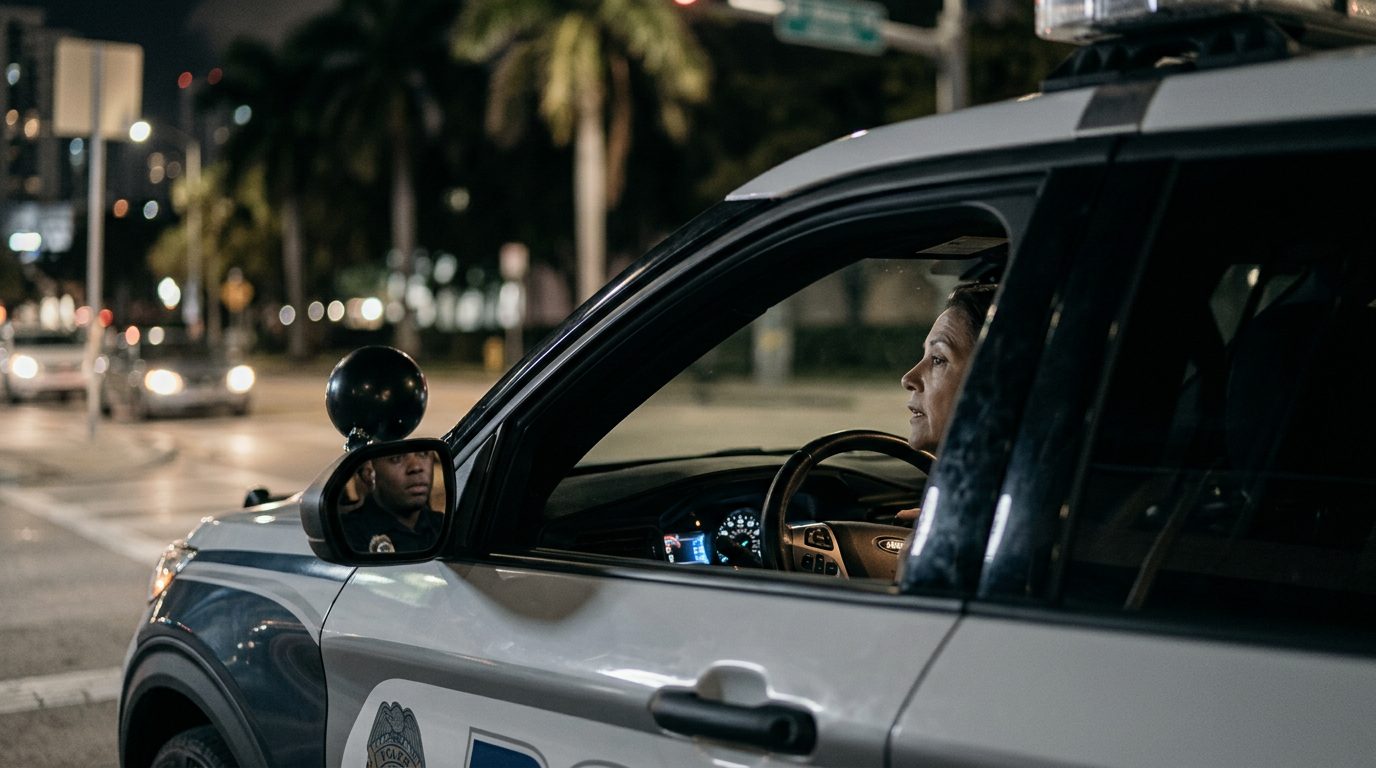
Most cases start with a traffic stop. The officer may talk with the driver, watch for signs of impairment, and ask for roadside exercises. Those exercises are often followed by a breath or blood test.
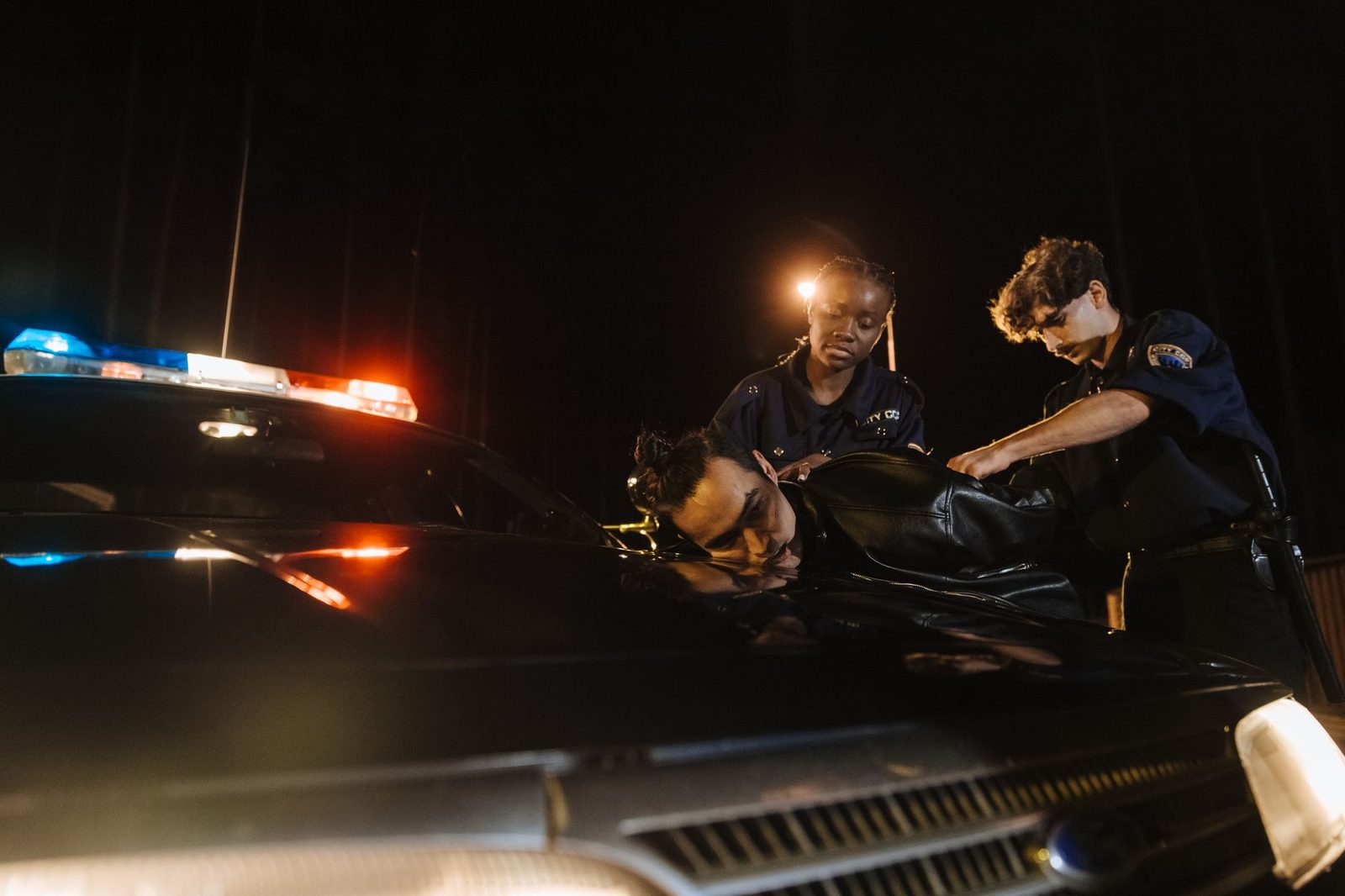
Officers can make some arrests without a warrant. Under § 901.15, an officer may arrest a driver when a chapter 316 violation happens in the officer’s presence. That arrest may be made immediately or in fresh pursuit.
Florida also has consent rules for testing.
Each stage creates records: reports, video, test printouts, and maintenance logs. Florida’s criminal discovery rule governs how the state shares much of that evidence. Those records are where a review starts.
Challenging the Traffic Stop
A traffic stop can be challenged when the officer lacked a lawful reason to make it.
The defense compares the reason given for the stop with the officer’s report, dash camera footage, and body camera video, if any. Small gaps between those records often matter. Dispatch logs get checked too.
Officer notes can be brief. A review looks at what they leave out, like the exact time, the location, and the reason given for the stop.
If the stop was unlawful, the defense can ask the court to suppress what the officer found after it. Under Florida’s pretrial motion rule, a request like that must be in writing and must state its grounds.
A successful challenge can narrow what the state may use. It doesn’t end a case on its own. The full record decides what comes next.
Challenging Field Sobriety Tests
Field sobriety tests can be challenged on how they were given, scored, and recorded.
Common roadside exercises include the balance test, the walk-and-turn test, and the one-leg-stand test. The driver follows instructions on the roadside, sometimes beside passing traffic. The officer then scores what he or she saw.
Many things can change how a person performs. Footwear, a sloped shoulder, rain, poor lighting, nerves, and past injuries can all affect balance. A review checks each one against the video and the officer’s notes.
Florida’s impairment standard names the abilities at stake. Under § 316.1934, normal faculties include, but are not limited to, the ability to see, hear, walk, talk, judge distances, drive an automobile, make judgments, act in emergencies, and, in general, normally perform the many mental and physical acts of daily life. The defense asks whether the roadside observations really show those abilities were lost.
Challenging Breath and Blood Test Results
Breath test results can be challenged when the test was not performed substantially according to methods approved by the Department of Law Enforcement; insubstantial differences between approved techniques and actual testing procedures do not render the test or results invalid.
Under § 316.1934, a test counts only if it was done substantially in line with methods approved by the Florida Department of Law Enforcement, by someone with a valid permit. Small technical differences do not automatically make a result invalid.
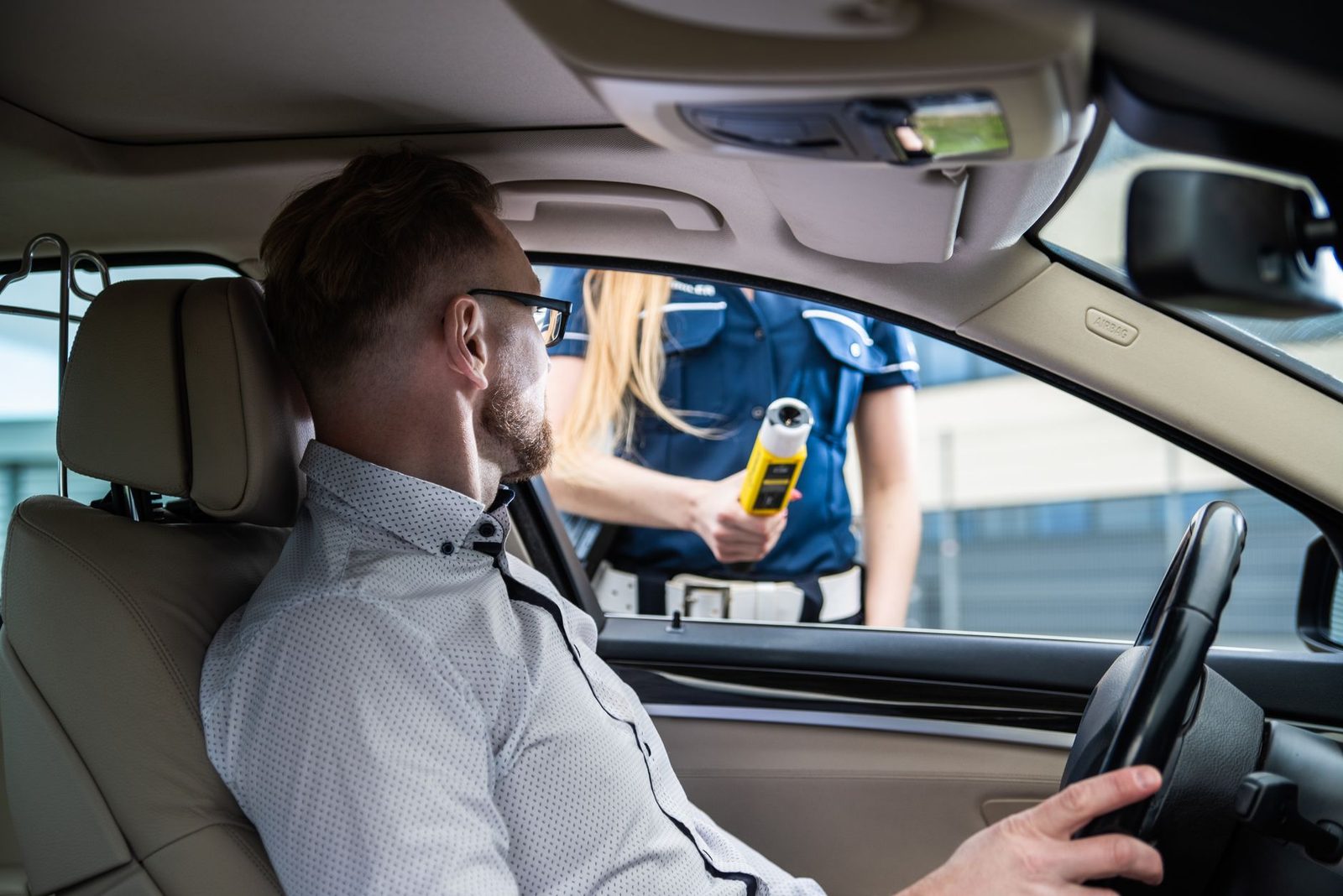
Breath tests draw questions about device maintenance, calibration records, and the operator’s training. Blood tests raise questions about when the sample was drawn, how it was stored, and who handled it at each step. The timeline between driving and testing is checked closely.
The number carries rules too. Under the same section, a result of 0.05 or less creates a presumption that the person was not impaired. A result above 0.05 but below 0.08 creates no presumption either way.
Medical Conditions, Diet, and Other Physical Explanations
Medical conditions, medications, and injuries can produce signs that an officer may read as impairment.
A defense review asks a plain question: could a physical condition, a prescription, or an old injury explain what the officer saw? Balance problems and slow reactions can have many causes. Each possible cause needs records to support it.
Tell your lawyer about every medical condition and medication, including over-the-counter products. Bring the bottles or a written list. A short written timeline helps, too, with the medicines taken and any recent injuries.
These are factors a review weighs. They do not explain every case, and they must be supported by evidence, not assumed.
Not sure what your next step is?
Talk it through with our team — the first consultation is free, confidential, and carries no obligation.
Whether the State Can Prove Driving or Actual Physical Control
The state must prove the person was driving or in actual physical control of the vehicle.
Under § 316.193, a DUI applies to a person who is driving or in actual physical control of a vehicle in Florida while under the influence of alcoholic beverages, a chemical substance, or a controlled substance, when affected to the extent that the person’s normal faculties are impaired. The statute uses both terms, so the state must prove one of them. This issue often comes up when a car is parked, stopped, or off the road.
The facts around the car matter most. Location is a starting point: a public road, a parking lot, or private property. Other facts include whether the keys were in the ignition, whether the engine was running, and where each person was seated.
In Miami-Dade and Broward, a car parked outside a restaurant or stopped on a shoulder can raise this issue. Witness accounts also bear on it.
License reviews ask a related question. Under § 322.2615, in a formal review hearing the hearing officer determines by a preponderance of the evidence whether sufficient cause exists to sustain, amend, or invalidate a suspension for driving with an unlawful blood-alcohol or breath-alcohol level of 0.08 or higher, and one issue is whether the law enforcement officer had probable cause to believe the person was driving or in actual physical control of a motor vehicle in this state while under the influence of alcoholic beverages or chemical or controlled substances.
How DUI Cases Resolve, and Whether to Get Help
The path that fits a case comes from the evidence and the record.
Some outcomes are limited by statute. Under § 316.193, upon conviction the court shall suspend or revoke the offender’s driver license, and the clerk must give notice of this at arraignment.
First offenders may have other options. Under § 948.08, a first offender, or a person previously convicted of not more than one nonviolent misdemeanor, who is charged with a misdemeanor or third-degree felony may be eligible for pretrial intervention, but only with the approval of the program administrator, the consent of the victim, the state attorney, and the judge, and a voluntary, knowing waiver of the right to a speedy trial. Fla. Stat. § 948.08 reads: “However, the defendant may not be released to the pretrial intervention program unless, after consultation with his or her attorney, he or she has voluntarily agreed to such program and has knowingly and intelligently waived his or her right to a speedy trial for the period of his or her diversion.”
Plea decisions belong to the client. Under Fla. R. Crim. P. 3.171, defense counsel must advise the client of all plea offers and the likely results of each.
License consequences run on a separate track. Under § 322.2615(14)(a), the department’s license-review decision may not be considered in a trial for a violation of s. 316.193 (DUI), and a written statement a person submits in requesting that departmental review may not be admitted into evidence against that person in such a trial.
For non-citizens, a DUI can raise residence and visa questions. Our criminal defense for non-citizens page covers that topic.
What is the best defense against a drunk driver?
No single defense fits every case. The strongest points depend on the stop, the testing, and the proof of driving.
What happens if someone refuses a breath test in Florida?
A first refusal can bring a one-year license suspension under § 316.1932. A refusal to submit to a breath test when a law enforcement officer requests it can also be used as evidence in a criminal case under § 316.1932.
Can a first offender enter pretrial intervention?
Sometimes. Eligibility under § 948.08 for the first-offender pretrial intervention program is limited to a first offender, or a person previously convicted of not more than one nonviolent misdemeanor, who is charged with a misdemeanor or third-degree felony, and requires approvals and a speedy-trial waiver; the section also provides other eligibility, including for a person charged with a felony who is identified as a veteran or a servicemember and qualifies for a veterans treatment court program.
If you’re facing a DUI charge, or you’re worried about someone who is, you don’t have to sort through these defenses alone. The first consultation is free, confidential, and comes with no obligation to continue. Call 786-761-1719 or send a message through our contact page.
Why Clients Contact Patrick Wilson Law
Focused DUI Defense
Our practice concentrates on drunk driving and related charges, including first-time offenses and cases involving breath or blood test results.
Attention for Licensed Professionals
We understand that a charge can affect a license and a career, and we factor those consequences into every decision.
South Florida Coverage
We represent clients from Miami and Miami-Dade County to Broward County, Fort Lauderdale, Miami Beach, Homestead and the Florida Keys.
Confidential Free Consultation
Your first consultation is free, confidential and comes with no obligation to continue.
Be Careful What You Say
Statements made to police, or posted online, can become evidence in your case. Before answering questions about where you were, what you drank or how you were driving, speak with a lawyer.
Defense Points We Examine
The Traffic Stop
We review whether the officer had a lawful reason to stop your vehicle and whether the detention that followed was justified.
Field Sobriety Observations
We look at how roadside tests were given, the conditions where they were performed and what the officer actually recorded.
Breath and Blood Testing
We examine how testing equipment was maintained, how samples were collected and handled, and whether the results are reliable.
Proof of Driving
We assess what the evidence shows about who was driving, when, and whether the state can connect you to operating the vehicle.

