
Criminal Defense | Miami, Florida
Can You Drop Charges After They Are Filed in Florida?
Once a case is filed, the State decides whether it moves forward, and an alleged victim's wishes are only one factor. Patrick Wilson Law, PLLC defends clients across South Florida, from Broward County to the Keys. Learn what affects a filed case and where you stand.
By Patrick David Wilson · Published November 5, 2026
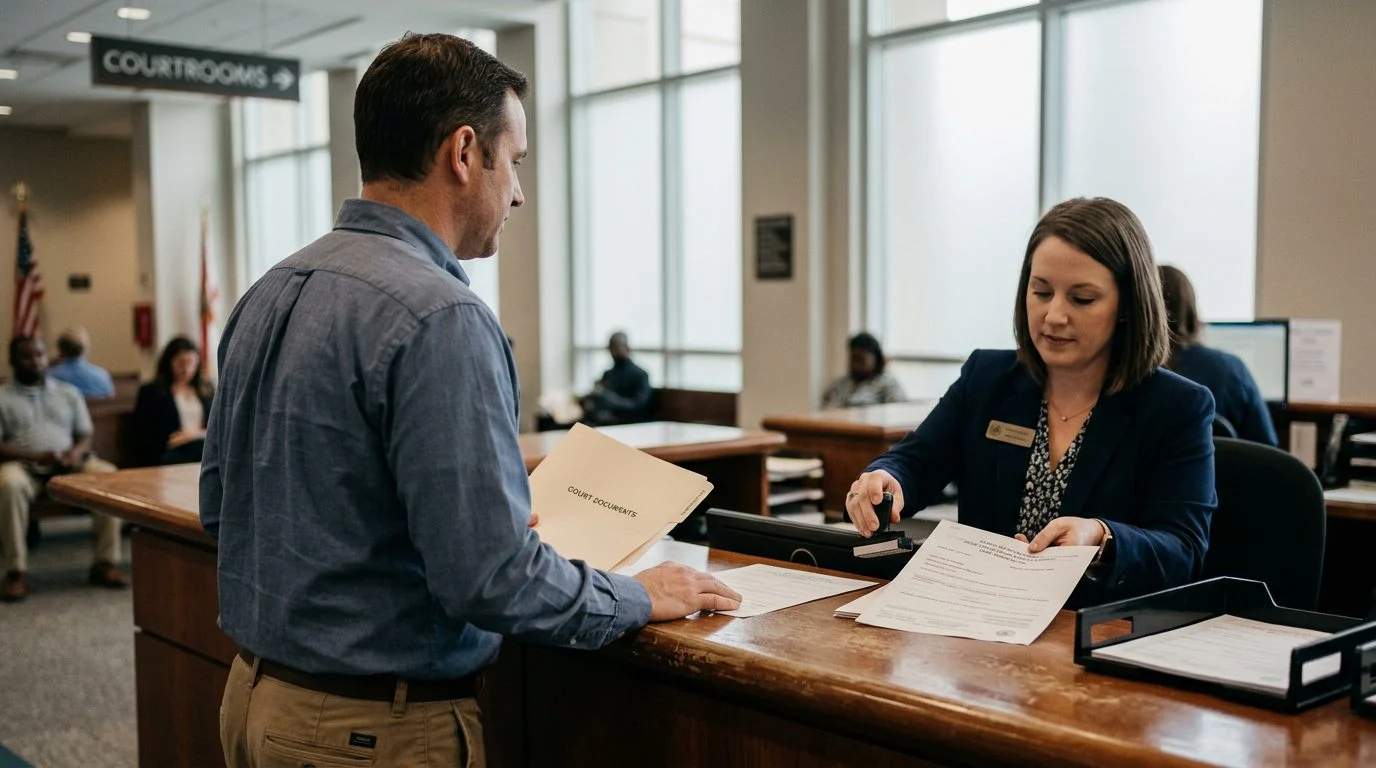
Once charges are filed, the State of Florida decides whether the case goes forward. The person who made the report can share their wishes, but asking alone won’t end the case.
This page explains why. It covers what an alleged victim’s wishes can and cannot do, how a case can end early, and why a protective order can stay in place after a charge goes away.
Who Decides Whether a Filed Case Continues
Once charges are filed, the State Attorney’s Office decides whether the case goes on. The person who called the police or signed the report does not make that choice.
Florida’s rules show why. An information, the formal charging document, must state that the appropriate prosecuting attorney makes the charge (Fla. R. Crim. P. 3.140). The case is brought in the name of the State of Florida, not the person who made the report.
This applies to everyone reading this page. If you’re the alleged victim, your report started the process, but the State runs it from here.
If a charge is already on file against you or someone you care about, you don't have to work through the court process alone. Our team is ready to talk through your options. Talk it through with our team — the first consultation is free, confidential, and carries no obligation.
Prosecutorial Discretion: Why the State Attorney Makes the Call
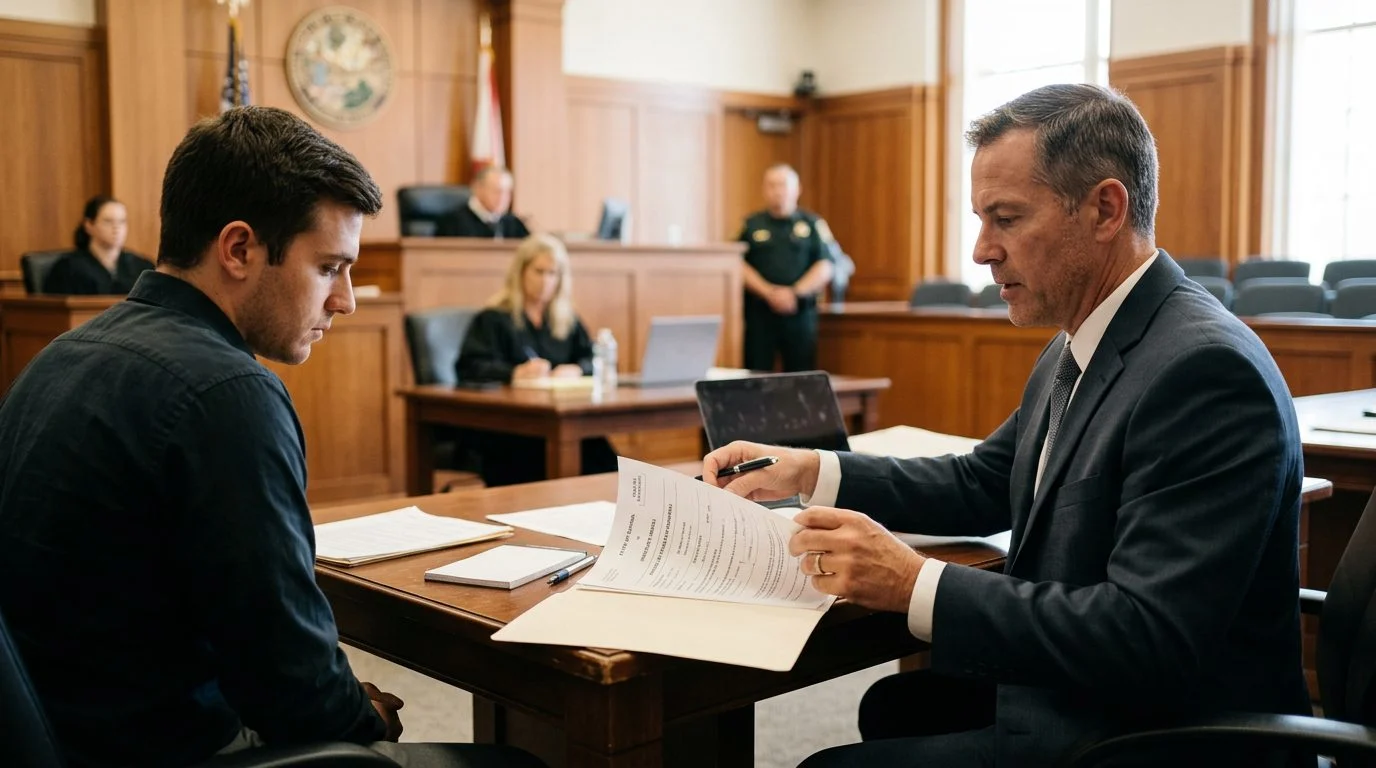
Prosecutorial discretion is a prosecutor’s power to choose which cases to bring and which to close.
Prosecutors weigh several things. They ask whether the evidence can prove the charge. They ask whether witnesses are available and willing to testify. The complainant’s stated wishes matter, but they are one factor among others.
That means a request from the alleged victim does not bind the prosecutor. A case can keep going after the alleged victim asks it to stop.
Many families assume the prosecutor will simply follow the accuser’s lead. That assumption leads people to skip steps that matter. The decision rests with the State, based on what it can prove.
The Role of the Alleged Victim in the Case
The alleged victim is a witness. The State usually needs that witness to prove what happened. Victim input can be considered at any stage, but the prosecutor is not required to follow it.
When an alleged victim changes the account or refuses to testify, the State may have less to prove. That can lead to a dismissal.
A witness also cannot simply walk away. Subpoenas for testimony can be issued by the clerk of the court or by any attorney of record in a case (Fla. R. Crim. P. 3.361). A subpoenaed witness must stay until the court or all parties excuse them. A witness who refuses to obey, or leaves without being excused, may be held in contempt.
So the decision is not the witness’s alone to end. Anyone who thinks it is should understand that before the next court date.
The Process of Dropping Charges: Nolle Prosequi, Dismissal, and Refiling
It is one way the State steps away from a case.
A dismissal is a different step. The court, not only the prosecutor, is involved in some dismissals. The result can look similar from the outside, but the path is different.
Refiling is the question people ask most often. Whether a dropped charge can be filed again depends on how the case ended. It also depends on the time limits that apply. Florida sets those limits in § 775.15. A charge that went away once is not always over for good.
Some cases also have a path to clear the record.
Charge Level Matters: Misdemeanors and Felonies
A misdemeanor is the lowest criminal charge in Florida. A misdemeanor is punishable by up to one year in a county correctional facility (§ 775.08). Fla. Stat. § 775.08 reads: “(2) The term “misdemeanor” shall mean any criminal offense that is punishable under the laws of this state, or that would be punishable if committed in this state, by a term of imprisonment in a county correctional facility, except an extended term, not in excess of 1 year.” A noncriminal violation sits below that. It carries only a fine, forfeiture, or other civil penalty, and it is not a crime. It does not cover a conviction for a violation of a municipal or county ordinance (§ 775.08).
A felony is more serious. A felony is punishable by death or by imprisonment in a state penitentiary for more than one year (§ 775.08). Under § 775.08(1), a felony is any criminal offense that is punishable under the laws of this state, or that would be punishable if committed in this state, by death or imprisonment in a state penitentiary. Fla. Stat. § 775.08 reads: “A person shall be imprisoned in the state penitentiary for each sentence which, except an extended term, exceeds 1 year.” Felonies are graded as capital, life, first degree, second degree, or third degree (§ 775.081). Misdemeanors are graded as first degree or second degree (§ 775.081).
A second-degree misdemeanor or noncriminal violation fine is generally capped at $500, unless a higher amount equal to double the pecuniary gain or loss is imposed or a statute specifically authorizes a higher amount (§ 775.083).
A reduction or amendment of a charge is different from dropping it. Know which result is on the table before you decide what to expect.
Protective Orders and No-Contact Conditions Stay in Place
Dropping a criminal charge does not automatically end a protective order. A domestic violence injunction is a civil order that stands apart from the criminal case. Florida law lets a person described in the statute who is a victim of domestic violence, or who has reasonable cause to believe he or she is in imminent danger of becoming one, file a verified petition in circuit court (§ 741.30).
No-contact conditions work the same way. It stays enforceable for the length of pretrial release, or until a court changes it (§ 903.047). Unless the court says otherwise, no contact includes communicating directly or through a third person with the victim or any other person named in the order, except that at the defendant’s request the court may designate a third person to contact the victim solely to facilitate contact with shared children, and defense attorneys may communicate with protected persons for lawful purposes (§ 903.047). It also covers physical or violent contact with the protected person or their property, and being within 500 feet of the protected person’s residence, vehicle, place of employment, or a specified place frequented regularly by that person, even if the defendant shares the residence.
Only a court can change that condition. A judge may modify it on motion when good cause is shown and the interests of justice require. The victim must be allowed to be heard (§ 903.047).
The costly mistake is contacting the other person because the case seems over. A court may revoke pretrial release on probable cause of a new crime or a material violation (§ 903.0471). A person with one or more prior convictions for a crime of domestic violence, or for violating an injunction or foreign protection order, who then violates an injunction or foreign protection order against the same victim commits a third-degree felony (§ 741.31).
Not sure what your next step is?
Talk it through with our team — the first consultation is free, confidential, and carries no obligation.

Talking With a Miami Defense Lawyer Before the Next Hearing
You may be reading this with a court date on the calendar. You may have a no-contact order you don’t fully understand, or you may have heard that a case would simply go away. That is a stressful place to be, and the rules above are only a starting point.
Patrick Wilson Law, PLLC is a Miami criminal defense firm. It defends people across South Florida, from Broward County to the Keys, including Miami-Dade County. Patrick David Wilson is the responsible lawyer for this page. The firm also defends first-time offenders and licensed professionals, among others.
If a charge is already filed, call 786-761-1719 or request a free first consultation. The first consultation is free, confidential, and carries no obligation to continue.
Can you drop charges after they are filed?
You do not have to face this alone. The State of Florida decides whether a filed case continues, though the alleged victim’s wishes are one factor.
Does a no-contact order end when the charges are dropped?
Not automatically. A no-contact order stays enforceable until a court changes it.
What is the lowest criminal charge in Florida?
A misdemeanor is the lowest criminal charge. A noncriminal violation carries a fine or civil penalty and is not a crime.
Can dropped charges be refiled in Florida?
Every case is different, so the answer depends on the facts of your situation.
How We Help Clients Facing a Filed Case
Clear answers about your case
We explain how the charge was filed, what stage the case is in, and which factors may matter going forward.
Protection of your record
We look at defense options and, where appropriate, discuss how a case may affect your record and future opportunities.
Guidance on court orders
We review any no-contact or protective order with you so you understand what it requires and how to comply with it.
A plan built around you
Our team focuses on first-time offenders, licensed professionals and non-citizens who need a careful, individual strategy.
Important: Do Not Assume a Case Is Over
A filed case does not end because the alleged victim no longer wants to proceed. A no-contact order also stays in effect until a court changes it. Contacting the other person, even to apologize or to ask them to drop the case, can create new problems. Speak with an attorney before taking any step.
Steps to Take Right Away
Do not ignore the case
Every court date and deadline on a filed case matters. Missing one can lead to serious consequences, so keep track of all paperwork.
Avoid contact when restricted
Follow any no-contact or protective order exactly. Do not rely on the other person to resolve the matter for you.
Talk with a criminal defense attorney
A free, confidential initial consultation with no obligation to continue lets you review your options before you decide anything.

