
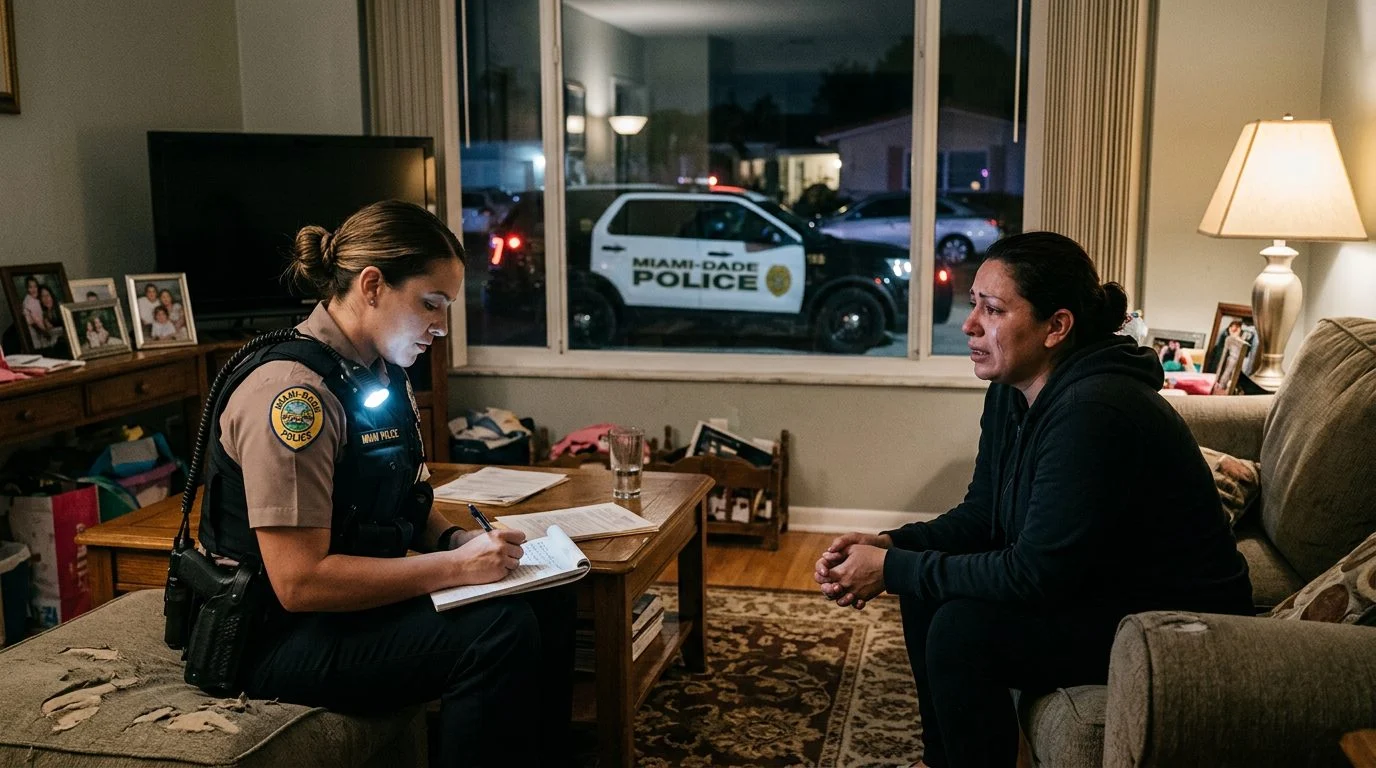
Domestic Violence Defense | Miami, FL
Miami Domestic Violence Court Process: What Happens Next
Patrick David Wilson, responsible attorney at Patrick Wilson Law, PLLC, explains how a domestic violence case moves through Miami-area courts and where a criminal defense attorney fits in.
By Patrick David Wilson · Published November 1, 2026
How do domestic violence courts work? In Florida, a domestic violence case moves on two tracks at once. The criminal case is brought by the State. A separate civil case may ask a judge for a protective injunction. The first steps happen fast, and the early conditions often matter most. This guide walks through each stage in plain terms.
What a domestic violence court handles
A domestic violence case involves a specific relationship and a specific type of offense. Under Fla. Stat. § 741.28, domestic violence includes assault, battery, sexual battery, stalking, and false imprisonment. It also includes any offense that causes physical injury or death, when one family or household member commits it against another.
Family or household members include spouses, former spouses, persons related by blood or marriage, persons who are or have been residing together as if a family, and parents of a child in common. Other people must live, or have lived, together in the same single dwelling unit.
Court arrangements vary by county. Some counties assign these cases to dedicated divisions. Others hear them in general criminal court. Questions about how a criminal case may proceed in a particular county are worth raising with a lawyer early.
The criminal case belongs to the State, not to the alleged victim. Florida law treats domestic violence as a criminal act rather than a private matter (Fla. Stat. § 741.2901). A separate civil case for a protective injunction can run alongside it (Fla. Stat. § 741.30).
If someone you love was arrested for domestic violence in South Florida, you don't have to work out the next steps alone. Reach out to our team for a free, confidential first consultation. Talk it through with our team — the first consultation is free, confidential, and carries no obligation.
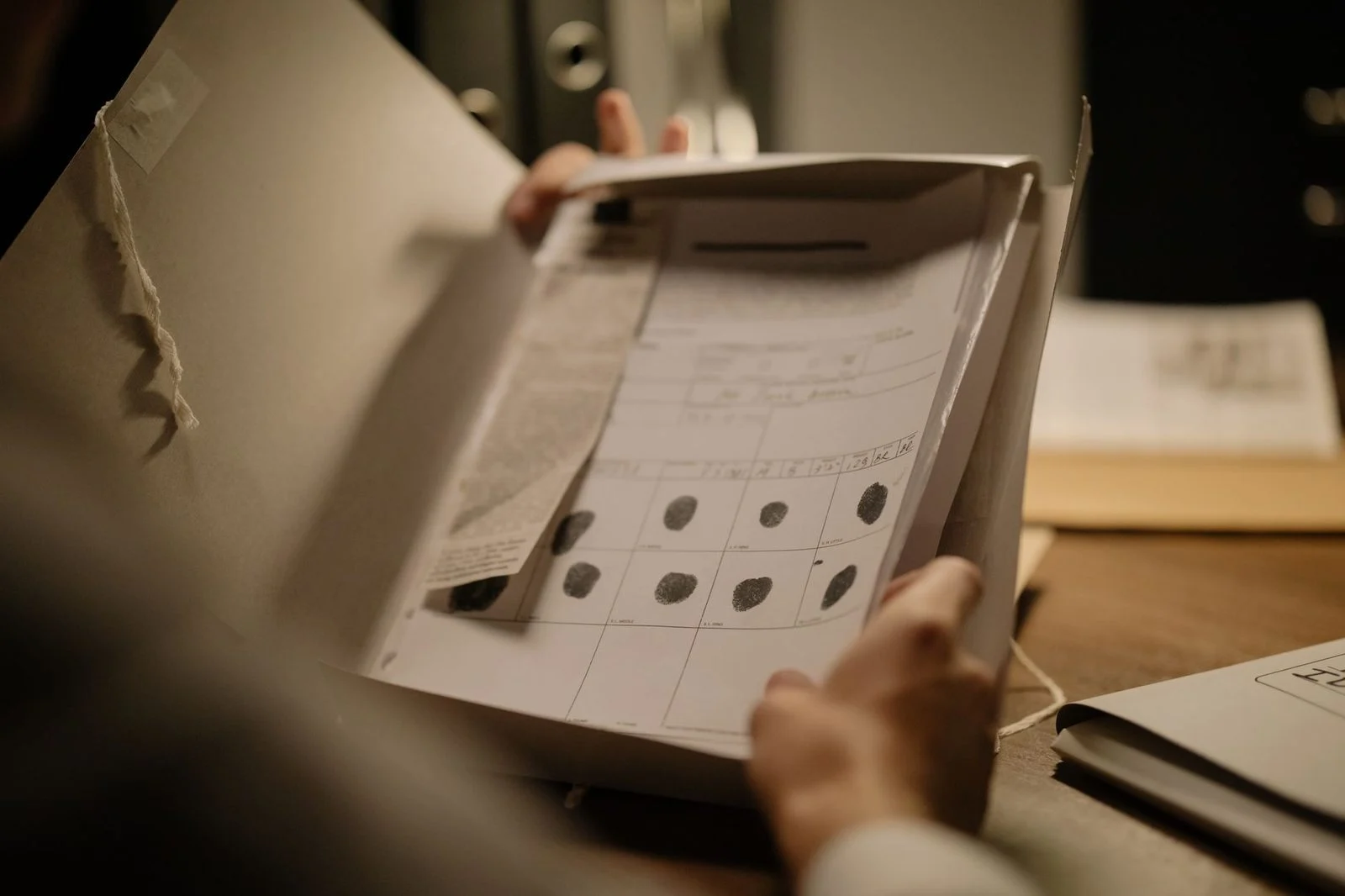
The two tracks: criminal case and protective injunction
The criminal case asks whether the State can prove a charge. The injunction case asks whether a judge should issue a protective order. Each track has its own steps and its own timing.
On the criminal track, the State files charges. The case then moves toward a plea or a trial. If the court finds guilt, the judge sentences. Florida law says sentences for domestic violence can be greater in both length and severity (Fla. Stat. § 741.2901).
On the civil track, a petitioner files a verified petition in circuit court. The petitioner must be a victim, or someone with reasonable cause to believe they face imminent danger (Fla. Stat. § 741.30). At an ex parte hearing for a temporary injunction, the court uses only verified pleadings or affidavits. That rule applies unless the respondent appears or received reasonable notice.
An injunction can do more than limit contact. A final injunction bars a person from having firearms or ammunition while it is in force. Breaking that rule is a first-degree misdemeanor (Fla. Stat. § 790.233).
From arrest to first appearance
After an arrest, the person must see a judge within 24 hours. That hearing is called first appearance. Except when previously released in a lawful manner, every arrested person must be taken before a judge, in person or by audio-video communication technology at the court’s discretion, within 24 hours of arrest (Florida Rule of Criminal Procedure 3.130). A prosecutor must attend.
At first appearance, the judge states the charge and gives a copy of the complaint. The judge also explains the defendant’s rights, including the right to counsel.
The judge must consider the safety of the victim, the victim’s children, and anyone else who may be in danger (Fla. Stat. § 741.2901). A Florida State Courts System overview notes that a court may impose a no-contact order as a release condition.
Fla. Stat. § 741.2901 does not address when a no-contact order takes effect; it provides that a defendant arrested for domestic violence is held in custody until brought before the court for admittance to bail. It also bars being within 500 feet of that person’s home, car, or workplace, even if you share a home. Other release conditions can limit travel, residence, and alcohol use.
Breaking release conditions can lead to revoked release. Under Fla. Stat. § 903.0471, a court may, on its own motion, revoke pretrial release and order pretrial detention if it finds probable cause to believe the defendant committed a new crime while on pretrial release or violated any other condition of pretrial release in a material respect. Section 903.0471 does not contain the phrase “any contact of any type” and does not address contact the other person started. It allows a court, on its own motion, to revoke pretrial release if it finds probable cause that the defendant committed a new crime or violated another condition of release in a material respect.
Arraignment, pretrial conferences, and discovery
At arraignment, the charge is read or stated, and the defendant is asked to plead. Counsel may file a written not-guilty plea at or before arraignment (Florida Rule of Criminal Procedure 3.160). After a not-guilty plea, the defendant gets a reasonable time to prepare for trial.
Pretrial conferences follow. Judges and attorneys set dates, check the case’s status, and sort out open issues. Release conditions stay in force until the court changes them.
Discovery is the exchange of evidence. After the charging document is filed, a defendant may elect to participate in discovery by filing a Notice of Discovery, which then binds both sides to the rule’s procedures (Florida Rule of Criminal Procedure 3.220). The file includes police and investigative reports prepared for the case, subject to the rule’s limits.
Defense motions can ask the court to change release conditions. The court may modify a no-contact condition for good cause when the interests of justice require it. Where a court considers modifying a no-contact condition, the victim is permitted to be heard at that proceeding.
Resolution: plea, trial, and sentencing
A criminal case usually ends in one of two ways: a negotiated plea or a trial. Plea talks happen between the prosecutor and defense counsel, or with the defendant when he or she is representing himself or herself. Counsel must advise the client of all plea offers and their likely results. Counsel cannot finalize a plea without the client’s full and complete consent (Florida Rule of Criminal Procedure 3.171).
At trial, a judge or jury decides whether the State proved the charge. If the defendant is convicted, the sentence can carry consequences beyond jail or probation.
Repeat violations carry higher stakes. A person with one or more prior domestic violence or injunction violation convictions, who violates an injunction against the same victim, commits a third-degree felony. A conviction for this purpose includes a plea or trial result, even if adjudication is withheld (Fla. Stat. § 741.31). How these rules affect a specific case depends on the facts.
Questions people often have about the process
The State decides whether charges move forward, not the alleged victim.
Can the alleged victim drop the charges?
The prosecutors assigned to domestic violence cases decide whether charges are filed, not filed, or diverted, and they may proceed over the victim’s objection if necessary (Fla. Stat. § 741.2901).
Does a no-contact order apply if they contacted me first?
The no-contact rule covering “any contact of any type,” including indirect contact, is not in § 741.2901. Section 741.2901(2) states that criminal prosecution shall be the favored method of enforcing compliance with injunctions for protection against domestic violence, and Section 741.31 lists the acts that violate such an injunction. Section 741.2901 does not contain a list of prohibited no-contact acts; it addresses prosecution policy, charging decisions, and bail considerations in domestic violence cases.
How long does the State have to act on an injunction violation?
Law enforcement has 20 days after the initial report to finish its investigation. The state attorney then has 30 working days to decide on charges or other action (Fla. Stat. § 741.31).
Do I need a lawyer at first appearance?
The judge must advise you of your right to counsel.
If someone you love was arrested in Miami-Dade, Broward, or the Keys, you don’t have to face the first steps alone. Patrick Wilson Law offers a free, confidential first consultation with no obligation to continue. Call 786-761-1719 or send us a message.
This page is written by Patrick David Wilson, responsible lawyer at Patrick Wilson Law, PLLC, in Miami, Florida.
The Stages of a Miami Domestic Violence Case
Arrest and First Appearance
After an arrest, the case typically begins with a first appearance before a judge, where the charge is reviewed and conditions of release are discussed.
The Prosecutor's Charging Decision
Prosecutors assigned to domestic violence cases decide whether charges are filed, not filed or diverted. Early review of the evidence can shape how the case proceeds.
Arraignment and Release Conditions
At arraignment the defendant enters a plea. Release conditions often include no-contact terms that must be followed closely.
Pretrial, Discovery and Resolution
Pretrial work includes reviewing the State's evidence, investigating the facts and evaluating options, which may range from dismissal to negotiated resolution or trial.
Do Not Contact the Other Person
A no-contact order generally covers any contact of any type, including calls, texts, social media messages and messages sent through friends. Contact that starts with the other person does not remove the risk. Speak with a defense attorney before responding.
Why Clients Work With Patrick Wilson Law
Focused Criminal Defense
Our lawyers focus on criminal defense, including domestic violence, DUI, sexual battery and first-time offender matters.
Across South Florida
We represent clients in Miami-Dade and Broward counties, Fort Lauderdale, Miami Beach, Hialeah, Kendall, Homestead and the Florida Keys.
Licensed Professionals and First-Time Offenders
We understand what is at stake for professionals whose careers depend on their record and for people facing a first charge.
Confidential First Consultation
Your initial consultation is free, confidential and carries no obligation to continue.

