
Vehicular Homicide Defense | Miami and South Florida
A Brake Failure Crash Can Still Lead to Criminal Charges
Patrick Wilson Law, PLLC defends drivers in Miami-Dade, Broward and the Keys after fatal crashes. Brake problems are one fact among many, and we examine every one of them. Your first consultation is free, confidential and comes with no obligation.
By Patrick David Wilson · Published October 24, 2026
Short Answer: Yes, a Brake Failure Crash Can Still Lead to Charges
Yes. In Florida, a driver can face criminal charges after a fatal crash even when the brakes failed. A brake problem is one fact among many. It is not an automatic shield from charges.
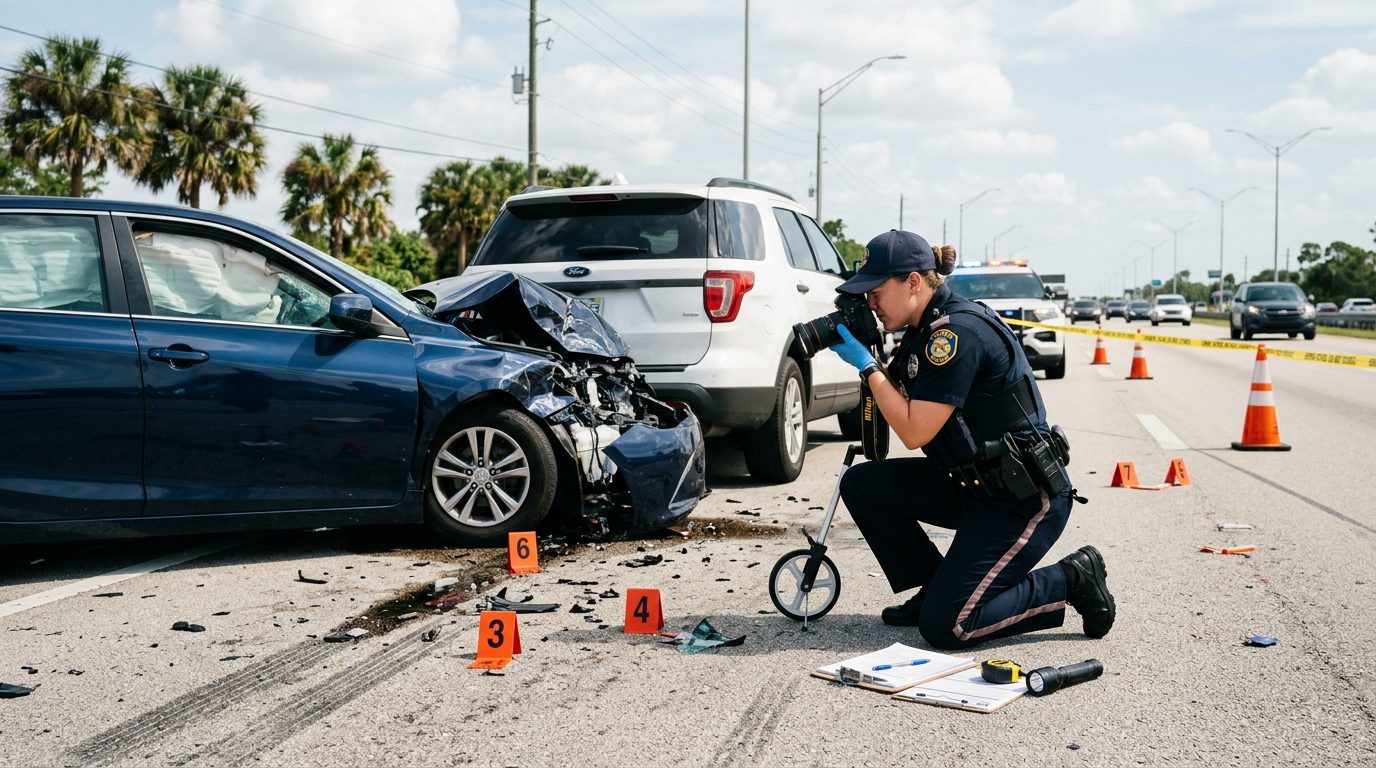
Police and prosecutors look at how the car was driven, what the driver knew, and what happened before the crash. They also look at whether the driver met the duties that follow a crash with a death.
Whether charges are filed, and what they look like, depends on the facts. This page gives general information for drivers in Miami-Dade, Broward, and the Florida Keys. It is not legal advice.
If your brakes failed and someone died, you don't have to decide what to tell police on your own; reach out and we'll talk through your options. Talk it through with our team — the first consultation is free, confidential, and carries no obligation.

How Florida Vehicular Homicide Works
Florida treats vehicular homicide as a killing caused by reckless driving, not by a simple accident. Under Fla. Stat. § 782.071, the offense covers a death caused by operating a motor vehicle “in a reckless manner likely to cause the death of, or great bodily harm to, another.”
The key word is “reckless.” A simple accident is not reckless driving. Charges like these call for a careful review of the facts from the start. The state has to show the way the car was operated carried a likely risk of death or serious harm.
The base offense is a second-degree felony. Penalties for felonies in Florida are set by Florida’s penalty statute, § 775.082, which covers sentencing rules.
Two facts can raise the level to a first-degree felony. The first is when the driver knew, or should have known, that the accident happened and did not give information and render aid as the law requires. The state does not need to prove the driver knew anyone was hurt. The second is a prior conviction under certain listed statutes, including this one.
For an overview of how we approach these cases, see our vehicular homicide defense overview.
How a Mechanical Defect Affects the Recklessness Question
A brake failure can change how the recklessness question looks. It does not settle that question. A sudden failure the driver could not detect may weigh differently than a known problem the driver kept driving on.
Investigators usually ask three questions. When were the brakes last serviced? Did warning signs appear before the crash? Did the driver keep driving after noticing a problem? The answers shape how the mechanical cause fits into the case.
A mechanical cause is evidence to be weighed. It is not a defense that ends the case. Each case turns on its own record, including the vehicle, the road, and the driver’s conduct.
Felony cases in Florida circuit and county courts are charged by indictment or information. Under Fla. R. Crim. P. 3.140, an information must be a plain, concise, and definite written statement of the essential facts of the offense. The charging papers show the state’s theory of the driver’s conduct.
Warning Signs and Maintenance History
Prosecutors may point to warning signs the driver saw or should have noticed. Florida law requires brakes to stay in good working order. Under § 316.263, all brakes must be maintained in good working order. Under § 316.261, service brakes must be adequate to control and stop the vehicle under all conditions of loading. Fla. Stat. § 316.261 reads: “ADEQUACY.—Every such vehicle and combination of vehicles, except special mobile equipment not designed to carry persons, shall be equipped with service brakes adequate to control the movement of and to stop and hold such vehicle under all conditions of loading, and on any grade incident to its operation.”
Common warning signs include a soft or sinking brake pedal, grinding or squealing, a brake warning light, leaking brake fluid, and a repair estimate the owner put off. Each sign can become a point in the case. Who noticed it, when, and what was done about it all matter.
Maintenance records can help both sides. Repair invoices, service dates, and messages with a mechanic can show the driver had no notice of a problem. They can also show the driver knew about one and waited.
Our advice is simple. Don’t repair, alter, or throw away the vehicle or any brake parts before you talk with a lawyer. Physical evidence can help the defense or the prosecution. Once it is gone, it cannot be put back.
Leaving the Scene After a Fatal Crash Is a Separate Duty
A driver must stop and stay after a fatal crash, even if the brakes failed. Under Fla. Stat. § 316.027, a driver in a crash that results in death must immediately stop at the scene, or as close as possible. The driver must stay until the duties in § 316.062 are met.
Under Florida Statute § 316.027(2)(c), a willful violation of that duty that results in a death is a first-degree felony. When a leaving-the-scene crash caused a death, a person who willfully violates the duty to remain at the scene commits a first-degree felony, and the statute provides for a mandatory minimum term of imprisonment of 4 years, s. 316.027(2)(c). For a violation not committed while driving under the influence, the defendant may move to depart from that minimum, and the court may grant the motion only if it finds that imposing the minimum would result in an injustice.
This duty applies to the driver no matter what caused the crash. A leaving-the-scene charge can stand apart from the question of what caused the crash.
Property-only crashes follow a different rule. § 316.061 covers crashes that cause only damage to a vehicle or other property that is driven or attended by any person. A crash involving a death falls under § 316.027 and § 316.062 instead.
The Florida Department of Highway Safety and Motor Vehicles explains the duty to remain at the scene on its hit-and-run guidance page.
Talking to Investigators and Family After a Death
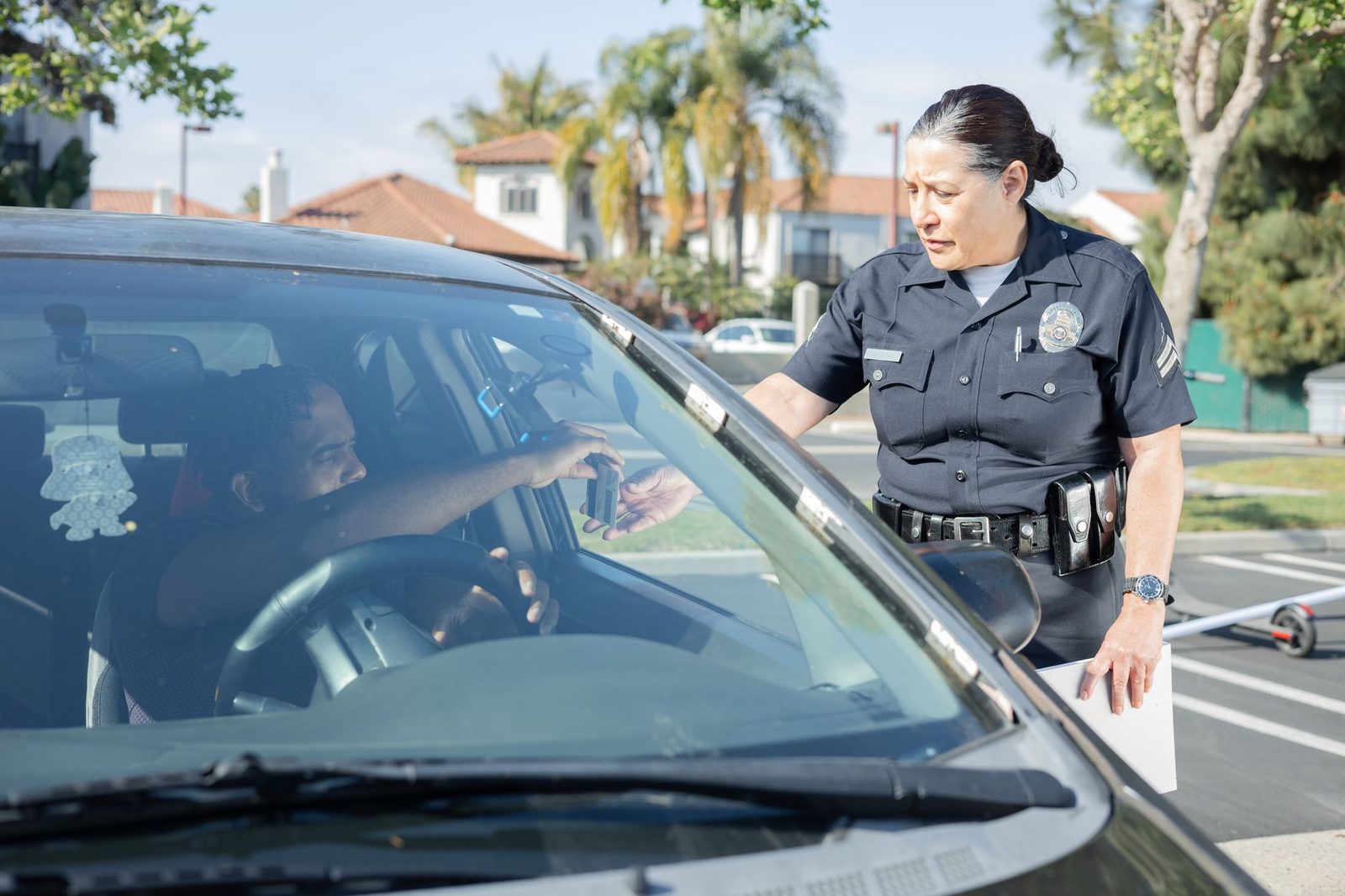
A driver must give basic information at the scene, but not every detail. Under § 316.062, the driver must give a name, address, and registration number. The driver must show a license or permit, if one is available, on request to any person injured in the crash, to the driver or occupant of or person attending any vehicle or other property damaged in the crash, or to any police officer at the scene or investigating the crash. The driver must also give reasonable help to an injured person.
The same statute says the duty to report to an officer does not extend to information that would violate the driver’s privilege against self-incrimination. That limit matters when questions turn to the brakes and the moments before the crash.
A detailed account given in shock can be hard to correct later. Words like “the brakes just went” will be written down and read again. Before giving a full account, contact Patrick Wilson Law for a free, confidential initial consultation with no obligation to continue; call 786-761-1719 or leave us a message.
After a death, many drivers want to speak with the victim’s family. Sympathy matters. Talk with a lawyer first, so kind words are not later read as statements about fault.
Not sure what your next step is?
Talk it through with our team — the first consultation is free, confidential, and carries no obligation.
Talk Through Your Brake Failure Crash With Our Team
If your vehicle failed and someone died, you are likely making fast decisions. You may be asked what to tell police, whether to give a statement, and what to do with the car. Those choices can shape the case early.
You can contact us online or call 786-761-1719 to leave a message. Our first consultation is free, confidential, and carries no obligation to continue.
Patrick David Wilson is the responsible lawyer for this page. Patrick Wilson Law, PLLC has its office in Miami and serves Miami-Dade County, Broward County, and the Florida Keys.
How We Approach a Brake Failure Case
Reviewing the Vehicle
We look at maintenance records, repair history, inspection reports and any evidence about when the brake problem began and who knew about it.
Reconstructing the Crash
We study the speed, road conditions, traffic and the timeline before impact to show what the driver could and could not have controlled.
Challenging the State's Theory
We test whether the prosecution's account of driving conduct, knowledge and responsibility holds up under the evidence.
Defense for Drivers Across South Florida
Patrick Wilson Law, PLLC is based in Miami and represents clients from Broward County to the Florida Keys.
Talk to a Lawyer Before You Give a Statement
After a fatal crash, investigators and insurers may ask for your account right away. Speak with a criminal defense lawyer before you describe what happened or what you knew about the brakes.
Facts That Shape a Vehicular Homicide Case
How the Car Was Driven
Speed, lane position, following distance and reaction to warning signs are often central to how a case is evaluated.
What the Driver Knew
Warning lights, unusual pedal feel, recent repairs or prior complaints can all change how a brake failure is viewed.
Maintenance and Inspection History
Service records, mechanic visits and inspection dates can show whether a failure was sudden or developed over time.
Conduct at the Scene
What a driver did and said after the crash, including whether they stayed and offered help, can matter as much as the crash itself.

