
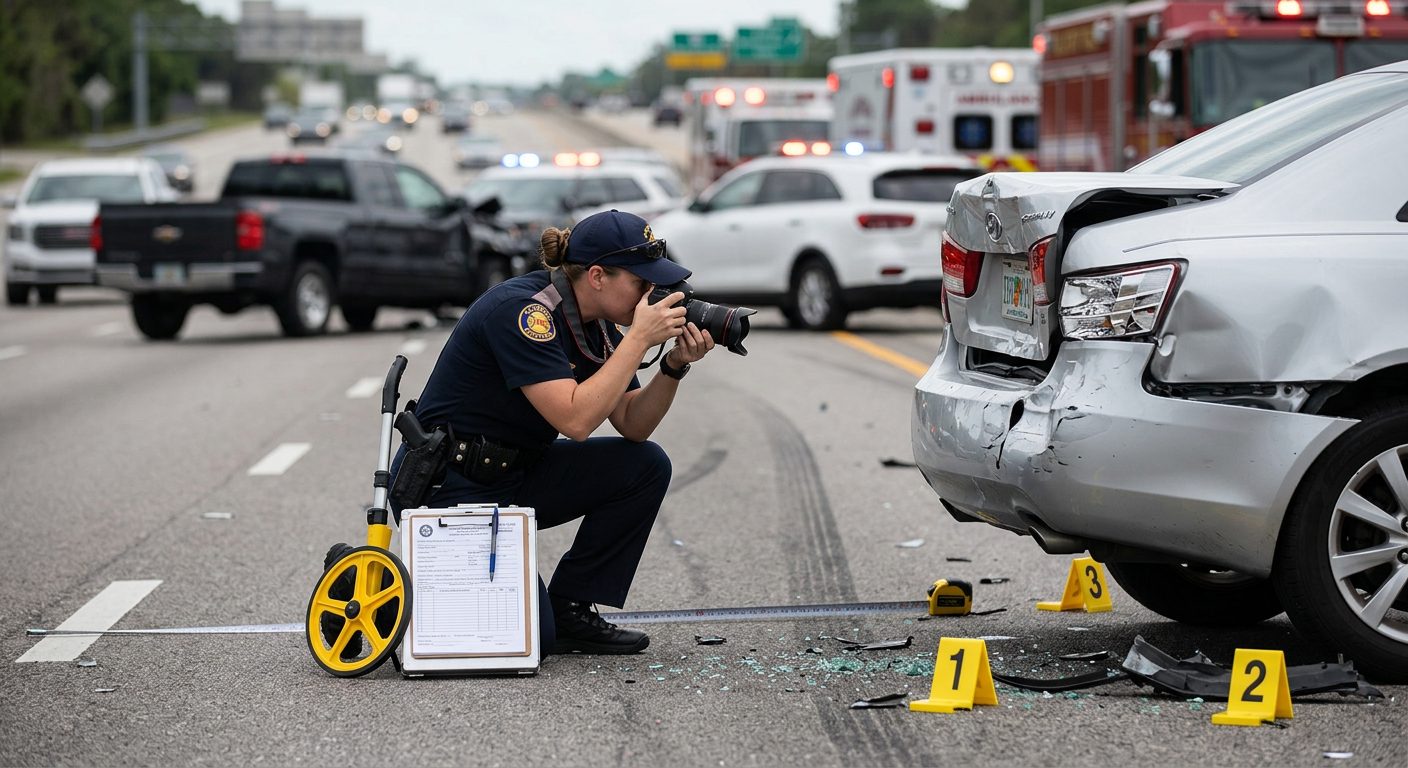
Vehicular Homicide Defense | Miami and Miami-Dade County
How Vehicular Homicide Charges Are Sentenced in Florida
Sentencing depends on the charge, the facts of the case, and the sentencing scoresheet. Patrick Wilson Law explains how the framework works and what to discuss in a free, confidential first consultation.
By Patrick David Wilson · Published October 17, 2026
Can You Get 3 Years for Manslaughter in Florida?
If someone you care about is facing a manslaughter charge, you don't have to sort out these rules alone. Our team offers a free, confidential first consultation, with no obligation to continue. Talk it through with our team — the first consultation is free, confidential, and carries no obligation.
Short answer: can a Florida manslaughter sentence reach 3 years?
Can you get 3 years for manslaughter in Florida? Whether a sentence falls within a legal range depends on the specific charge and the facts of each case. Manslaughter is a second-degree felony, and that degree carries a maximum of 15 years in state prison.
Whether a judge actually imposes 3 years depends on the facts of the case, the charge filed, and the sentencing scoresheet. This page explains that framework. It does not predict how any case will end.
Florida defines manslaughter as the killing of a human being by the act, procurement, or culpable negligence of another, without lawful justification.
A statutory maximum is a ceiling, not an expected sentence. The scoresheet and the facts decide where a sentence lands inside that range.
Manslaughter penalties under Florida Statute § 782.07
The longest sentence for standard second-degree manslaughter is 15 years in state prison. Florida sorts felonies by degree under Fla. Stat. § 775.081.
Fines apply too. Fla. Stat. § 775.083 caps the fine for a first- or second-degree felony at $10,000.
The charge on the paperwork matters. Aggravated forms of manslaughter, such as killing an elderly person or disabled adult, a child, or certain first responders, are first-degree felonies under the same statute. A higher degree means a higher ceiling. So the exact charge filed shapes the exposure from the start.
What is the minimum sentence for manslaughter in Florida?
No single minimum applies to every manslaughter case. Florida uses the Criminal Punishment Code, and the scoresheet sets the lowest permissible sentence.
The court may still choose prison if it finds prison appropriate, within its discretion.
When total points exceed 44, the lowest prison term is figured differently. The statute subtracts 28 points from the total and then decreases the remaining total by 25 percent.
The permissible range runs from that lowest sentence up to the statutory maximum. Under Fla. Stat. § 921.0024, the lowest permissible sentence is the minimum sentence that may be imposed by the trial court, absent a valid reason for departure.
A judge can go below the lowest permissible sentence only with reasons that justify it. Fla. Stat. § 921.0026 lists mitigating circumstances. One example is an offense committed in an unsophisticated manner that was an isolated incident, where the defendant has shown remorse. Another is a legitimate, uncoerced plea bargain.
Manslaughter, DUI manslaughter, and vehicular homicide: why the charge label matters
Crash deaths are often charged under different statutes, and each carries its own penalties. The charge filed sets the starting point.
Vehicular homicide is the killing of a human being caused by reckless operation of a motor vehicle. Fla. Stat. § 782.071 makes it a second-degree felony. It becomes a first-degree felony if the person knew or should have known the accident occurred and did not give information and render aid.
DUI manslaughter falls under Fla. Stat. § 316.193. Under Fla. Stat. § 316.193, a person convicted of DUI manslaughter shall be sentenced to a mandatory minimum term of imprisonment of 4 years.
Intoxication also does not help the defense on mitigation. Under § 921.0026(3), substance abuse or intoxication at the time of the offense does not, under any circumstances, justify a downward departure.
Our Miami vehicular homicide page covers these charges in more detail. Commercial drivers and licensed professionals also face consequences beyond the sentence, and our page on criminal defense for licensed professionals addresses that.
What the scoresheet and the facts can change
The scoresheet counts past convictions. Under Rule 3.704 of the Florida Rules of Criminal Procedure, a prior conviction is scored as prior record. A first-time offender has no prior convictions to score, so the total is usually lower than for someone with a record.
Facts matter too. The judge weighs the mitigating circumstances listed in § 921.0026. Cooperation with the state is one of them. So is a plea agreement that is legitimate and uncoerced.
Plea talks are part of how many cases get resolved. Rule 3.171 says the prosecutor and defense counsel are encouraged to discuss and agree on pleas. It also says ultimate responsibility for the sentence rests with the trial judge.
Defense counsel must advise the client of all plea offers. Counsel must also explain the likely results of each plea and any alternatives. Under the same rule, a prosecutor may agree to abandon other charges.
Not sure what your next step is?
Talk it through with our team — the first consultation is free, confidential, and carries no obligation.
If a manslaughter charge is pending: what to do next
If a family member or friend has been charged, the stakes can feel overwhelming. Start by collecting what you already have.
Keep copies of the arrest paperwork, the charging document, court dates, and any notices from the clerk. Write down the dates of key events while you still remember them.
Avoid posting about the crash or the charge on social media. Avoid answering investigators’ questions without a lawyer present. Anything said can be used later.
Can you get 3 years for manslaughter?
Under Fla. Stat. § 782.07, manslaughter is a felony of the second degree. Whether a sentence reaches that term depends on the scoresheet and the case facts.
Is manslaughter a second-degree felony in Florida?
The answer to this question depends on the facts of each case. Fla. Stat. § 782.07 defines standard manslaughter as a second-degree felony.
Can a judge give probation instead of prison?
A manslaughter scoresheet cannot total 44 points or fewer. Manslaughter is a Level 9 offense under the offense severity ranking chart in Fla. Stat. § 921.0022, and it scores 92 primary-offense points before victim-injury points for death are added under the scoresheet rules in Fla. Stat. § 921.0024. A nonstate prison sanction would therefore generally require a valid downward departure under § 921.0026, not a scoresheet total at or below 44 points. The court can still impose prison within its discretion.
Does the scoresheet decide the whole sentence?
No. It sets the lowest permissible sentence and the range. The judge chooses within that range.
Facing a manslaughter charge is hard, and you don’t have to figure out the sentencing rules by yourself. Patrick Wilson Law offers a free first consultation in Miami. It is confidential and comes with no obligation to continue. You can call 786-761-1719 or leave a message.
What Shapes a Vehicular Homicide Sentence
The Charge Filed
The specific offense and its degree set the starting framework. Charging decisions are not always the same as the facts first reported.
The Sentencing Scoresheet
Florida's scoresheet considers the offense, the defendant's prior record, and other factors that can move a recommended range up or down.
The Facts of the Case
How the collision happened, the conduct involved, and the evidence available all matter to how a case is evaluated.
Background and Record
A client's prior record and personal circumstances can affect how the court views the case, which is why each file is reviewed individually.
Do Not Assume Another Case Predicts Yours
News reports and online examples describe sentences in other cases with different facts, charges, and records. Each vehicular homicide case turns on its own scoresheet and circumstances, so no general example predicts how a specific matter will end.
Questions to Bring to Your Consultation
What is the exact charge?
Understanding the charge and its degree is the first step in reviewing the sentencing framework for your case.
What does the scoresheet show?
Reviewing the scoresheet calculations helps clarify the recommended range and the factors behind it.
What facts will matter most?
Timeline, conduct, and evidence can shape how the case is presented and negotiated.
What are the next steps?
Discussing deadlines, court dates, and options early helps you make informed decisions from the start.

