
DUI Defense | Miami-Dade, Broward and the Keys
Charged with a DWI on a Bicycle? Talk to a Miami Defense Lawyer
Florida's impaired-driving law can reach people riding bicycles, not just drivers of cars. Patrick Wilson Law, PLLC defends these cases across South Florida, and your first consultation is free and confidential.
By Patrick David Wilson · Published October 25, 2026
Yes, you can get a DUI on a bicycle in Florida. The state’s DUI statute applies to a person who drives or is in actual physical control of a vehicle while impaired. Many people search for “DWI,” but Florida’s law uses the name driving under the influence. This page explains how the law reads, what penalties can follow, and what to expect after a stop.
The Short Answer: Yes, a Florida DUI Charge Can Apply to a Bicycle Rider
A person riding a bicycle in Florida can face a DUI charge when the facts fit the statute. Florida’s DUI statute makes it an offense to drive or be in actual physical control of a vehicle in this state while impaired. Impaired means a person’s normal faculties are affected by alcohol, a chemical substance, or a controlled substance.
The main question is whether the rider was impaired while operating or controlling the bicycle. Riders often feel a bicycle is too small to count. The law’s words matter more than that feeling. Whether a charge is filed depends on the facts of the ride, so no two stops look the same.
If a bike ride turned into a stop, an arrest, or a case for you or someone you love, our team can talk through the facts with you. You don't have to face it alone. Talk it through with our team — the first consultation is free, confidential, and carries no obligation.
What Florida’s DUI Statute Says About Impairment
The state can prove impairment with a chemical test, with other evidence, or with both. Under Florida’s presumption of impairment rules, a blood or breath alcohol level of 0.08 or higher is evidence that the person was impaired. In plain terms, the law treats that result as prima facie evidence of impairment, which other competent evidence can still be weighed against.
A result of 0.05 or less creates a presumption that the person was not impaired. A breath or blood alcohol reading is only one piece of the evidence in a Florida DUI case, and how much weight it carries can depend on the specific facts of the arrest. A court can still weigh them with other evidence.
The presumptions do not limit other competent evidence. That can include how the rider looked, spoke, or moved. Tests must also follow approved methods. Small technical differences do not automatically make a result invalid.
How Florida’s Traffic Code Treats Cyclists
A bicycle rider in Florida generally has the rights and duties of a driver. Florida’s bicycle regulations say a person propelling a vehicle by human power has all the rights and duties of the driver of any other vehicle. The exceptions cover special bicycle rules and provisions that cannot apply to bicycles.
That is why the DUI question comes up. The traffic code treats the rider like a driver. The impairment statute’s words about driving and physical control are part of that analysis.
Bicycle equipment rules are a separate layer. At night, a bicycle needs a white front lamp and a red rear lamp with a reflector. A first violation of that lighting rule is dismissed once the rider proves proper lighting was bought and installed. Except as otherwise provided in the section, violations of these bicycle rules are noncriminal traffic infractions, punishable as pedestrian violations.
Penalties for a DUI While Riding a Bicycle in Florida
Penalties for a bicycle DUI come from the same DUI statute. Florida’s DUI statute sets the punishment and treats a prior DUI conviction as a prior conviction in later cases. For a first conviction, the court must order at least 50 hours of public service, and may let the person pay $10 for each hour instead only if doing the work would create an undue hardship because of where the person lives or works.
Penalties rise sharply when a crash causes a death. Under Florida’s vehicular homicide statute, vehicular homicide, a killing caused by operating a motor vehicle in a reckless manner likely to cause death or great bodily harm, is a second-degree felony. It becomes a first-degree felony if the person knew or should have known a crash occurred and failed to give information and render aid. It is also a first-degree felony with a prior qualifying conviction.
A first-time offender still faces these statutes. Readers who want more on first-offense exposure can review our first-time offender defense attorney page. If a professional license is part of your work, tell your lawyer early.
What Usually Happens After a Bicycle Stop
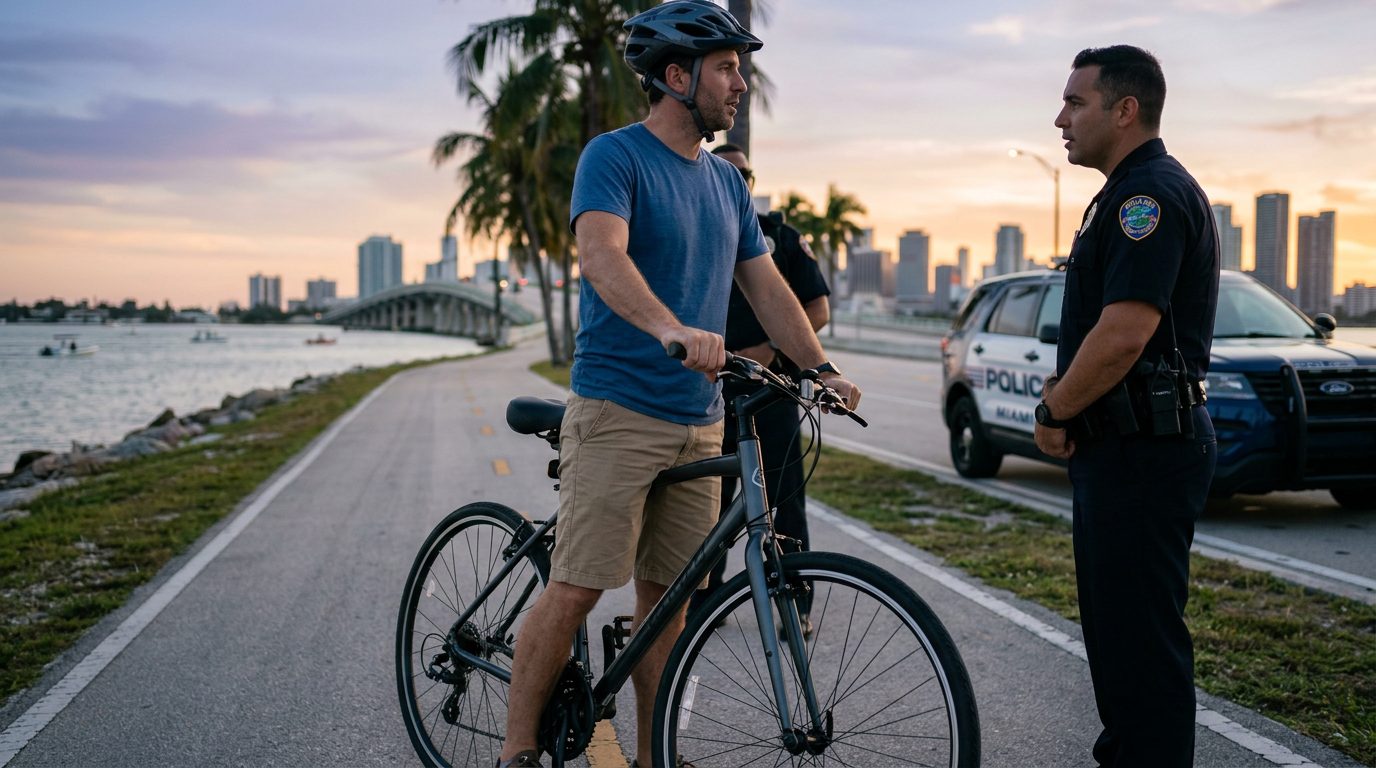
After a stop, an officer usually speaks with the rider and asks questions. The officer may ask about drinking and may ask the rider to do balance or coordination exercises. An arrest can follow if the officer believes the rider is impaired.
Two things often surprise riders. First, a bicycle does not keep a ride outside the impairment law. Second, a lighting ticket and a DUI charge are different matters. Write down what happened, the time, the route, and who was nearby while the details are still fresh.
Common questions
Does riding a bicycle drunk count as a DUI?
Yes, Florida’s DUI statute can reach an impaired rider on a bicycle. Charges turn on the specific facts of the ride.
Is a DUI on a bicycle a felony?
A DUI can also be charged as a felony: under Florida Statute § 316.193, a third violation for an offense that occurs within 10 years after a prior DUI conviction is a felony of the third degree. Other felony charges come from statutes tied to serious harm, such as vehicular homicide.
When a Bicycle Crash Involves a Death
A crash that causes a death falls under more serious statutes than a standard DUI stop. Florida’s crash statute says a driver in a crash that results in death must stop at the scene and remain until the required duties are met. A willful violation is a first-degree felony with a four-year mandatory minimum prison term, though a defendant who was not driving under the influence may ask the court to depart from that minimum. The same four-year minimum applies when the violation happens while driving under the influence.
The statute defines serious bodily injury as an injury that creates a substantial risk of death, serious personal disfigurement, or protracted loss or impairment of a bodily function. Under Florida’s blood test statute, when an officer has probable cause that an impaired driver caused death or serious bodily injury, the officer must require a blood test. The officer may use reasonable force to do so, under Florida’s blood test statute.
For a crash between a bicycle and a motor vehicle, these statutes can apply to the vehicle’s driver. Our Broward fatal bicycle crash page covers this scenario in more detail.
Not sure what your next step is?
Talk it through with our team — the first consultation is free, confidential, and carries no obligation.

Talk Through Your Bicycle Situation With Patrick Wilson Law
If a bicycle ride led to a stop, an arrest, or an investigation, you may feel unsure what comes next. Some readers are worried about a family member who was riding. Others are thinking about a coworker, a friend, or their own record and license.
Call 786-761-1719 or leave a message, and our team will discuss the facts of your situation with you. Our first consultation is free, confidential, and carries no obligation to continue. You can also reach us through our contact page.
Patrick Wilson Law, PLLC is responsible for this page. The responsible lawyer is Patrick David Wilson. The firm’s office is in Miami, Florida, and it serves Miami-Dade, Broward County, and the Florida Keys.
How We Can Help
Focused Criminal Defense
Patrick Wilson Law, PLLC focuses on DUI and other criminal defense matters for people across Miami-Dade, Broward and the Florida Keys.
Facts Matter
Whether a bicycle charge holds up depends on the specific facts of the ride, the stop and the testing. We review each detail before advising you.
Careers and Records
We represent first-time offenders and licensed professionals whose jobs, licenses and records are on the line.
Confidential and No Obligation
Your first consultation is free, confidential and comes with no obligation to continue.
Do Not Talk Your Way Into a Worse Case
Police statements made at the roadside or at the station can shape your case. Before you explain what happened or sign anything, speak with a defense lawyer.
Common Questions About Bicycle DUI Charges
Can a bicyclist be charged?
Florida's DUI statute can apply to impaired riders on a bicycle. The charge depends on the facts of the ride and the evidence gathered.
Can it become a felony?
Repeat impaired-driving charges within a set number of years can carry heavier penalties, including felony exposure. Prior history matters.
What about non-citizens and professionals?
A charge can affect immigration status or a professional license. We address those consequences alongside the criminal case.
Can a record be sealed or expunged?
In some cases, a criminal record may be sealed or expunged. We review eligibility and walk you through the options.

