
Vehicular Homicide Defense | Miami
How Vehicular Homicide Charges Get Filed in Miami
An arrest, a filed charge and a grand jury indictment are different steps. Here is how each one works and who makes the decisions.
By Patrick David Wilson · Published October 24, 2026
A vehicular homicide charge in Florida is filed in one of two ways. The State can file an information, which is a written charge the prosecutor makes. Or it can seek an indictment, which a grand jury makes. Before either happens, the case goes to the State Attorney, who decides whether to file and what to charge. This guide walks through that path in order. It is written by Patrick David Wilson, the responsible lawyer for this page at Patrick Wilson Law, PLLC, a criminal defense firm in Miami.
What Florida Must Show Before a Vehicular Homicide Charge Is Filed
Florida defines vehicular homicide in Fla. Stat. § 782.071. The statute covers a killing caused by another person operating a motor vehicle in a reckless manner likely to cause death or great bodily harm, and also the killing of an unborn child by any injury to the mother caused in the same way.
A person died. The driver operated the vehicle. And the driving was reckless in a way that was likely to cause death or serious injury. The word “likely” matters. It has to prove the driving carried that kind of risk.
Causation is where many cases are tested. The State must tie the driver’s conduct to the death, not just show that a crash happened. That is why the earliest review focuses on how the crash unfolded.
Impairment works differently. When alcohol or drugs are involved, the State may look to Fla. Stat. § 316.193, which defines driving under the influence. That section applies when a person’s normal faculties are impaired. Later in this guide, we explain how it differs.
If a fatal crash has you waiting to learn whether the State will file a vehicular homicide or DUI manslaughter charge, we're ready to talk through where your case stands. Talk it through with our team — the first consultation is free, confidential, and carries no obligation.

From Arrest to First Appearance: Where the Clock Starts
The clock starts at arrest. Except when previously released in a lawful manner, under Fla. R. Crim. P. 3.130, every arrested person must go before a judge within 24 hours of arrest. The hearing can happen in person or by audio-video technology.
At that first appearance, the judge must tell the defendant the charge and give the defendant a copy of the complaint. A prosecutor must attend. The judge also decides release conditions under Rule 3.131. In setting bail, the judge may weigh past and present conduct, including any record of convictions and any earlier flight to avoid prosecution. The judge is not bound by a bond schedule.
Three steps are easy to mix up. An arrest is police taking someone into custody. A sworn complaint goes to the clerk of the circuit court and then to the State Attorney, as Rule 3.115 provides. A formal charge is the information or indictment filed later. An arrest alone does not mean a formal charge will follow.
For release details, read our vehicular homicide bond guide. For the full overview, see the vehicular homicide defense guide.
Information or Indictment: The Two Ways Florida Files a Felony Charge
Florida files a felony charge either by information or by indictment. An information states that the appropriate prosecuting attorney makes the charge. An indictment states that the defendant is charged by the grand jury of the county. Both routes are governed by Fla. R. Crim. P. 3.140.
Either document must cite the law the defendant allegedly violated. Each count must include the customary citation of that statute or rule. This keeps every charge tied to a specific law.
The rule also says an offense that may be punished by death must be prosecuted by indictment. Vehicular homicide is not that kind of offense. Under § 782.071, its penalty comes from felony grades, second degree or first degree. So the indictment-only rule does not apply, and the State may use either route.
Felony grades matter for what comes next. Florida sorts felonies into capital, life, first degree, second degree and third degree. Any crime labeled a felony without a degree is third degree. See Fla. Stat. § 775.081.
The Prosecutor’s Decision: What the State Attorney Reviews Before Filing
The State Attorney decides whether to file and which charge to bring. The State Attorney’s Office prosecutes the case.
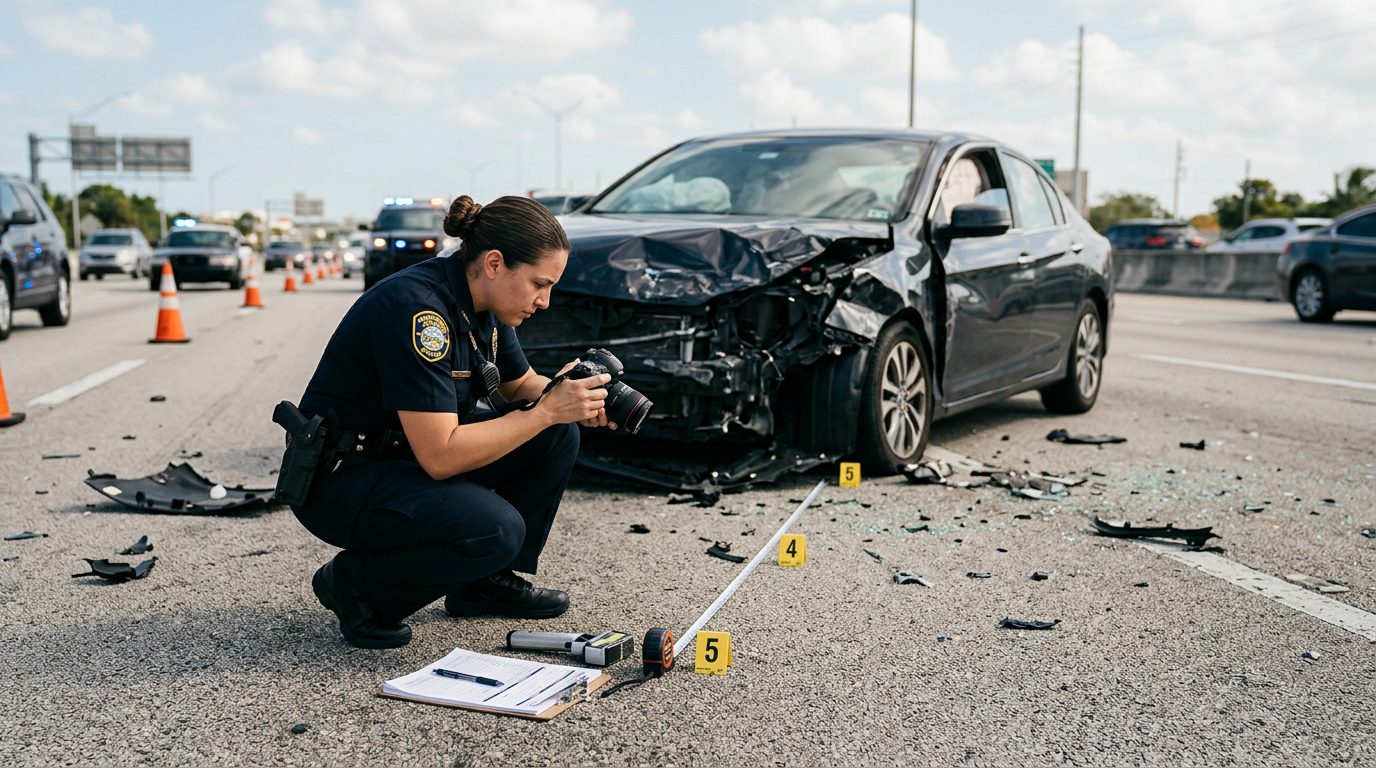
Prosecutors usually review the crash report, scene measurements, vehicle data, toxicology results, witness statements, medical examiner findings and any video. Each item helps answer two questions. What did the driver do, and did it cause the death?
Four outcomes are possible. The State can file vehicular homicide. It can file DUI manslaughter if the driver was impaired and a human being or unborn child died. It can file a lesser offense. Or it can decline to file. A filing is not a finding of guilt. Charges can be reduced, amended or dismissed as the evidence develops.
Deadlines keep the decision moving. For someone in custody, Rule 3.133 requires a probable cause determination before a judge within 48 hours of arrest, unless a judge has already made that finding. If no information or indictment is filed within 21 days of arrest, the person is entitled to an adversary preliminary hearing on any felony charge then pending. A later filing does not erase that right. How long the final decision takes depends on the facts of the crash and the evidence still outstanding.
Does the Filing Timeline Change in Miami-Dade, Broward or the Keys?
The same Florida rules set the filing deadlines in Miami-Dade, Broward and Monroe County. Each county has its own State Attorney’s Office and courts, so the people handling a file are local.
The deadlines themselves stay the same. Under Rule 3.134, the State must formally charge a person in custody within 30 days of arrest. No one in custody can stay there beyond 40 days without a formal charge. A person on pretrial release must be formally charged within 60 days of arrest, though the court may continue pretrial release for up to an additional 30 days if the State shows good cause.
What changes from case to case is the work behind the file. Crash reconstruction, lab results and medical examiner findings can take more or less time depending on how complex the crash is. If your case is in Miami, Broward or the Keys, the same steps and deadlines apply. Patrick Wilson Law takes criminal cases across South Florida, from Broward County to the Keys.
Vehicular Homicide, DUI Manslaughter and Vehicular Manslaughter: Key Differences and Penalties
Charging papers cite the statute, so the statute number shows which charge the State chose.
The first is when the person knew or should have known the accident occurred and failed to give information and render aid as section 316.062 requires. The law does not require that the person knew the accident caused injury or death. The second is when the person has a prior conviction under listed statutes.
Fines follow the grade. Under Fla. Stat. § 775.083, a fine for a first- or second-degree felony conviction cannot exceed $10,000, unless it is a higher amount equal to double the pecuniary gain derived from the offense or double the pecuniary loss suffered by the victim, or a higher amount a statute specifically authorizes.
Under § 316.193, a person commits DUI when driving or in actual physical control of a vehicle within Florida while under the influence to the extent normal faculties are impaired, or when another prong of the statute is met, such as a listed chemical or controlled substance. They are a separate question from the filing decision.
Not sure what your next step is?
Talk it through with our team — the first consultation is free, confidential, and carries no obligation.
Collateral Issues That Arise Once a Charge Is Filed
Once a charge is filed, two issues move to the front: the trial clock and release conditions. Under Rule 3.191, a person charged by indictment or information has the right to demand a trial within 60 days. The demand is made by filing a separate pleading entitled ‘Demand for Speedy Trial’ with the court and serving a copy on the prosecuting authority.
The vehicular homicide statute also addresses civil claims. Under § 782.071, a right of action for civil damages exists under section 768.19 for all deaths described in the section. That civil right is separate from the criminal case.
Early review matters because each deadline starts from a specific event. Knowing which event started which clock helps you plan.

Where a Filed Vehicular Homicide Charge Leaves You Now
A filed charge starts the court process. It does not decide the case. Whether the charge stays, changes or is dropped depends on the State Attorney’s review and the evidence still in play.
How is vehicular homicide filed in Florida?
It is filed by information from the prosecutor or by indictment from a grand jury. Both must cite the law the defendant allegedly violated.
Does an arrest mean charges will be filed?
No. An arrest is one step. The State Attorney decides whether to file and what charge to bring.
How soon must someone see a judge after arrest?
Under Rule 3.130, unless the person was previously released in a lawful manner, the person must go before a judge within 24 hours of arrest.
What is the difference between vehicular homicide and DUI manslaughter?
Vehicular homicide rests on reckless driving. DUI manslaughter rests on impaired driving under § 316.193.
If a fatal crash has you waiting to learn whether the State will file a charge, you don’t have to sort out the steps alone. Call Patrick Wilson Law, PLLC at 786-761-1719 or reach out through our contact page. The first consultation is free, confidential, and comes with no obligation to continue.
Key points about the charging process
An arrest is not a charge
That arrest is one step. Whether a case moves forward depends on the prosecutor's review.
Grand juries can also indict
In some cases the charge comes from a grand jury indictment rather than a filed information.
The charge must cite the law
A filed charge identifies the statute the defendant is alleged to have violated, which sets the framework for the defense.
Talk to a defense lawyer early
Statements made after a crash, to police or to an insurance adjuster can affect how a case develops. Speak with a criminal defense lawyer before answering questions about a fatal collision.
Terms you will hear in a vehicular homicide case
Information
A formal charging document filed by the State Attorney, typically after a probable cause determination, that sets out the offense charged.
Grand jury indictment
A charging document issued by a grand jury after it reviews evidence presented by the prosecution.
Arrest report
The police record of the arrest and the facts gathered at the scene. It is not the same as the formal charge filed by the State.
Florida Statute 782.071
The Florida law that defines vehicular homicide as the killing of a human being caused by the operation of a motor vehicle in a reckless manner, classified as a second-degree felony.
Facing a vehicular homicide charge in Miami? Start with a free, confidential consultation, with no obligation to continue. Patrick Wilson Law, PLLC focuses on criminal defense across South Florida.
Related practice areas
- Can I Apologize to Family After a Fatal Crash in Florida?

