

DUI Defense | South Florida
Facing a DUI in Florida? Know Both Cases Before You Decide Your Next Step
A Florida DUI arrest can start a criminal case in court and a separate action against your driver license. Criminal defense attorney Patrick David Wilson explains how each one works and what may affect your options.
By Patrick David Wilson · Published October 16, 2026
If you’re asking what happens in Florida when you get a DUI, the short answer is that two separate processes start at once. One is a criminal case in court. The other is an action against your driver license, handled through the state’s motor vehicle agency. Each moves on its own timeline, and each turns on the facts of your arrest and the law that applies.
This page walks through that timeline in plain English. It’s written for a driver facing a first arrest, a family member trying to help, and a licensed professional worried about what a charge could mean for a career. Patrick Wilson Law, PLLC is a Miami criminal defense practice. Patrick David Wilson concentrates in DUI defense and related charges.
What Florida Counts as a DUI
Florida’s DUI offense is defined in § 316.193, Florida Statutes. Under Florida law, a DUI charge under § 316.193, Florida Statutes, may rest on driving or being in actual physical control of a vehicle while impaired to the normal faculties, or on a blood or breath alcohol level of 0.08 or higher, depending on the facts and applicable law. The impairment can come from alcohol, a listed chemical substance, or a controlled substance, to the extent the person’s normal faculties are impaired.
The license side uses a different number. Florida’s license law treats a blood or breath alcohol level of 0.08 or higher as a trigger for suspension. Drivers under 21 face a lower threshold. Under § 322.2616, Florida Statutes, it is unlawful for a person under 21 with a level of 0.02 or higher to drive. That under-21 rule is a separate statute from the adult DUI offense.
For a broader view of how these charges are handled, see the DUI defense practice overview.
Not sure what your next step is?
Talk it through with our team — the first consultation is free, confidential, and carries no obligation.
The Roadside Stage and the Separate License Process
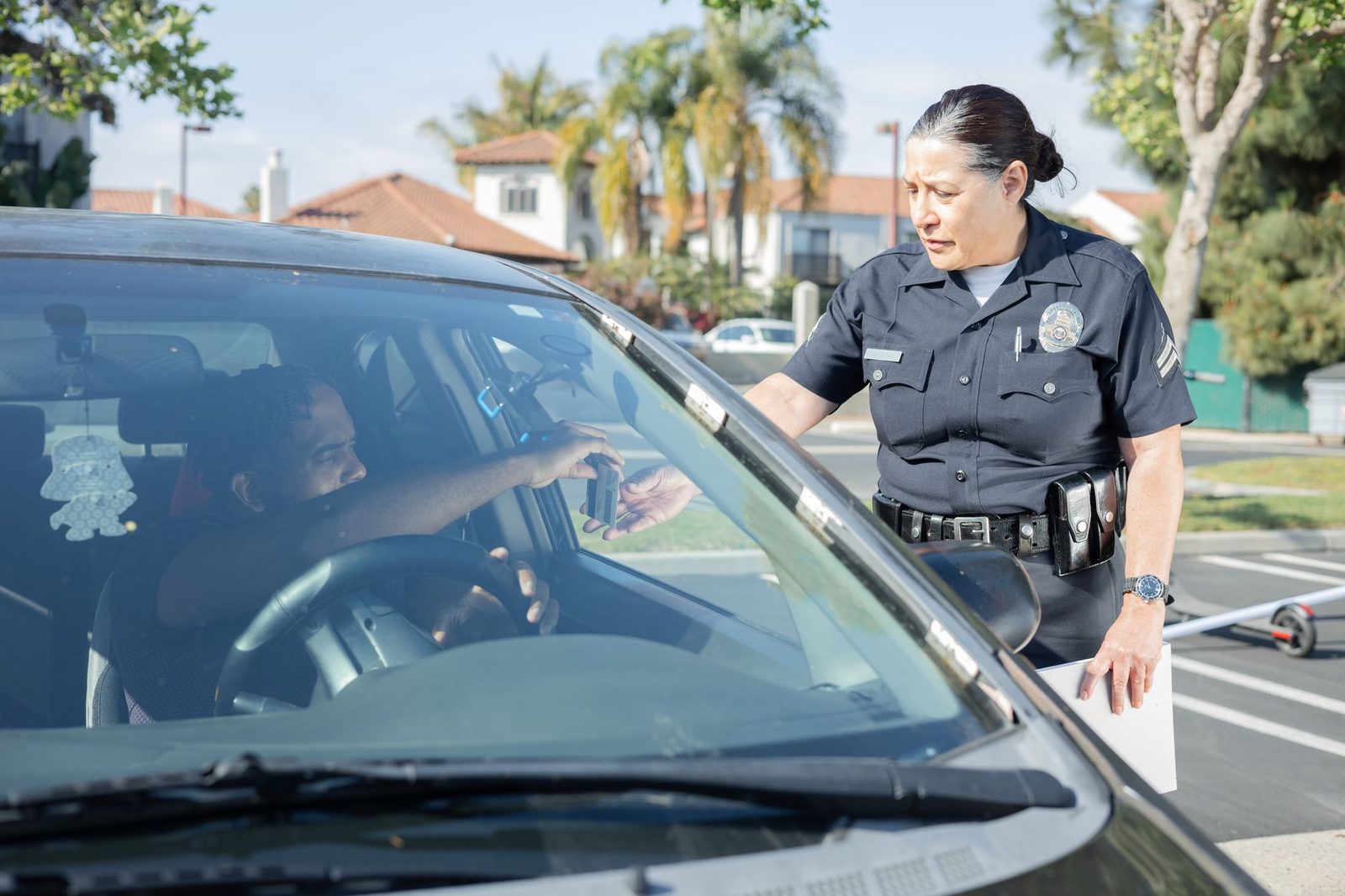
The license action runs apart from the criminal case, and it can begin at the roadside. An officer who finds a 0.08 level or a test refusal can suspend the driving privilege. Under § 322.2615, Florida Statutes, the officer takes the license and issues a 10-day temporary permit if the person is otherwise eligible. The notice of suspension is the paper to track closely.
The driver can seek a review. The hearing officer decides, by a preponderance of the evidence, whether sufficient cause exists to sustain, amend, or invalidate the suspension. The review is limited to listed issues, such as probable cause and the test result. The Florida DUI and administrative suspension laws guide from the Florida Department of Highway Safety and Motor Vehicles explains how these actions work.
Refusing a test adds its own track. Under § 316.1932, Florida Statutes, a person who can refuse must be told that a first refusal means a one-year suspension. A previous suspension or fine raises that to 18 months. Under § 316.1939, Florida Statutes, refusing a lawfully requested breath, urine or blood test may be charged as a misdemeanor only if all of these are met: the person’s driving privilege was previously suspended for a prior refusal, the person was lawfully arrested for DUI on probable cause, and the person was told the consequences of refusing before refusing. Whether the statute applies depends on the facts and applicable law. Under the statute, a refusal may be a first-degree misdemeanor only when the driving privilege was previously suspended for a prior refusal, depending on the facts and applicable law.
The license result and the criminal refusal case don’t control each other. Under the same statute, the disposition of one does not affect the other. Read the notice right away and write down every date on it.
How a Florida DUI Case Moves Through Court
A DUI case generally moves through arrest, first appearance, discovery, motions, and then a resolution or trial. Each stage has its own rules, and the timing varies from case to case.
Florida’s rules require an arrested person to appear before a judge within 24 hours of arrest, unless the person was previously released in a lawful manner. Under Fla. R. Crim. P. 3.130, the judge must state the charge, provide a copy of the complaint, and explain the right not to say anything.
Discovery comes next. Under Fla. R. Crim. P. 3.220, a defendant may file a Notice of Discovery after the charging document is filed. That notice binds both sides to the discovery rules, which reach police and investigative reports.
This is where the paperwork gets reviewed. The stop report, field sobriety notes, breath or blood records, and any video can raise questions about the stop, the roadside testing, or the equipment. Whether any of those questions matter turns on the specifics of the file.
Testimony from the license hearing has limits too. Whether testimony of this kind may be used in the criminal case depends on the facts of the case and applicable law, including whether it was timely disclosed in criminal discovery. Check your next court date on your own paperwork.
What Penalties a First-Time DUI May Carry
A first-time DUI may bring jail exposure, fines, probation, a DUI program, and possible vehicle conditions. The exact terms in any case depend on the facts and applicable law.
The same statute requires supervision. If treatment is ordered, completing it is a condition of probation, and the offender bears the reasonable costs.
Fines have caps. Fine amounts for misdemeanor offenses depend on the specific charge, the facts of the case, and applicable law. Court costs in a misdemeanor case depend on the facts of the case and applicable law, so the amount that applies to a specific case may differ.
A court may also require an ignition interlock device. Under § 316.1937, Florida Statutes, the device may be required for at least six continuous months if the person may drive. The court must order one in the situations that § 316.193 requires. An employer-owned vehicle can be driven without the device if the employer was notified and proof is kept in the vehicle. That exemption does not apply if the restricted person owns or controls the business.
Felony-only material is a separate subject.
Can a First-Time DUI Be Dismissed in Florida?
A first-time DUI can be dismissed, but dismissal is one possible outcome, not an automatic one. It may follow from problems with the evidence, the stop, or the testing. Other routes include trial, a plea to a different offense, or a pretrial program.
For how defense work on the evidence is approached in these cases, see DUI defense in Miami.
Is a First-Time DUI a Felony in Florida?
Review the charging document to see how the charge is stated. The label on your paperwork matters more than the word “first” alone.
Section 316.193 sets out the DUI offense and its penalty levels. The statute also contains felony-level penalties for certain situations. Your charge, and the statute it cites, tell you which level applies to you.
Keep felony material separate from the misdemeanor penalties above. Felony rules such as scoresheets belong to a different set of cases. If your charge is a felony, the penalty picture is different and should be reviewed on its own terms.
Not sure what your next step is?
Talk it through with our team — the first consultation is free, confidential, and carries no obligation.
How Long a DUI Stays on Your Record
A DUI case may remain in criminal history records, and whether it can be sealed or expunged depends on the facts and applicable law; an adjudication of guilt for DUI is generally a statutory bar to sealing or expunction. Sealing and expunction are separate court processes with their own rules.
For sealing, § 943.059, Florida Statutes, requires a certificate of eligibility for sealing before a petition is filed. The person must apply to the state for that certificate first.
Expunction follows a different statute. Under § 943.0585, Florida Statutes, eligibility depends on the conditions the statute sets out, and expunction may be available where no charging document was filed or where one was filed but the charge was dismissed, nolle prossed, or ended in acquittal, depending on the facts and applicable law. If an expunction order is entered, criminal justice agencies with custody must physically destroy or obliterate the record. The state still retains the record in confidential form.
Which path fits, if any, depends on how the case ends and which records are involved. For the sealing and expunction steps as their own topic, see DUI record clearing in Florida.
Talking Through Your DUI Case With Patrick David Wilson
If you were just arrested for DUI, or you’re researching for someone you care about, the paperwork can feel like a lot at once. The questions below cover the first steps.
What should I do first after a DUI arrest in Florida?
Read the notice of suspension and write down every date on it. Keep the charging papers and any court notices together.
Can I refuse a breath test in Florida?
A refusal may lead to a license suspension under § 316.1932. A misdemeanor charge under § 316.1939 requires a prior suspension for refusing a test, a lawful DUI arrest based on probable cause, and a warning about the consequences of refusing given before the refusal. Whether any of this applies depends on the facts and applicable law. Those are separate tracks.
Do I have to install an ignition interlock device?
A court may require one. The court must order one in the situations § 316.193 requires, so check your own order for whether it applies.
Patrick David Wilson is the lawyer responsible for this page. He concentrates in DUI defense and related charges from his Miami practice. The first consultation is free, confidential, and carries no obligation to continue. Call 786-761-1719 or send a message through the contact page. Bring your arrest paperwork and license notice to that conversation.
Two Processes That May Run at the Same Time
The Criminal Case
A DUI charge is filed in court and proceeds under its own schedule. Possible outcomes, penalties and defenses depend on the facts of your arrest, the evidence and the law that applies to your case.
The Driver License Action
Separate from the criminal case, the state's motor vehicle agency may take action against your driving privilege. Whether that happens, and on what timeline, depends on the facts of your stop and applicable law.
Facts That Often Matter
Details such as how the stop was made, field and chemical test procedures, your driving record and any prior matters can all affect how a case is evaluated. Gather any paperwork you received at the time of arrest.
Your Next Step
Contact the office for a free first consultation. It is confidential and comes with no obligation to continue. Patrick David Wilson can review your specific situation and explain the options that may apply.
What to Expect When You Contact Patrick David Wilson
Free First Consultation
The initial consultation is free, confidential and comes with no obligation to continue.
Criminal Defense Focus
Patrick David Wilson's practice focuses on criminal defense matters, including DUI, first-time offender and related cases across South Florida.
Review of Your Paperwork
Bring your arrest report, citations, bond paperwork and any notices from the state so your situation can be reviewed with the relevant facts.
South Florida Clients
The practice serves people from Broward County to the Florida Keys, including Miami-Dade County.
Act Early, and Be Careful What You Say
Deadlines for responding to a license action and for other steps in a DUI case may apply and can be strict. Avoid discussing your arrest on social media or with anyone other than your attorney. Check every document you receive, since its requirements depend on your own order and case.

