
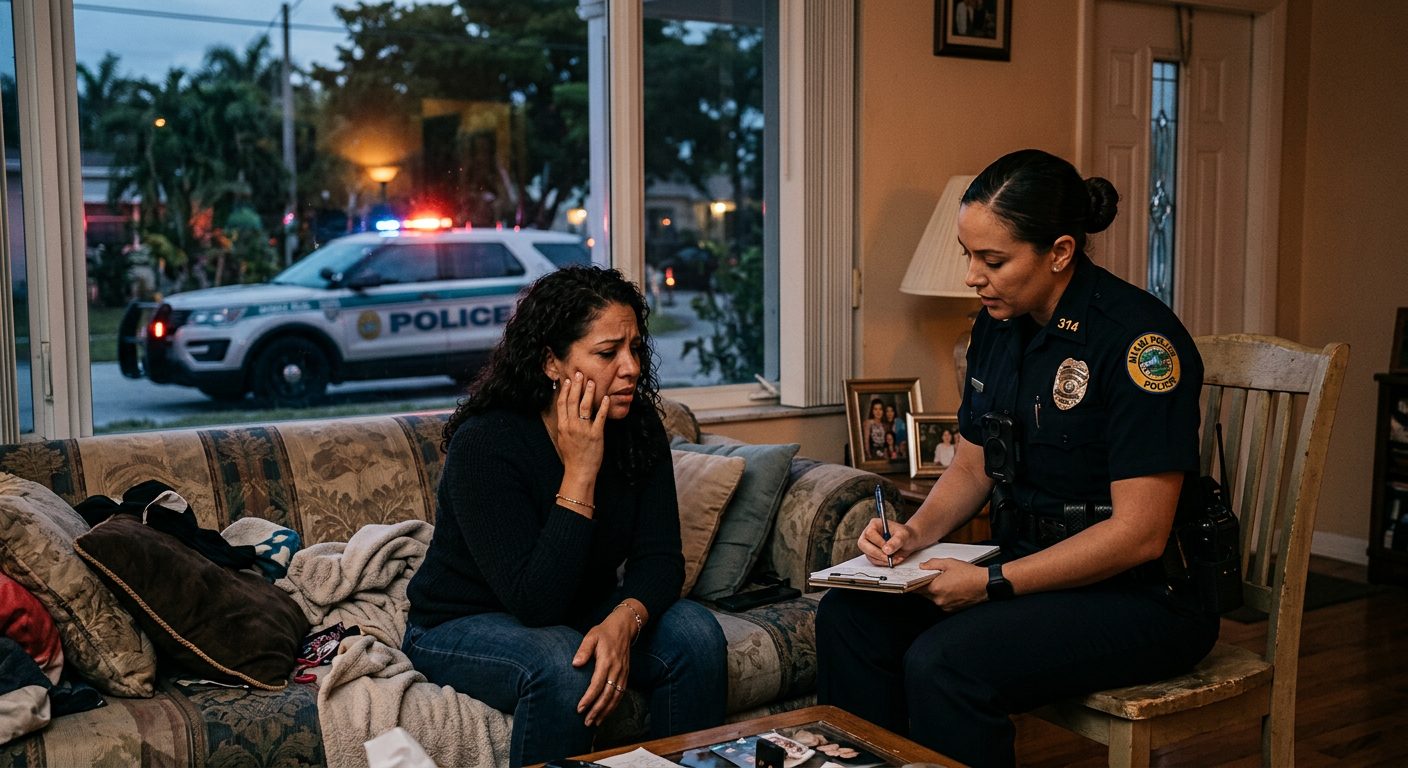
Domestic Violence Defense | Miami-Dade County
Why Domestic Violence Cases Get Dismissed in Miami
Patrick Wilson Law, PLLC focuses on criminal defense across South Florida, from Broward County to the Keys. Learn how these cases end before trial and what shapes that outcome.
By Patrick David Wilson · Published October 17, 2026
Why “Most” Cases Get Dismissed Is Harder to Pin Down Than It Sounds
Why do most domestic violence cases get dismissed? No single percentage fits every case, and a case can end early for many different reasons. This page explains the common ways these cases end in Florida.
When a case is dismissed, the State ends it before trial. That is different from an acquittal, which happens when a judge or jury finds the person not guilty after a trial. A dismissal can happen because of a legal problem, a lack of evidence, or a prosecutor’s choice to stop.
The reasons below are common patterns, not a promise about any one case. The facts of each case drive the outcome, so the same charge can end differently for two people.
One point often surprises people. Each domestic violence case depends on its own facts, so a review of the specific circumstances matters. The Miami-Dade State Attorney’s Office says so on its domestic violence page. A missing injury alone does not end a case.
If a domestic violence charge has you or someone you care about feeling stuck, we're glad to talk through what it could mean for your situation. Talk it through with our team — the first consultation is free, confidential, and carries no obligation.
The State, Not the Accuser, Decides Whether the Case Moves Forward
In Florida, the State brings domestic violence charges, so the person who complained cannot end the case just by asking. Under Fla. Stat. § 741.2901, prosecutors assigned to domestic violence cases decide whether to file, not file, or divert the charges. That decision can be made over the victim’s objection if necessary.
Sworn complaints go to the clerk of the circuit court and then to the state attorney for further proceedings, under Fla. R. Crim. P. 3.115. The prosecutor then reviews the police report, the statements, and any other evidence.
It is not the final word. Many people expect that a request to drop will end the matter. Under the statute above, that expectation does not match the law.
Evidence Problems That Lead to Dismissal
Prosecutors need evidence that supports each part of the charge. Weak proof is a common reason a case stops. Every criminal case depends on its specific facts and the evidence involved.
Common gaps include no independent witnesses, no photographs, and no medical or recorded evidence. A case built mostly on one person’s account can be hard to move forward, especially if that account changes.
Inconsistent statements matter too. A story told in the first police report, in a later interview, and in a court filing may not match. When the accounts shift, the prosecutor must decide which version the evidence supports.
Cross complaints create another problem. When both people report incidents against each other, the prosecutor has to work out who did what. That review takes time, and it can lead to dismissal.
Self-defense can also change the review. Under Fla. Stat. § 776.012, a person may use force, except deadly force, when the person reasonably believes it is necessary to defend against another’s imminent use of unlawful force. That person has no duty to retreat before using such force.
Why Witnesses Become Unavailable, and Why Some Cases Are Never Reported
Many incidents never reach a prosecutor at all. The person affected may feel afraid, financially dependent on the other person, or worried about the children. These reasons do not always show up in a police file.
Once a case is open, the State still needs witnesses. A witness who moves away, cannot be reached, or refuses to testify can leave the State without the proof it needs. That is one reason a case can end without a trial.
The State can still proceed on other evidence in some cases. That is why prosecutors look at the whole file rather than one witness.
Each case turns on its own circumstances, so these patterns are general. Someone facing a charge should not assume the same reasons apply to them.
Legal and Procedural Issues That Can End a Case
Timing rules and the way an arrest is handled can change how a case moves. The State has deadlines to act, and those deadlines can matter.
For a defendant in custody, Fla. R. Crim. P. 3.134 says the State must file formal charges within 30 days of arrest. No defendant may stay in custody beyond 40 days unless formally charged. For someone on pretrial release, the deadline is 60 days. The court can continue release for up to 30 more days if the State shows good cause.
Before a first appearance, the State Attorney’s Office must review the defendant’s history. A person arrested for domestic violence is held until brought before the court for bail. The court must consider the safety of the victim and any children.
A defense attorney reviews the record for timing questions, arrest questions, and any self-defense issues. Those points can shape how the prosecutor evaluates the evidence.
A No-Contact Order Stays in Effect Even If the Accuser Wants Contact
A no-contact order stays in force until a court changes it. The Florida Courts domestic violence legal outline explains that a court can impose a no-contact order as a condition of pretrial release.
A request to drop charges and a court order are separate matters. Only the court can change the order. If the person named in the order has contact anyway, that can lead to a new charge.
Under Fla. Stat. § 741.31, the State Attorney must decide within 30 working days whether to file criminal charges, seek a criminal contempt order, or do both. A person with one or more prior convictions for domestic violence or an injunction violation, who later violates an order against the same victim, commits a third-degree felony.
Not sure what your next step is?
Talk it through with our team — the first consultation is free, confidential, and carries no obligation.
What a Dismissal Means for Your Record and Next Steps
A dismissal ends the pending case, but it does not erase the arrest by itself. Sealing and expunction are separate court processes with their own rules.
Under Fla. Stat. § 943.0585, a person may petition to expunge a record when the charge was dismissed or nolle prosequi by the state attorney. A nolle prosequi is a prosecutor’s formal notice that the State will not go forward with the charge.
A petition must include a certificate of eligibility from the Florida Department of Law Enforcement and a sworn statement, under Fla. R. Crim. P. 3.692. The court may deny any request at its sole discretion.
Some records are never eligible. Under Fla. Stat. § 943.0584, a conviction for assault or battery of one family or household member by another is ineligible. Certain other records may seal automatically under Fla. Stat. § 943.0595, depending on the charge and how the case ended.
If a charge has been filed against you or someone you love, you are likely carrying a lot of stress right now. Every case and every record is different, so a short conversation can help you see your options. Call 786-761-1719 or send a message through our contact form. The first consultation is free, confidential, and comes with no obligation to continue.
For more on defense options, see our domestic violence defense attorney page. For the record-clearing process, see our seal and expunge criminal records page.
Can the victim drop domestic violence charges in Florida? No. The State decides whether to proceed, and the victim’s request is one factor the prosecutor may weigh.
Does a dismissed case mean the arrest disappears? Not by itself. Sealing or expunction is a separate court process with its own requirements.
Why do most domestic violence cases get dismissed? No single reason explains it. Cases end for many reasons, including evidence problems, witness availability, and timing rules.
Common Reasons a Domestic Violence Case Ends Early
Insufficient evidence
When the available evidence does not support the charge, the State may decide not to move forward.
Witness and complainant issues
Changes in what a witness recalls or reports can affect whether the State can proceed.
Problems with the arrest or filing
Procedural errors in how the case was investigated, documented or charged can lead to its dismissal.
Prosecutorial decisions
Prosecutors review each file and may decide that pursuing the charge is not warranted.
Do Not Assume a Case Will Be Dismissed
A dismissal is never automatic. Missing a court date, contacting a complainant in violation of a court order, or speaking to investigators without legal advice can change the course of a case. Speak with a lawyer before you take any step.
How Our Team Approaches Your Case
Criminal defense focus
Patrick Wilson Law, PLLC focuses on criminal defense, including domestic violence charges in Miami-Dade and Broward Counties.
Careful review of the file
We examine the police report, evidence and charging documents to identify issues that may matter to the outcome.
Support for first-time offenders
We understand what is at stake for people facing their first criminal charge, including their families, jobs and records.
Confidential, no-obligation start
Our initial consultation is free, confidential and comes with no obligation to continue.
Talk With Patrick Wilson Law About Your Domestic Violence Case
Related practice areas
- Miami Domestic Violence Defense Attorney | Patrick Wilson Law
- Domestic Violence Defense Attorney in Miami-Dade County
- How Vehicular Homicide Charges Are Sentenced in Florida

