
Sexual Battery Defense | Miami, Florida
A Rape Kit Is Not a Charge: What Happens Next in Miami
Patrick Wilson Law, PLLC focuses on criminal defense across South Florida, from Miami-Dade and Broward to the Florida Keys. Here is how evidence collection, testing and charging decisions fit together in a sexual battery case.
By Patrick David Wilson · Published October 29, 2026
A rape kit is the set of materials used to collect evidence during a sexual assault exam. In a rape kit sexual battery Florida case, the exam collects both medical findings and physical evidence, and a crime lab may test that evidence later. The exam itself does not decide whether a crime happened.
This guide explains each step, what the samples can show, and what they cannot. It is written for people who are reporting an assault, people who have been told an exam was done, and people who are accused.
What a Rape Kit and a SANE Exam Are
A rape kit is the collection of containers, swabs, and forms used in a sexual assault forensic exam. A sexual assault nurse examiner, or SANE, is the nurse who usually performs the exam and handles the kit.
The exam has two purposes. The first is medical care, such as checking for injuries and treating any risk of infection. The second is collecting physical evidence. Both happen in one visit.
Florida law defines sexual battery in specific terms. Under Fla. Stat. § 794.011, sexual battery means oral, anal, or female genital penetration by, or union with, the sexual organ of another; however, sexual battery does not include an act done for a bona fide medical purpose. It also covers the anal or female genital penetration of another by any other object. The exam is only one piece of a case. For the broader framework, see our guide to Florida sexual battery cases.
If a rape kit was collected in an investigation involving you, you don't have to make sense of the lab results alone. Call Patrick Wilson Law or leave a message, and we'll talk through what comes next. Talk it through with our team — the first consultation is free, confidential, and carries no obligation.
Who Can Receive the Exam and Where It Happens
A person who reports a sexual assault can ask for a forensic exam. The exam is usually done at a hospital, a sexual assault center, or another designated facility.
The timing matters.
The exam and the decision to report to police are separate choices.
What Happens During the Exam, Step by Step
The examiner starts with intake. This includes a medical history and a discussion of what the exam involves. The examiner asks for consent before each step.
Next, the examiner takes a history of the incident. This records what the person reports about what happened and any recent activity relevant to the exam. The record is written in the person’s own account.
The physical exam checks for injuries such as bruising, abrasions, or tears. A clear exam does not mean nothing happened, and an injury does not prove who did it.
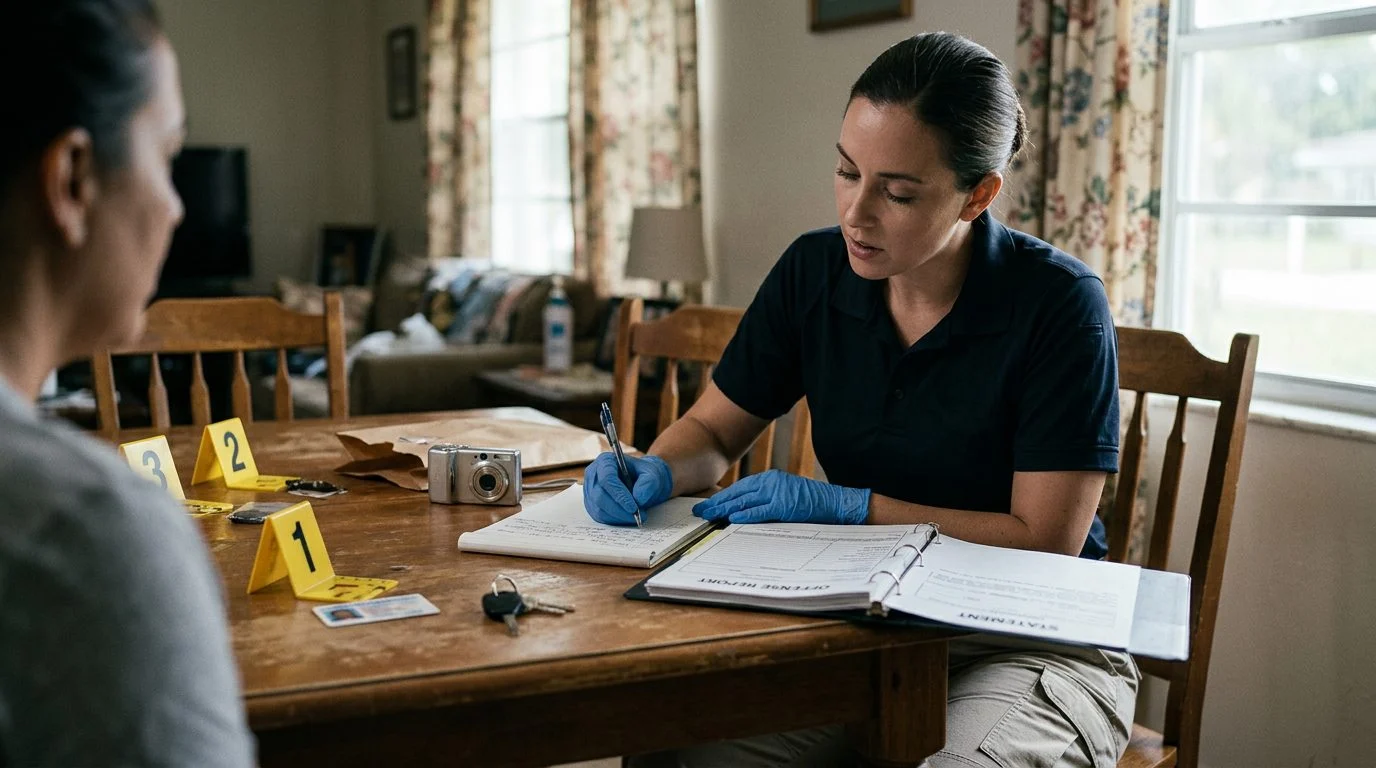
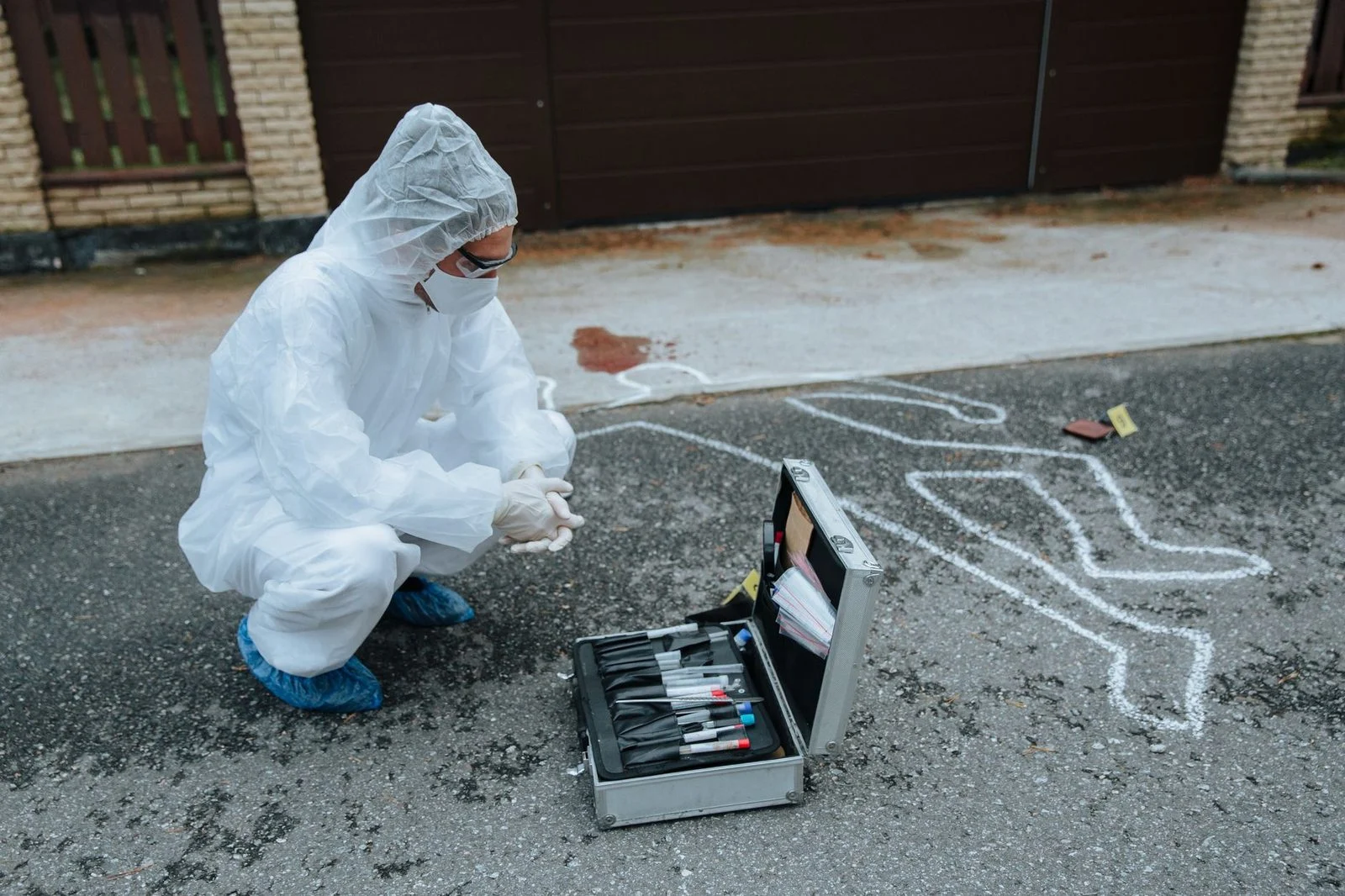
Evidence collection follows. Examiners may take swabs, collect hair and clothing, scrape under fingernails, and take photographs. Each item is sealed, labeled, and packaged. Blood or urine may be collected for toxicology when it is relevant. The exam records become part of the medical record and the evidence trail.
How Samples Are Tracked, Tested, and Sent to the Lab
Chain of custody is the paper trail for each sealed item. Each handoff is logged, so a court can trace who had the kit and when.
The Florida Department of Law Enforcement (FDLE) runs a sexual assault kit tracking program. The program covers medical facilities, law enforcement agencies, and state crime laboratories.
In general terms, the lab first checks items for biological material. If material is present, analysts develop a DNA profile. That profile can then be compared with known profiles. The National Institute of Justice explains that profiles from sexual assault kits can be compared through CODIS, the national DNA database. Testing time varies with each case, the lab’s workload, and whether a comparison profile exists.
What Lab Results Can Show and What They Cannot
A DNA result can show that biological material from a particular person was on an item. It cannot, by itself, show when that material got there or how.
A negative or inconclusive result does not prove that no sexual battery happened. Lack of DNA is not the same as lack of an assault.
Medical findings have the same limit. Redness or bruising is not specific to sexual battery. It can have other causes, and it does not by itself show a lack of consent.
Consent is a legal question. Florida defines consent as “intelligent, knowing, and voluntary consent and does not include coerced submission,” under Fla. Stat. § 794.011. The same statute says consent is not deemed to mean a failure to resist physically. So the question is decided from the full set of facts, not from the exam alone.
Kits, Records, and Why Timing Matters
Storage, testing timing, and records decide what evidence exists in a case. A kit that is never tested, or tested late, changes what a court can review.
Florida’s rule on postconviction DNA testing addresses a different stage. Under Fla. R. Crim. P. 3.853, a motion for DNA testing may be filed or considered at any time after the judgment and sentence become final. The rule also says the motion must describe the physical evidence and, if known, where it is now.
The core records in a sexual battery case are the examiner’s report, the medical record, the chain-of-custody logs, and the lab reports. A defense lawyer reads each one for completeness and timing.
Not sure what your next step is?
Talk it through with our team — the first consultation is free, confidential, and carries no obligation.
How a Florida Defense Lawyer Reviews Exam and Lab Evidence
Patrick Wilson Law, PLLC is a Miami criminal defense firm. Patrick David Wilson is the responsible lawyer for this page. The firm’s lawyers, including Patrick David Wilson and Sahara Fonseca, review exam and lab evidence in sexual battery matters.
The review asks practical questions. Was each item sealed, labeled, and logged? Do the dates line up? Do the lab conclusions go beyond what the testing shows? Do other explanations fit the findings?
Discovery is part of this review. Under Fla. R. Crim. P. 3.220, the prosecutor must disclose, as soon as practicable after the charging document is filed, any material information within the state’s possession or control that tends to negate the guilt of the defendant as to any offense charged. The court may also bar the state from using material it did not disclose.
Is a rape kit the same as a charge?
No. A rape kit is evidence collection. A criminal charge is a separate step the state takes.
Does a rape kit prove sexual battery happened?
No. Exam and lab results show what was found. They do not, by themselves, show whether consent was given.
Can a kit be tested years later?
Yes, in some cases.
Talk With Patrick Wilson Law About Your Sexual Battery Case
If a rape kit was collected in an investigation involving you, a family member, or a partner, you may be waiting on lab results you don’t yet understand. Call Patrick Wilson Law, PLLC in Miami at 786-761-1719 or leave a message. We can talk through the exam records, the lab timeline, and what they may mean for your case. The first consultation is free, confidential, and carries no obligation to continue. You can also reach our team here.
Speak with a lawyer before giving a statement
Police may ask you to explain what happened. Talking to a criminal defense lawyer before you give a formal statement can help you understand your options.
Key points to understand
Evidence collection is separate
A rape kit gathers physical evidence. It is not a criminal charge. Charging decisions are made by the state after investigation.
Results have limits
Exam and lab results show what was found. They do not, on their own, show whether consent was given.
Testing can take time
Lab timelines vary, and results may come well after the exam. A case can develop long after the initial report.
Your defense starts early
Early review of the reports, the timeline and the evidence can shape how a sexual battery case is handled from the beginning.
How Patrick Wilson Law approaches these cases
Criminal defense focus
The firm focuses on criminal defense, including sexual battery, domestic violence, DUI and related charges.
Careful review of evidence
We examine exam reports, lab documentation, police records and timelines to understand what the evidence does and does not show.
Lawyers you can speak with
Our lawyers include Patrick David Wilson and Sahara Fonseca, and our team supports each client throughout the process.
Free, confidential first consultation
Your initial consultation is free, confidential and comes with no obligation to continue.
Serving South Florida
We represent people in Miami, Miami-Dade County, Broward County, Fort Lauderdale, Kendall, Hialeah, Miami Beach, Homestead and the Florida Keys.

