
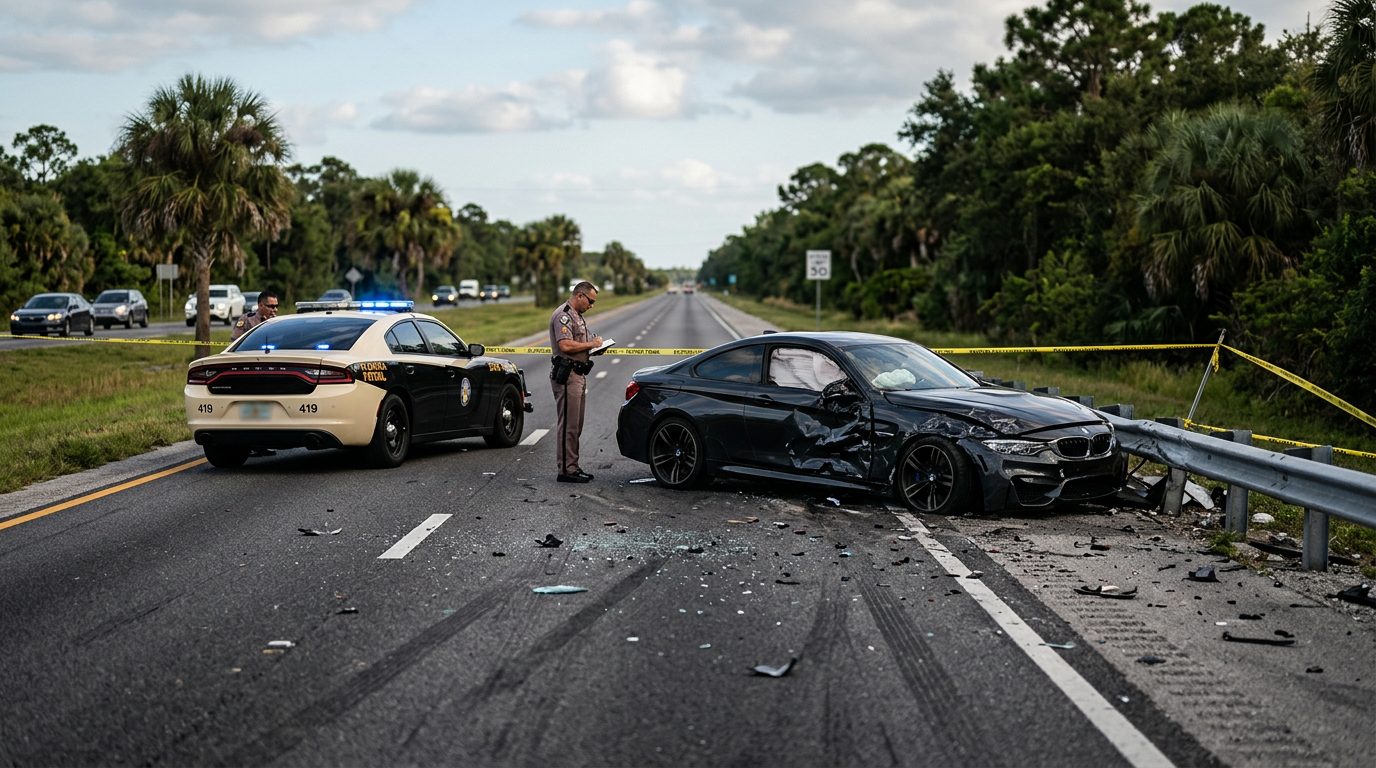
Vehicular Homicide and Super Speeder Defense | Miami
Charged After a Fatal Crash at Over 100 mph? Talk to a Miami Defense Lawyer
Patrick Wilson Law, PLLC defends Florida drivers facing fatal crash charges tied to excessive speed, from Miami-Dade and Broward to the Florida Keys. Patrick David Wilson is responsible for this page.
By Patrick David Wilson · Published October 25, 2026
A fatal crash involving speeds over 100 mph can lead to two separate Florida charges: dangerous excessive speeding and vehicular homicide. They are not the same. Patrick Wilson Law is based in Miami and serves clients across South Florida.
What Florida’s Super Speeder Law Covers
Florida’s super speeder law makes certain extreme speeding a crime, not just a ticket. Under Florida’s dangerous excessive speeding statute, a person commits dangerous excessive speeding if he or she operates a motor vehicle in excess of the speed limit by 50 mph or more, or at 100 mph or more in a manner that threatens the safety of other persons or property or interferes with the operation of any vehicle. The first is driving 50 mph or more over the speed limit. The second is driving 100 mph or more in a way that threatens others’ safety or interferes with other vehicles.
Ordinary speeding works differently. § 316.183 sets speed limits and requires reasonable speed. A violation of that section is a noncriminal traffic infraction.
A driver can face this charge even when no one is hurt. This page is written for drivers facing the charge and for family members trying to understand what the paperwork means.
If a fatal crash over 100 mph has left you or someone you love facing charges, you don't have to sort it out alone. Our team offers a free, confidential first consultation. Talk it through with our team — the first consultation is free, confidential, and carries no obligation.
Super Speeder Charge Versus a Vehicular Homicide Charge
When a fatal crash over 100 mph leads to charges, the speed count and the homicide count are separate questions. Vehicular homicide means killing a human being, or killing an unborn child by any injury to the mother, by operating a motor vehicle in a reckless manner likely to cause death or great bodily harm. Florida’s vehicular homicide statute sets that rule. The state must prove a death, the vehicle operation, and recklessness of that kind.
Speeding can be one piece of that proof. A court looks at the whole sequence, including road conditions, how the vehicle was driven, and what happened before impact.
Overlap happens. One fatal crash can lead to a speeding charge, a homicide charge, or both. Arrest paperwork may list several counts. Our page on speeding crash death charges covers the homicide side in more depth.
Penalties and Jail Exposure for Speed-Related Fatal Crashes
Yes, a dangerous excessive speeding conviction can lead to jail. A vehicular homicide conviction carries felony exposure.
For a first dangerous excessive speeding conviction, the statute allows up to 30 days in jail, a $500 fine, or both. A second or later conviction allows up to 90 days, a $1,000 fine, or both. A second conviction within 5 years of a prior one also requires license revocation of at least 180 days and up to 1 year.
It becomes a first-degree felony if the driver knew or should have known a crash occurred and did not give information and render aid under § 316.062. Felony sentences follow § 775.082. Fines follow § 775.083, which caps fines for first- and second-degree felonies at $10,000 unless a statute specifically authorizes a higher amount or the fine is double the pecuniary gain derived from the offense by the offender or double the pecuniary loss suffered by the victim.
Leaving the scene of a crash that causes death is a first-degree felony under § 316.027 when the driver willfully violates the duty to stop and remain at the scene, and it carries a 4-year mandatory minimum prison term. The driver’s license is revoked for at least 3 years.
The exact penalty depends on the charges filed and the facts of the crash.
How Speed Is Proven and Challenged in Fatal Crash Cases
Speed is usually proven with police measurements, vehicle data, and crash evidence. Each source can be tested.
Florida law sets rules for radar. Under § 316.1906, radar speed evidence is inadmissible unless the officer meets certain conditions. Under Fla. Stat. § 316.1906(2), evidence of a vehicle’s speed measured by a radar speed-measuring device is inadmissible in a proceeding over an alleged speeding violation unless the officer has satisfactorily completed the radar training course established by the Criminal Justice Standards and Training Commission pursuant to s. 943.17(1)(b), has made an independent visual determination that the vehicle is operating in excess of the applicable speed limit, and meets the other conditions listed in that subsection. Fla. Stat. § 316.1906 The radar must also run with audio Doppler engaged.
They also need an independent calibration test at least every 12 months. The posted limit matters too. Speed must be reasonable and prudent for conditions.
Our team reviews how each measurement was taken and the timing of the data. We also check whether the sequence of events supports the state’s version.
What to Expect: Steps and Timeline From Arrest to Arraignment
After a fatal crash, the case usually moves from the scene to charges, booking, and a first court date. Timing varies by case and county.
- Scene and investigation. Police collect evidence and write the crash report. A law enforcement agency must send information to the Department within 24 hours after a traffic fatality, under § 322.27.
- Charging decision. Prosecutors choose what to file. The list can include speeding, homicide, and leaving-the-scene counts.
- First appearance. The court reviews the charges and the terms of release.
- Arraignment. The court reads the charge and asks for a plea. Under Fla. R. Crim. P. 3.160, a represented defendant’s lawyer may file a written not guilty plea at or before arraignment.
In the first days, write down what you remember while it’s fresh. Keep records of the vehicle, insurance, and court dates. Send police and insurer questions to a lawyer first.
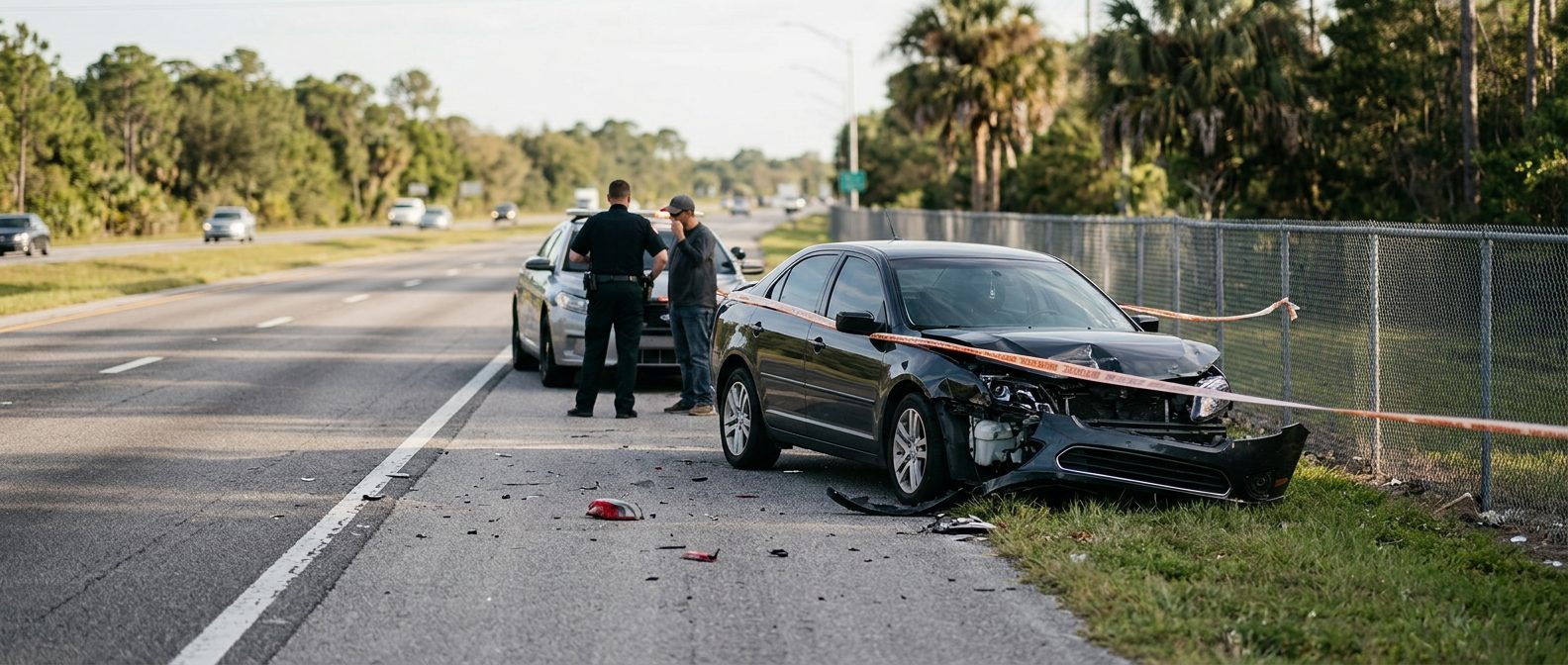
The Civil Side: Insurance Claims and Florida’s 51% Rule
Vehicular homicide law also allows a civil damages claim for the deaths it covers, under § 782.071.
Insurance claims can run alongside the criminal case. Speak with a lawyer before giving a recorded statement to any insurer.
Not sure what your next step is?
Talk it through with our team — the first consultation is free, confidential, and carries no obligation.
Why Drivers and Families Work With Patrick Wilson Law
Patrick Wilson Law focuses its practice on criminal defense in Miami and across South Florida. The firm handles DUI, domestic violence, sexual battery, and vehicular homicide matters, along with leaving-the-scene and super speeder charges.
Patrick David Wilson is the responsible lawyer for this page. Sahara Fonseca is also a lawyer at the firm. Our team includes assistants and office staff who help keep case files organized.
The firm is based in Miami and serves clients from Miami-Dade and Broward counties to the Florida Keys. For a fatal crash case, our lawyers review the state’s speed evidence, the crash report, and the sequence of events, based on the facts of each case.
Common Questions About Fatal Crash Speeding Charges
Most readers want to know whether speeding alone means jail, license loss, or a homicide charge.
Can you go to jail for going 100 mph in Florida?
Yes. A first dangerous excessive speeding conviction allows up to 30 days in jail, a $500 fine, or both.
Does it ever get over 100 in Florida?
Florida’s statute uses 100 mph as a threshold for this offense. Each speed in a case is decided by the evidence used to measure it.
What are the consequences of a hit and run charge in Florida?
Leaving the scene of a crash that causes death is a first-degree felony under § 316.027. A person who willfully violates s. 316.027 by leaving the scene of a crash that causes a death faces a first-degree felony and a 4-year mandatory minimum prison term, which the court may depart from on the defendant’s motion only if it finds that a factor, consideration, or circumstance clearly demonstrates that imposing the minimum would constitute or result in an injustice, unless the violation was committed while driving under the influence.
Will my license be affected?
It can be. Under § 322.27, the state may suspend a license without a preliminary hearing based on its records for listed grounds, such as a licensee who has committed an offense requiring mandatory revocation upon conviction, is incompetent to drive, or has permitted fraudulent use of a license, and also on a court’s direction after conviction or under the point system for convictions.
Do I have to talk to police?
Under § 316.062, a driver involved in a crash that results in injury, death, or damage to an attended vehicle or other property must give his or her name, address, and vehicle registration number to the people involved and to any police officer at the scene or investigating the crash, must show a license or permit to drive upon request and if available, and must render reasonable assistance to anyone injured. That same section also provides that a driver’s obligation to report or give information to an officer preparing a written crash report is not to be read as reaching information that would violate the driver’s privilege against self-incrimination. Talk with a lawyer before answering detailed questions.
Talk Through Your Situation With Patrick Wilson Law
Charges after a fatal crash over 100 mph can arrive fast and feel overwhelming. Arrest paperwork and court dates can be confusing, and you can talk with a lawyer about them.
Bring the crash report, any court papers, and your timeline of events if you have them. Call 786-761-1719 or leave us a message to talk through the facts of your case. Our first consultation is free, confidential, and carries no obligation to continue.
How We Examine a Speed-Related Fatal Crash Case
The Speed Evidence
We look closely at how the speed was measured, including radar or lidar readings, vehicle event data, dashcam footage and witness accounts, and whether those sources agree.
The Crash Reconstruction
We review the scene, vehicle damage, roadway conditions and timing to test the state's version of how the collision happened.
The Timeline
We build a detailed sequence of events from the moments before the crash through every police and investigative step that followed.
The Charges Themselves
We assess whether each charge fits the evidence, since the offense category and the facts can differ significantly from one case to another.
Before You Speak About the Crash
Avoid posting about the crash, guessing aloud about your speed, or discussing details with anyone other than your lawyer. Early, careful steps can matter to your defense.
Charges We Defend in Speed-Related Fatal Crash Cases
Vehicular Homicide
Charges arising from a death caused by the operation of a motor vehicle, where the state alleges reckless or unsafe driving.
Super Speeder Charges
Dangerous excessive speeding cases in which the state alleges a driver traveled at or above the statutory speed threshold.
Leaving the Scene
Allegations that a driver left the scene of a crash involving injury or death, which can be charged alongside a fatal crash case.
DUI-Related Crashes
Fatal crash cases in which the state also alleges impairment, requiring a close review of testing, timing and officer procedure.

