
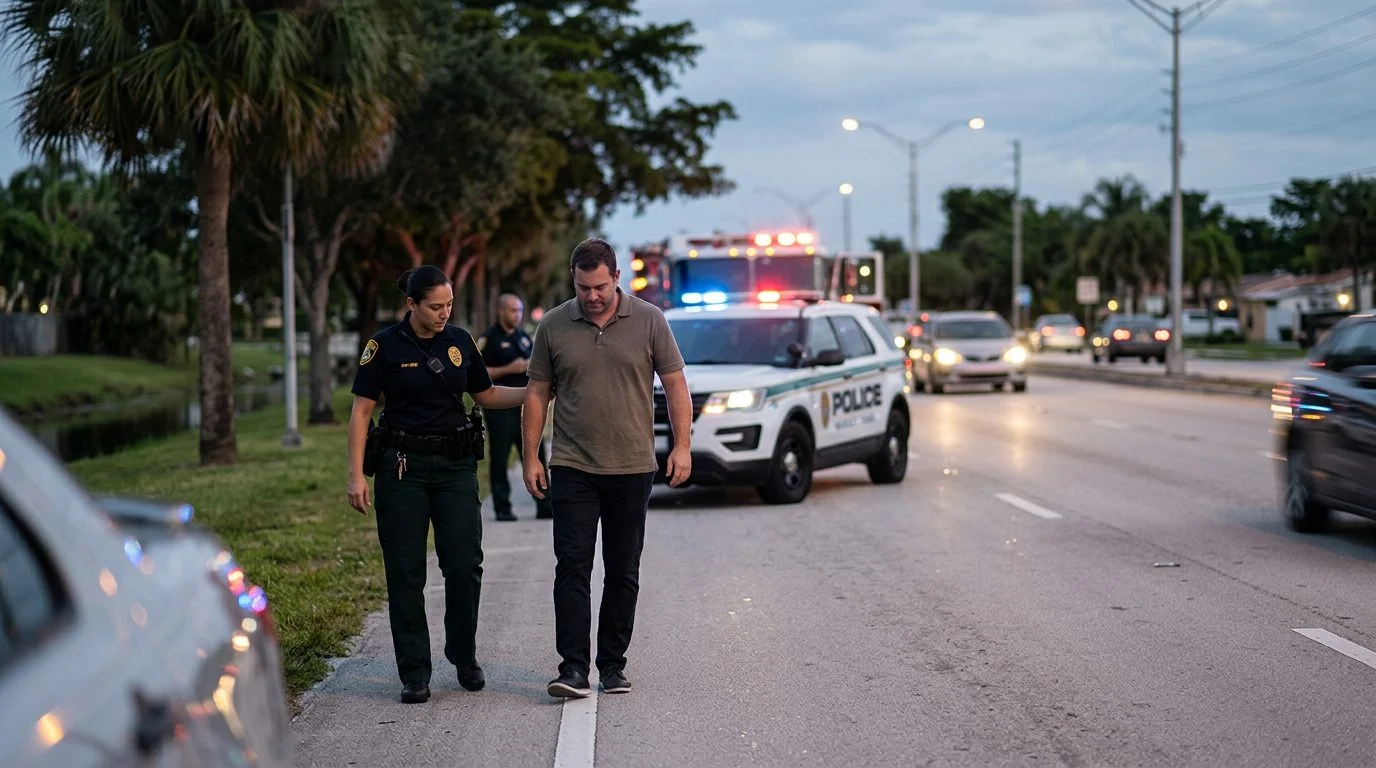
Vehicular Homicide Defense | Miami-Dade County
After a Fatal Car Accident in Miami, Knowing Your Next Steps Matters
The decisions made in the first hours can shape a criminal case. Here is how to protect yourself, your rights and your future.
By Patrick David Wilson · Published November 20, 2026
If you’re asking what to do after a fatal car accident Miami residents face, the first answer is simple. Stay at the scene, call 911, and make sure everyone who is hurt gets medical help. This page walks through the steps that often follow a crash, one at a time. It is general information, not advice about your own facts.
What the First 48 Hours Mean After a Fatal Crash in Miami-Dade
The first 48 hours matter because much of the evidence is gathered then. Police measure the road, photograph vehicles, and speak with witnesses. Hospital staff may draw blood. Insurers may call. Each step can become part of the record.
The offense most often discussed after a fatal crash is vehicular homicide (causing a death by reckless driving). Under Fla. Stat. § 782.071, it is “the killing of a human being… caused by the operation of a motor vehicle by another in a reckless manner likely to cause the death of, or great bodily harm to, another.”
The statute can raise the charge to a first-degree felony. Under Fla. Stat. § 782.071, vehicular homicide is a first-degree felony when, at the time of the accident, the person knew, or should have known, that the accident occurred and failed to give information and render aid as required by s. 316.062, or if the person has a prior conviction under this section, s. 316.193(3)(c)3., s. 327.35(3)(a)3.c., or s. 782.072. For the first-degree felony under Fla. Stat. § 782.071, the law does not require proof that the person knew the accident resulted in injury or death.
Whether any part of this applies to your case depends on the facts. Use this page to understand the steps, then get advice on your own situation.
If you were driving in a crash that killed someone, or a family member was, you don't have to face police questions and an investigation alone. Our team offers a free, confidential first consultation. Talk it through with our team — the first consultation is free, confidential, and carries no obligation.
Stay at the Scene, Call 911, and Get Medical Attention
Stay at the scene, call 911, and get medical help for everyone hurt, including yourself. Florida law requires a driver in a crash that results in death to stop immediately at the scene, or as close as possible.
Felony liability under § 782.071(1)(b) requires specific elements: the driver knew, or should have known, at the time of the accident that it occurred, and failed to give information and render aid as required by s. 316.062. Leaving the scene is a serious crime, not a small mistake.
The driver must also stay at the scene until he or she has fulfilled the requirements of s. 316.062, which include giving a name, address, and vehicle registration number. The driver must also stay at the scene until he or she has fulfilled the requirements of s. 316.062, which include showing a license or permit to drive, if available, upon request. The driver must give reasonable help to anyone hurt, including carrying that person, or arranging the carrying, to a physician or hospital if treatment is apparently necessary or if the injured person requests it.
If you’re injured, tell the first officer or medical worker. Ask for an ambulance if you cannot safely get help yourself. The Florida Department of Highway Safety and Motor Vehicles explains the duty to remain at crash scenes in its hit-and-run guidance.
Dealing With Law Enforcement at the Scene
Be polite, answer basic questions about who you are, and say clearly that you want a lawyer before you discuss how the crash happened. Saying this calmly is the right way to protect yourself.
Your legal duty to report or give crash information to an officer making a written crash report does not extend to information that would violate your privilege against self-incrimination (your right not to give evidence against yourself).
Officers can act on what they see. Under Fla. Stat. § 316.645, an officer may arrest a driver when, based on personal investigation, the officer has reasonable and probable grounds to believe the driver committed an offense in connection with the crash.
Keep your answers short and accurate. Do not guess about speed, distance, or timing. A guess can look wrong later when measurements or video show something else. Statements at the scene and later at a police station can both be used in the investigation.
Hospital Blood Draws and Testing After a Fatal Crash
Officers typically base an impairment investigation on what they observe at the scene.
Only certain people may draw blood at an officer’s request. The list includes physicians, certified paramedics, registered nurses, licensed practical nurses, other personnel authorized by a hospital to draw blood, and certain licensed clinical laboratory staff. Blood drawn for medical treatment can also be used. The statute says a failure to request a blood draw does not affect whether a test taken for medical purposes is admissible. Fla. Stat. § 316.1933 reads: “Notwithstanding any provision of law pertaining to the confidentiality of hospital records or other medical records, if a health care provider, who is providing medical care in a health care facility to a person injured in a motor vehicle crash, becomes aware, as a result of any blood test performed in the course of that medical treatment, that the person’s blood-alcohol level meets or exceeds the blood-alcohol level specified in s. 316.193(1)(b), the health care provider may notify any law enforcement officer or law enforcement agency.”
Impairment for a DUI charge means the person is “affected to the extent that the person’s normal faculties are impaired.” That language appears in Fla. Stat. § 316.193. Under Fla. Stat. § 316.1933(4), alcohol-content information obtained under that section shall be released to a defense attorney on request in connection with a s. 316.193 violation.
Ask hospital staff what tests they are ordering and why. Do not assume results are final or complete until a lawyer has reviewed them. The North Miami Police DUI guidance describes blood and urine requests after serious-injury and fatal crashes.
Document the Scene and Exchange Information Without Admitting Fault
Exchange basic information with the other driver and any passengers. Document the scene only if you can do so safely. Florida law already requires some of this exchange. Under Fla. Stat. § 316.070, the officer at a crash that must be reported tells each driver to report to all other parties suffering injury or property damage as an apparent result of the crash the name and address of the vehicle’s owner and driver, the vehicle’s license number, and the name of the liability carrier. Under Fla. Stat. § 316.066, the crash report must list the names of the insurance companies for the respective parties involved in the crash.
Useful documentation includes photos of vehicle positions, road markings, traffic signals, weather, and damage. Write notes about what you saw as soon as you can. Collect witness names and contact details if witnesses are still there.
Exchanging information is not the same as discussing fault. Showing concern for a grieving family is human. Saying “it was my fault” is different. Avoid admissions, even small ones, at the scene and in texts afterward.
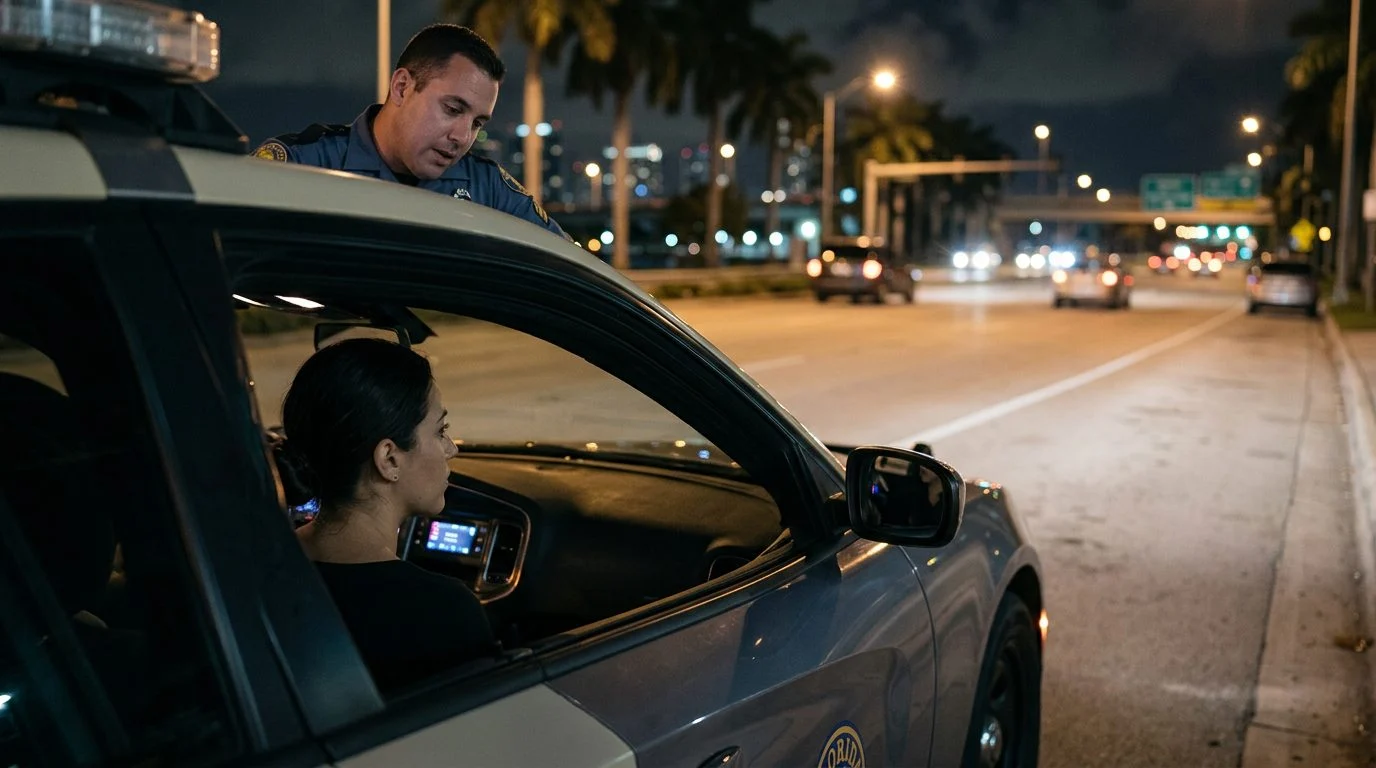
What Not to Do After a Fatal Car Accident
Knowing what to do after a fatal car accident Miami drivers can count on is only half the picture. Avoiding these mistakes matters just as much in the first days.
- Don’t leave the scene. Leaving after a death is a serious felony, as described above.
- Don’t discuss fault with the other family, witnesses, or insurers before speaking with a lawyer.
- Don’t post online. Skip posts about the crash, the victim, or your version of events. Don’t delete existing posts without legal advice, either.
- Don’t repair, sell, or scrap the vehicle or its parts. The vehicle and its data may be important evidence.
- Don’t give written or recorded statements to insurers or others before getting legal advice.
Not sure what your next step is?
Talk it through with our team — the first consultation is free, confidential, and carries no obligation.
How the Police Report and Investigation Work
Police usually prepare a crash report, and a fatal crash often leads to a more detailed investigation. A Florida Traffic Crash Report, Long Form, must be completed for a crash that results in death or personal injury, that shows any indication of complaints of pain or discomfort by any of the parties or passengers involved in the crash, or that involves a commercial motor vehicle. It must be submitted within 10 days after the investigation is completed, under Fla. Stat. § 316.066. Personal information in a crash report is confidential for 60 days after the report is filed.
Investigators often document the scene, take measurements and photos, review vehicle damage, interview witnesses, and rebuild the sequence of events. This takes time. A report may not be final right away, so don’t treat early notes as the full story.
Write down which agency responded and the report number. Ask the officer for the number at the scene if one is given. Keep copies of any paperwork you receive.
Preserving Vehicle Data and Other Evidence
Some vehicles record data about speed, braking, and throttle just before a crash. That data can help investigators reconstruct what happened. Find out which agency has the vehicle. Police or a tow yard may hold it, and it is a key piece of evidence.
Ask whoever has access to the vehicle to leave it unrepaired and unsold until a lawyer has advised on it. Don’t reset, wipe, or change the vehicle yourself. Keep phone records, receipts, and records of the trip.
Write down what you ate, drank, or took before driving. Share those notes privately with your lawyer, not with insurers or online.
Frequently Asked Questions After a Fatal Crash
What not to do after a car accident?
Don’t leave the scene, admit fault, post about the crash online, or give recorded statements to insurers before getting legal advice.
Do you need a police report after a crash in Florida?
A report is usually prepared when police respond to a crash that causes death or injury. Ask the officer for the report number if one is given.
Can I talk to police without a lawyer?
You can say clearly that you want a lawyer before answering questions about how the crash happened. You still must give the basic information the law requires.
Is a fatal crash a criminal case?
Vehicular homicide involves the killing of a human being, or the killing of an unborn child by any injury to the mother, caused by the operation of a motor vehicle by another in a reckless manner likely to cause the death of, or great bodily harm to, another. Charges turn on the specific facts. The vehicular homicide defense page explains the offense in more detail.
Talk With Patrick David Wilson About Your Fatal Crash
If you were driving in a crash that killed someone, or a family member was, you may now be facing police questions, a hospital blood test, or a criminal investigation. That is a lot to handle while you’re grieving or recovering from injury.
Patrick David Wilson is the responsible lawyer for this page. Patrick Wilson Law, PLLC is based in Miami and handles vehicular homicide matters for people across Miami-Dade, Broward County, and South Florida. The first consultation is free, confidential, and carries no obligation to continue.
To talk through what happened, call 786-761-1719 or leave a message through the contact page.
How Patrick Wilson Law Can Help
Criminal defense focus
Patrick Wilson Law focuses on criminal defense, including vehicular homicide and leaving the scene of an accident cases, for clients across South Florida.
Support for first-time and professional clients
Our team works with first-time offenders and licensed professionals whose careers and reputations may be at stake.
Confidential first conversation
The first consultation is free, confidential and without obligation to continue.
Warning: Avoid These Mistakes
Do not leave the scene, admit fault, post about the crash on social media, or give a recorded statement to an insurer or investigator before speaking with a lawyer. Your words can be used in a criminal case.
Steps to Take After a Deadly Crash
Stay at the scene
Leaving the scene of a crash involving a death or injury can lead to separate criminal charges. Remain until law enforcement releases you, unless you need emergency care.
Get medical help
Call 911 for anyone injured. Reporting injuries and cooperating with emergency responders is important for everyone involved.
Limit what you say
Be polite and factual with officers, but avoid speculating about what happened. Politely decline to give detailed statements until you have legal guidance.
Call a criminal defense lawyer
Early legal guidance can help you understand the charges that may apply and how to respond to investigators and prosecutors.

