
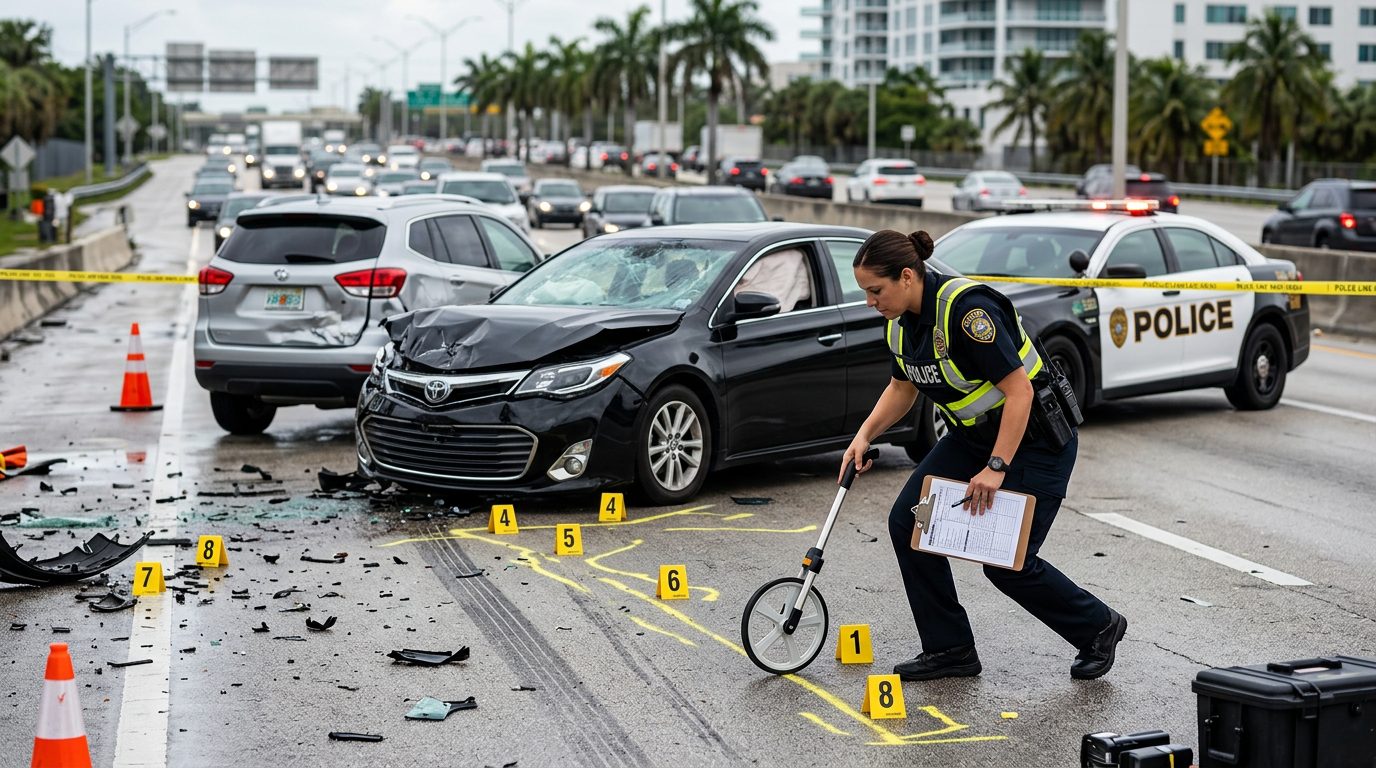
Miami Vehicular Homicide Defense: License Risks
A Vehicular Homicide Charge Can Put Your Driver License at Risk. Address It Early.
Patrick Wilson Law, PLLC focuses on criminal defense in Miami and across South Florida, including vehicular homicide cases. Learn how license issues can develop alongside a criminal case, and what to ask about your options.
By Patrick David Wilson · Published October 22, 2026
Yes. A vehicular homicide charge in Florida can affect your driver license, and a conviction carries its own license consequences. The license side runs on a separate track from the criminal case. This page explains both tracks for drivers in Miami-Dade, Broward County, and the Florida Keys, plus the deadlines that matter most.
Yes, Your License Can Be Affected
A license after vehicular homicide charge in Florida can be at risk before any trial begins. Florida defines vehicular homicide as killing a human being, or killing an unborn child by any injury to the mother, by operating a motor vehicle in a reckless manner likely to cause death or great bodily harm (Florida Statutes, § 782.071). The state can act on a license based on its records, without a preliminary hearing, for certain offenses that require mandatory revocation upon conviction (Florida Statutes, § 322.27). Law enforcement must also send information about a traffic fatality to the state within 24 hours.
So don’t assume the criminal case is the only thing to watch. A conviction adds another layer. The state must revoke a license once it receives the record of a conviction for any felony in which a motor vehicle is used (Florida Statutes, § 322.26). That rule means the criminal outcome and the license outcome are linked, but they are not the same process.
If a fatal crash has left you with a license notice or a court date, we can review those deadlines with you in a free, confidential first consultation. Talk it through with our team — the first consultation is free, confidential, and carries no obligation.
Administrative Suspension vs. Court-Ordered Sanctions
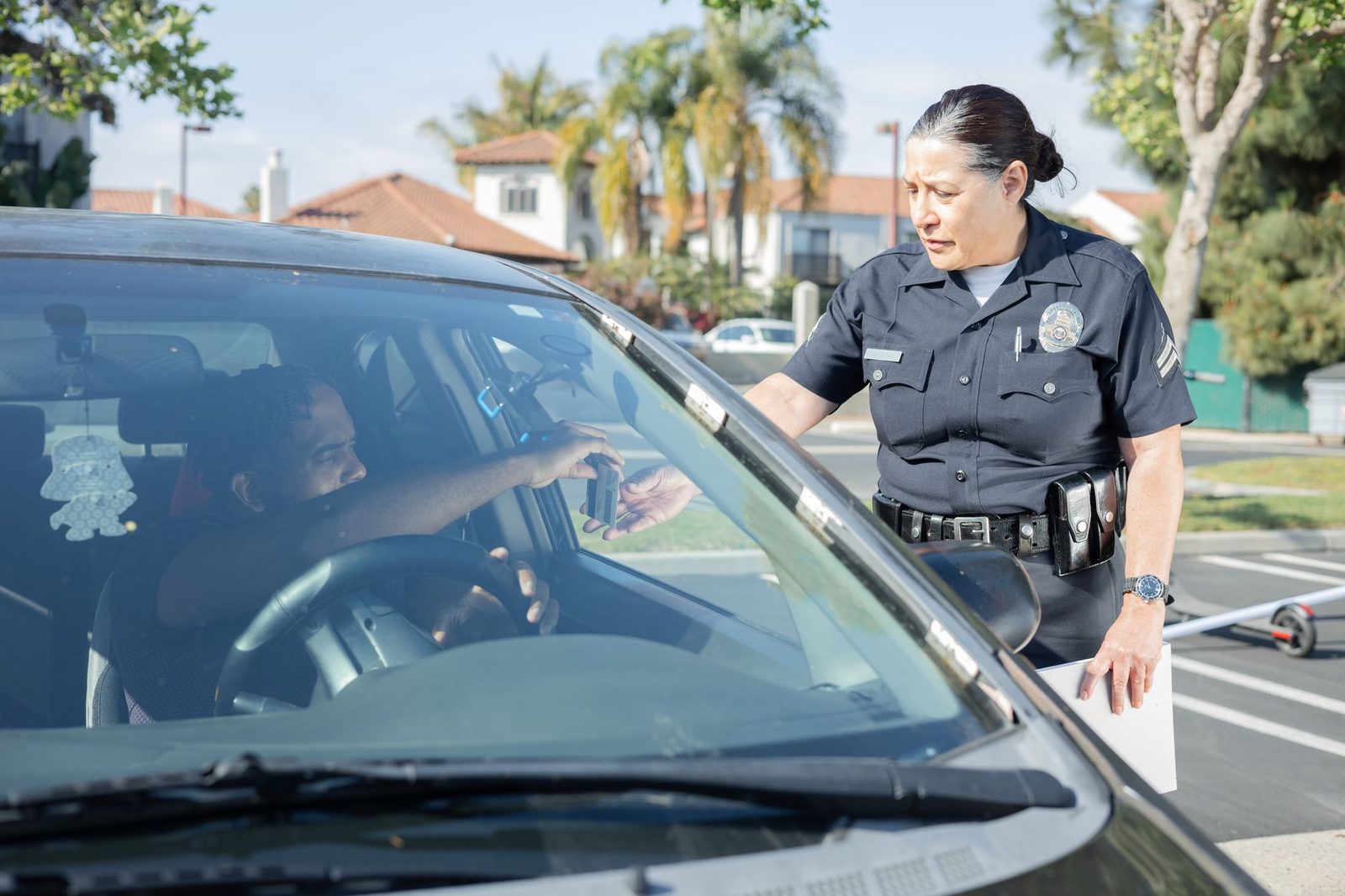
Administrative action comes from the state’s licensing agency. Court sanctions come from a judge at sentencing. The Florida Department of Highway Safety and Motor Vehicles handles the first track through its own process, separate from the criminal court.
The first track has specific triggers. Under Florida Statutes, § 322.2615, an officer must suspend the driving privilege of a driver with a blood-alcohol or breath-alcohol level of 0.08 or higher, or a driver who refused a breath, blood, or urine test. The officer issues a 10-day temporary permit if the driver is otherwise eligible. The suspension period starts on the date the notice is issued. This track applies to those alcohol and refusal facts. It does not attach to every vehicular homicide charge.
Here is how the same crash can produce both kinds of action. Two drivers are in the same fatal crash. One had a 0.08 reading at the roadside. The other did not. The first may face an alcohol-based suspension right away, plus the criminal case. The second may face only the criminal case, and a conviction could bring a revocation later. Which track applies depends on the facts.
The second track is court-based. A driver who violates the stop-and-remain rule after a crash that results in death has his or her driver license revoked for at least 3 years (Florida Statutes, § 316.027). The two tracks can run on different clocks, so one does not wait for the other.
Hearing Deadlines You Cannot Afford to Miss
A suspension notice starts a clock, so act on it fast. Under Florida Statutes, § 322.251, notice is complete 20 days after the state mails it or sends it by e-mail. A failure to receive the order does not stay its effective date. If the letter never reaches you, the suspension still takes effect on its stated date.
You can ask for a hearing. Under Florida Statutes, § 322.271, the department must hold the hearing as early as practicable and within not more than 30 days after receipt of your request, except for a person whose license is revoked as a habitual traffic offender or who is ineligible to be granted the privilege of driving on a limited or restricted basis.
Review after a final order works differently. Final orders can be reviewed only by a writ of certiorari from the circuit court in the county where you live, within the time set by the Florida Rules of Appellate Procedure (Florida Statutes, § 322.31).
Here is a simple habit. Write down the date each notice arrives and put the deadline on your calendar that same day. Keep every notice, court paper, and mailed or e-mailed letter in one folder. Asking for a hearing protects your right to contest the action. It does not by itself confirm any result.
How a Commercial Driver License Changes the Stakes
A commercial driver license (CDL) can be lost faster than a standard license. Under Florida Statutes, § 322.64, an officer must disqualify a CDL holder from commercial driving after an arrest, while operating or in actual physical control of a motor vehicle, for an unlawful blood-alcohol or breath-alcohol level, or after a refused test. The officer issues a 10-day temporary permit for noncommercial vehicles only, if the driver is otherwise eligible.
The criminal case does not control that result. Commercial driving can stop right away, even while the criminal case is still open.
Other offenses carry their own limits. Under Florida Statutes, § 322.61, two serious traffic violations within 3 years, arising in separate incidents committed in a commercial motor vehicle, including a traffic control violation tied to a crash that results in death, bring a 60-day disqualification. For a CDL holder convicted of such violations in a noncommercial vehicle, the 60-day disqualification applies only if the convictions result in suspension, revocation, or cancellation of the driving privilege. Under Florida Statutes, § 322.61, two violations specified in subsection (3), such as leaving the scene of a crash, arising in separate incidents and committed while operating a commercial motor vehicle, bring permanent disqualification from commercial driving. For a CDL holder, the same applies to violations committed while operating any motor vehicle.
Why Licensed Professionals Face Added Consequences
Your professional license is separate from your driver license. A criminal charge can bring a second review from the board that licenses you. The Florida Department of Health’s professional boards describes discipline of health-care licenses. That includes emergency action for serious violations involving crimes, and a right to a hearing before final agency action.
A driver license action and a board action are two different files. Each can move on its own schedule. Your profession’s rules decide whether a charge or conviction must be reported, and those rules differ by field. Keep the charge papers, court dates, and every license notice in one file. That makes it easier to answer each track on time.
Talk Through Your License Questions Before the Deadlines Pass
If a fatal crash has left you with a suspension notice, a court date, and a license your job depends on, you do not have to sort out both tracks alone. Patrick David Wilson is the responsible lawyer for this page, and Patrick Wilson Law, PLLC in Miami can review your notices, deadlines, and how the criminal and license tracks fit together. Call 786-761-1719, leave a message, or use our contact page. The first consultation is free, confidential, and carries no obligation to continue.
Frequently Asked Questions
Can I lose my driver license after a vehicular homicide charge in Florida?
Yes, a license can be affected before, during, or after the criminal case. The license track can run separately, so watch both.
Does a conviction revoke my license?
Under Fla. Stat. § 322.26, the department shall forthwith revoke the license or driving privilege of a person upon receiving a record of that person’s conviction of any felony in the commission of which a motor vehicle is used. Revocation follows the conviction record.
How long do I have to request a hearing?
Act on the notice right away, since the deadlines run from its date. Once the state gets your request, the hearing must be held as early as practicable, within not more than 30 days after receipt, under Florida Statutes, § 322.271, except for a person whose license is revoked as a habitual traffic offender or who is ineligible for a limited or restricted driving privilege. Revocation under § 322.26 follows the department’s receipt of a record of such person’s conviction.
Can a vehicular homicide charge affect a CDL?
It can. Under Fla. Stat. § 322.64, a law enforcement officer shall, on behalf of the department, disqualify from operating any commercial motor vehicle a person who, while operating or in actual physical control of a commercial motor vehicle, is arrested for a violation of s. 316.193 relating to unlawful blood-alcohol level or breath-alcohol level, or who has refused to submit to a breath, urine, or blood test authorized by s. 322.63 or s. 316.1932.
How We Approach License Risk in a Vehicular Homicide Case
Review the Whole Picture
We look at the criminal charge, the driving record, and any administrative license action together so nothing is overlooked.
Watch Both Timelines
License proceedings can move on a separate track from the criminal case, so we track both at the same time.
Plan for the Driver License
We discuss how each step in the case may affect your ability to drive for work, school, and family obligations.
Clear Communication
Our team explains the process in plain language and keeps you informed at each stage.
Do Not Wait to Ask About Your License
A license problem can arise before, during, or after the criminal case. Speak with a criminal defense lawyer as soon as possible so that both the charge and your driving privilege are addressed.
Common License Concerns After a Vehicular Homicide Charge
Administrative License Actions
A license may be affected through a separate administrative process, which can run apart from the criminal court case.
Convictions and Driving Privileges
Questions about how a conviction may affect your driving privilege are best reviewed against the specific charge and your driving history.
Work and Family Obligations
Losing the ability to drive can disrupt employment and daily life. We help you weigh these practical effects when planning your defense.
Talk With Patrick Wilson Law About Your Vehicular Homicide Case
Related practice areas
- Vehicular Homicide Defense Attorney in South Florida: Charges, Penalties and How the Defense Is Built
- Blood Test After Fatal Crash Florida: Consent Rules

