
Vehicular Homicide Defense | Miami, Florida
Charged After a Pedestrian Fatality? Build Your Defense From the First Call.
Patrick Wilson Law, PLLC, based in Miami, defends drivers facing vehicular homicide charges from pedestrian fatal crashes across Miami-Dade, Broward County and the Florida Keys.
By Patrick David Wilson · Published October 22, 2026
A driver charged after a pedestrian or bicyclist dies is often charged with vehicular homicide. Florida law requires the State to prove more than a crash. It must prove the driver operated a vehicle in a reckless manner likely to cause death or great bodily harm. This guide explains how a pedestrian fatal crash vehicular homicide charge works, how the crash is rebuilt, and how a defense is built. Patrick Wilson Law, PLLC is a Miami criminal defense firm that handles these cases across South Florida.
What a Pedestrian or Cyclist Vehicular Homicide Charge Means in Florida
Vehicular homicide is a felony. It applies when a driver’s reckless operation of a vehicle causes a death. Florida’s vehicular homicide statute describes it as killing a person through the operation of a motor vehicle in a reckless manner likely to cause death or great bodily harm.
Recklessness is the key point. A crash alone is not enough. Ordinary carelessness is not enough either. Florida’s reckless driving penalties define reckless driving as driving in willful or wanton disregard for the safety of persons or property. The homicide statute uses its own reckless-manner standard, so the State must prove that standard for the death count.
Florida’s crash involving death statute defines a “vulnerable road user” to include pedestrians.
This page is for drivers charged or under investigation after a walker or cyclist died. It is also for the family members who help them decide what comes next.
If a pedestrian or cyclist died in a crash you were involved in, you don't have to face the charge alone; call Patrick Wilson Law for a free, confidential consultation. Talk it through with our team — the first consultation is free, confidential, and carries no obligation.
Related Charges That Often Appear in the Same Case
Other charges often appear with a vehicular homicide count. Which ones apply depends on what happened before, during, and after the crash.
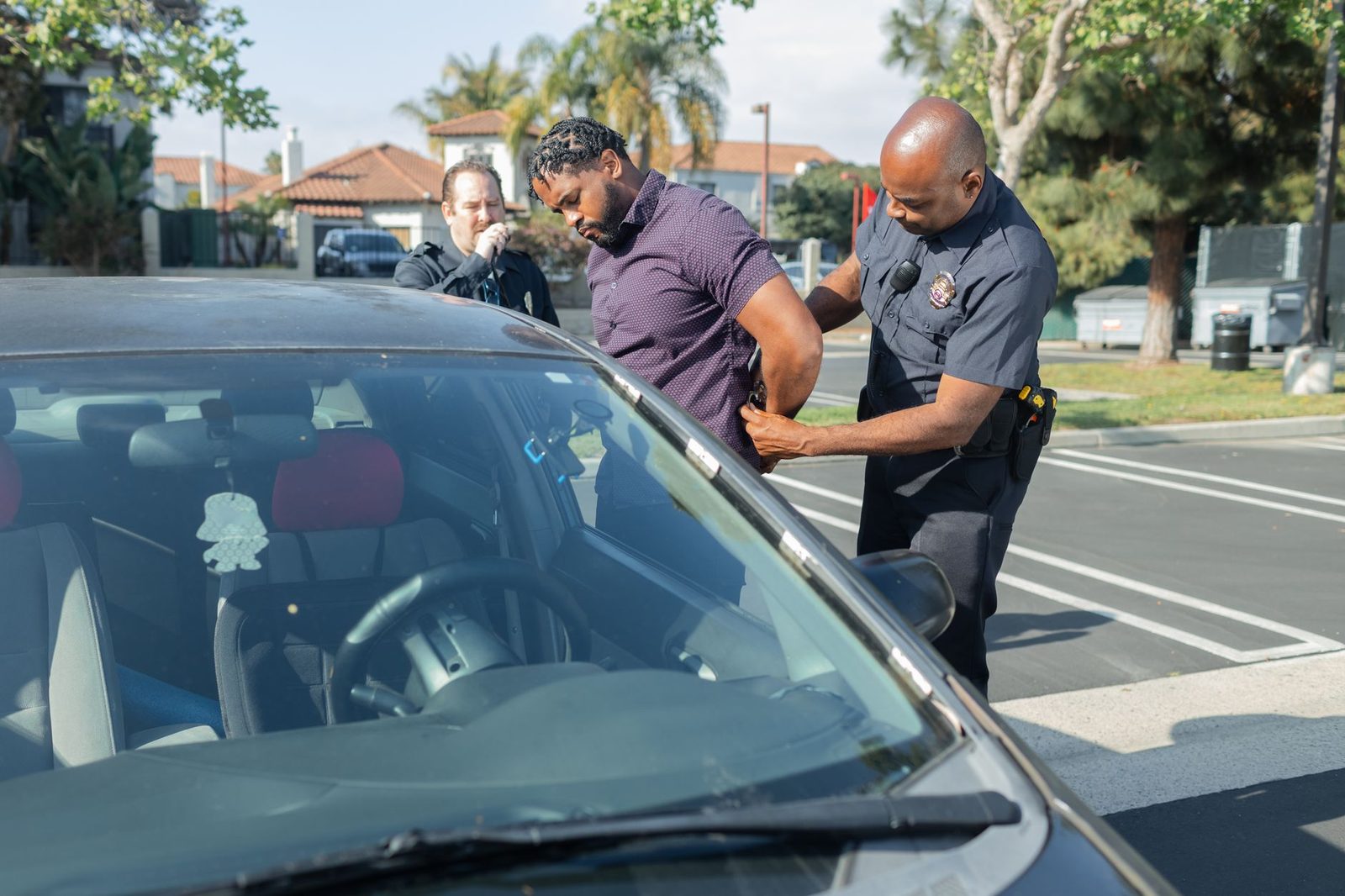
- Leaving the scene. Under the crash statute, a driver who willfully fails to remain at a fatal crash scene commits a first-degree felony. That law also carries a four-year mandatory minimum for a willful violation. Under the homicide statute, the charge rises to a first-degree felony when the driver knew or should have known of the crash and did not give information and render aid under § 316.062. For more, see our leaving the scene of a crash page.
- Impairment. A DUI-related count may be filed when impairment is alleged. After a death or serious injury, Florida’s fatal-crash blood test rule requires an officer with probable cause to believe that a motor vehicle driven by a person under the influence has caused the death or serious bodily injury of a human being to require that driver to submit to a blood test. The officer may use reasonable force if needed.
- Reckless driving. Reckless driving that causes serious bodily injury is a third-degree felony under the reckless driving statute.
Charges can be added, reduced, or dropped as the investigation develops. The first charging paper is a starting point, not the final picture.
How the Crash Is Reconstructed and What Evidence Matters
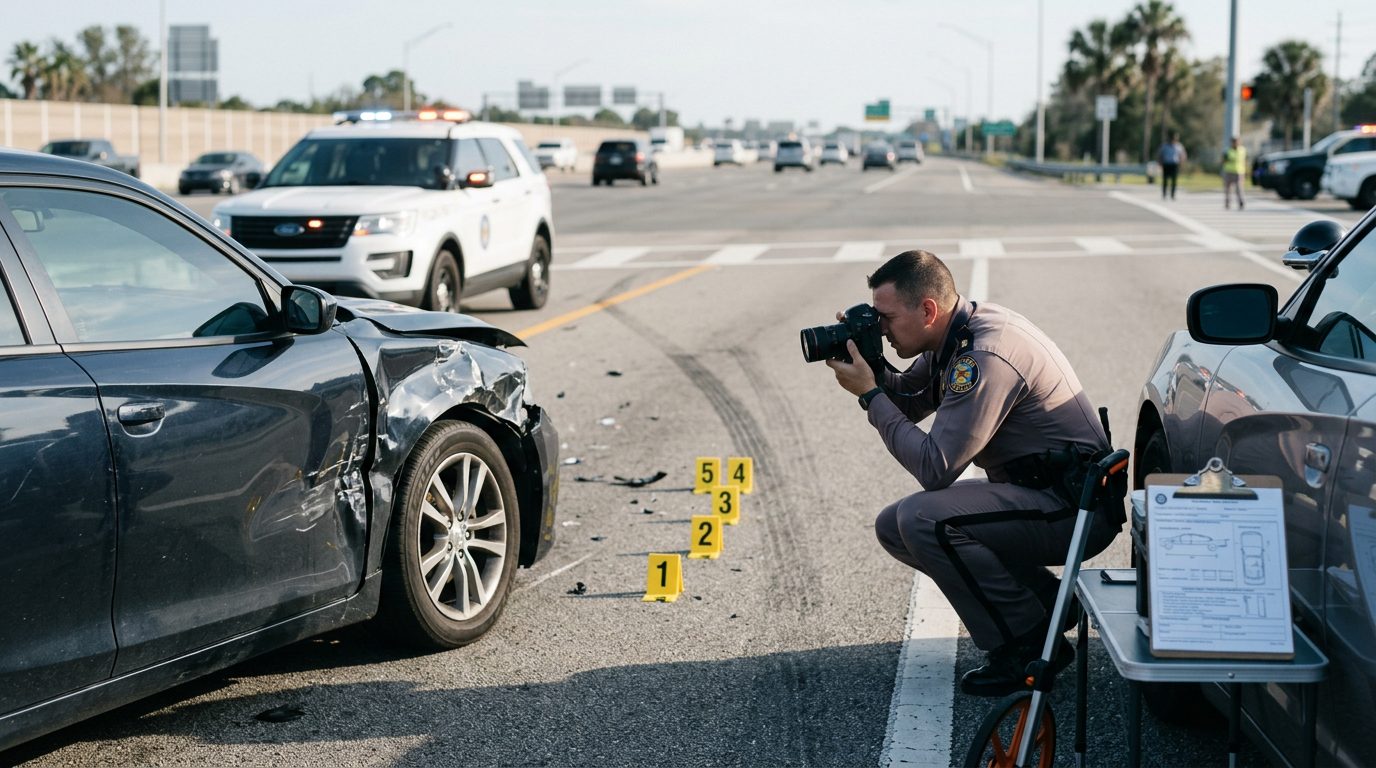
A crash reconstruction uses physical, digital, and human evidence. It estimates what the driver and the pedestrian or cyclist did in the seconds before impact. Key sources include:
- Scene measurements. Skid marks, debris fields, final rest positions, and roadway measurements help estimate speed and the point of impact.
- Vehicle data. An event data recorder, often called the “black box,” can store speed and braking information. Damage patterns on both the vehicle and the victim’s gear also matter.
- Video. Traffic cameras, dashcams, business surveillance, and phone footage can show the sequence. Timestamps must be verified before anyone relies on them.
- Roadway conditions. Lighting, sight lines, signal timing, crosswalk markings, bike lane placement, and weather all affect what the driver could see.
- Witnesses and toxicology. Witness accounts are tested against the physical evidence. Toxicology results for both the driver and the victim are read in context.
Each source has limits. The reconstruction is only as strong as its assumptions.
How the Defense Is Built in a Fatal Pedestrian or Bicycle Case
The defense tests whether the State can prove recklessness and causation. It also checks every assumption behind the reconstruction.
- Recklessness versus negligence. The defense asks whether the driver had a realistic chance to see and react. Speed, visibility, and the perception-reaction window are central.
- The victim’s conduct. A pedestrian who entered the road outside a crosswalk, or a cyclist riding without lights at night, may bear on causation. The facts decide how much weight this carries.
- Reconstruction assumptions. Speed calculations and the method for placing the vehicle and the victim can be challenged.
- The driver’s statements. Any statement to police is reviewed. Florida’s pretrial motion rule allows a motion to suppress statements obtained unlawfully.
- Timeline gaps. Phone activity and vehicle data help build a timeline. That timeline can answer claims of distraction or impairment.
Common mistakes make these cases harder. Many drivers give a recorded statement at the scene before speaking with counsel. Others post about the crash online, which can hand the State material it did not have.
What to Expect: Step-by-Step From Investigation to Resolution
Most cases move through the same stages. The steps can overlap.
- Investigation. Officers work the scene, may hold the vehicle, and request statements. You do not have to answer questions before speaking with counsel.
- First appearance. Under Florida’s first appearance rule, an arrested person must see a judge within 24 hours of arrest. The judge must advise the defendant that he or she is not required to say anything.
- Discovery. Under Florida’s discovery rule, the term “statement” includes police and investigative reports. The defense reviews those reports, video, data downloads, and the State’s witness reports line by line.
- Pretrial motions. The defense may challenge the charge, the evidence, or statements through motions. Our pretrial motion rule requires that defenses other than not guilty be raised by motion.
- Resolution. Plea discussions may occur. Defense counsel must advise a client of all plea offers under Florida’s plea rule. Each case is different, so no path can be predicted.
- Trial preparation. If the case does not resolve, the defense prepares for jury selection and presents the reconstruction at trial.
Why Drivers Work With Patrick Wilson Law
Patrick Wilson Law, PLLC is a criminal defense firm based in Miami. Patrick David Wilson is the responsible lawyer for this page. The firm’s lawyers include Patrick David Wilson and Sahara Fonseca.
The firm focuses on criminal defense across Miami-Dade County, Broward County, Fort Lauderdale, Hialeah, Kendall, Miami Beach, Homestead, and the Florida Keys. Its practice areas include vehicular homicide, DUI, leaving the scene, domestic violence, sexual battery, and white collar crime. The firm focuses on first-time offenders and licensed professionals, whose careers can depend on how a fatal-crash charge is resolved.
Our team reviews each case on its own facts. The first consultation is free, confidential, and carries no obligation to continue.
Not sure what your next step is?
Talk it through with our team — the first consultation is free, confidential, and carries no obligation.
Frequently Asked Questions About Pedestrian and Cyclist Fatal Crash Charges
Can I be charged if the pedestrian or cyclist was at fault?
Fault is one factor. Every crash case turns on its own facts.
Is vehicular homicide always a felony?
Yes, Florida’s statute makes vehicular homicide a felony. The degree depends on the facts, and felony classes are set under Florida’s felony classification statute.
Should I speak with police after a fatal crash?
Speak with a lawyer before giving any recorded statement. At first appearance, a judge must advise you that you are not required to say anything.
Can charges be dropped?
Counts can be reduced or dismissed as the evidence develops. No result can be promised in any case.
What should I bring to a consultation?
Bring the crash report or citation, any court or police paperwork, and a written account of events. Write the account soon, before details fade.
Does a fatal crash give the family a civil claim?
Florida’s vehicular homicide statute gives a right to bring a civil damages claim for these deaths. Civil and criminal matters proceed separately.

Talk With Patrick Wilson About Your Crash and the Charge
If a pedestrian or cyclist died in a crash you were involved in, and the investigation or charging decision is still ahead, you can get answers now. Call 786-761-1719 or leave us a message to request a free, confidential consultation with Patrick Wilson Law.
How Patrick Wilson Law approaches a pedestrian crash case
Confidential from the start
Your first consultation is free, confidential and comes with no obligation to continue.
Evidence-focused review
We look closely at the crash scene, vehicle data, witness statements, police reports and the timeline of events.
Clear communication
We explain the charge, the process and your options in plain language so you can make informed decisions.
Support for your career and family
We understand how a serious charge affects your job, your license and the people who depend on you.
Speak with a lawyer before giving any statement
Investigators may contact you soon after a crash. Anything you say can be used in the case. Call before you answer questions about what happened.
Key issues in pedestrian fatal crash cases
Felony charge exposure
A vehicular homicide charge is a serious felony. Understanding the charge and the possible consequences is the first step in planning a defense.
Crash reconstruction evidence
Speed, lighting, roadway design, signal timing and vehicle data can all shape how a crash is understood. These details require careful review.
Conduct of all parties
The actions of the driver, the pedestrian and any other road users are examined in context, based on the facts of each case.
Statements and records
Police statements, body-camera footage, 911 recordings and medical records can all matter. We review them early to protect your position.

