
Vehicular Homicide Defense | Miami, Miami-Dade and Broward
Charged With Vehicular Homicide While Driving for a Rideshare App?
Patrick Wilson Law defends rideshare drivers across South Florida, from Broward County to the Keys, after fatal crashes. Your first consultation is free, confidential and comes with no obligation to continue.
By Patrick David Wilson · Published October 24, 2026
A rideshare or delivery driver faces a vehicular homicide charge in Florida when the State says reckless driving caused someone’s death. The offense is a second-degree felony, and some cases are charged at a higher level. This page explains the rideshare driver vehicular homicide charge in Florida, what prosecutors must prove, the penalties, and what usually happens next.
Patrick Wilson Law is a Miami criminal defense firm. It focuses on DUI, domestic violence, sexual battery and traffic homicide charges across Miami-Dade, Broward and the Florida Keys.
What a Vehicular Homicide Charge Means for a Rideshare or Delivery Driver
A vehicular homicide charge is a criminal case about how a driver operated a vehicle. Florida defines the offense as a killing caused by another person’s operation of a motor vehicle in a reckless manner likely to cause death or great bodily harm (Fla. Stat. § 782.071).
The State files this charge in a criminal case. A civil claim for damages is separate. The same statute says a right of action for civil damages exists for all deaths it describes, so both can arise from one crash (§ 782.071).
App work adds questions that other drivers don’t face. The charge can arise when the driver was on a trip or delivery, or when the app was off. The crash facts decide the case, and the app’s timing is one of the first facts to pin down.
This page is for two readers. One is the driver who has been arrested or is under investigation. The other is the family member trying to understand what comes next.
If a fatal crash happened while you were working an app, you don't have to sort out the charges alone, and we're ready to talk through your facts. Talk it through with our team — the first consultation is free, confidential, and carries no obligation.
How Florida Defines Vehicular Homicide and What Penalties Apply
Vehicular homicide is generally a second-degree felony in Florida, but it is a first-degree felony in certain listed circumstances. The fine limit for a second-degree felony is $10,000 under § 775.083, unless a higher amount equal to double the pecuniary gain derived from the offense by the offender or double the pecuniary loss suffered by the victim applies, or a statute specifically authorizes a higher amount.
The first is when the driver knew, or should have known, the crash happened and did not give information and render aid as the law requires. The statute says the driver does not have to have known someone was hurt or killed (§ 782.071). A prior conviction is one circumstance that makes vehicular homicide a first-degree felony. Under § 782.071, vehicular homicide is a first-degree felony, punishable as provided in s. 775.082, s. 775.083, or s. 775.084, if the person has a prior conviction under this section, s. 316.193(3)(c)3., s. 327.35(3)(a)3.c., or s. 782.072.
The court may also order 120 hours of community service in a trauma center or hospital (§ 782.071).
Intoxication is a separate charge. A death caused by an impaired driver is DUI manslaughter, a second-degree felony with a mandatory minimum prison term of 4 years, under § 316.193. Vehicular homicide turns on recklessness, so a driver can face it with no alcohol or drug involvement.
What the State Must Prove, and Where Defenses Are Built
The State must prove recklessness, not only that a crash happened or that someone died. Reckless driving under Florida law means driving “in willful or wanton disregard for the safety of persons or property,” and fleeing a law enforcement officer in a motor vehicle is also reckless driving per se (§ 316.192).
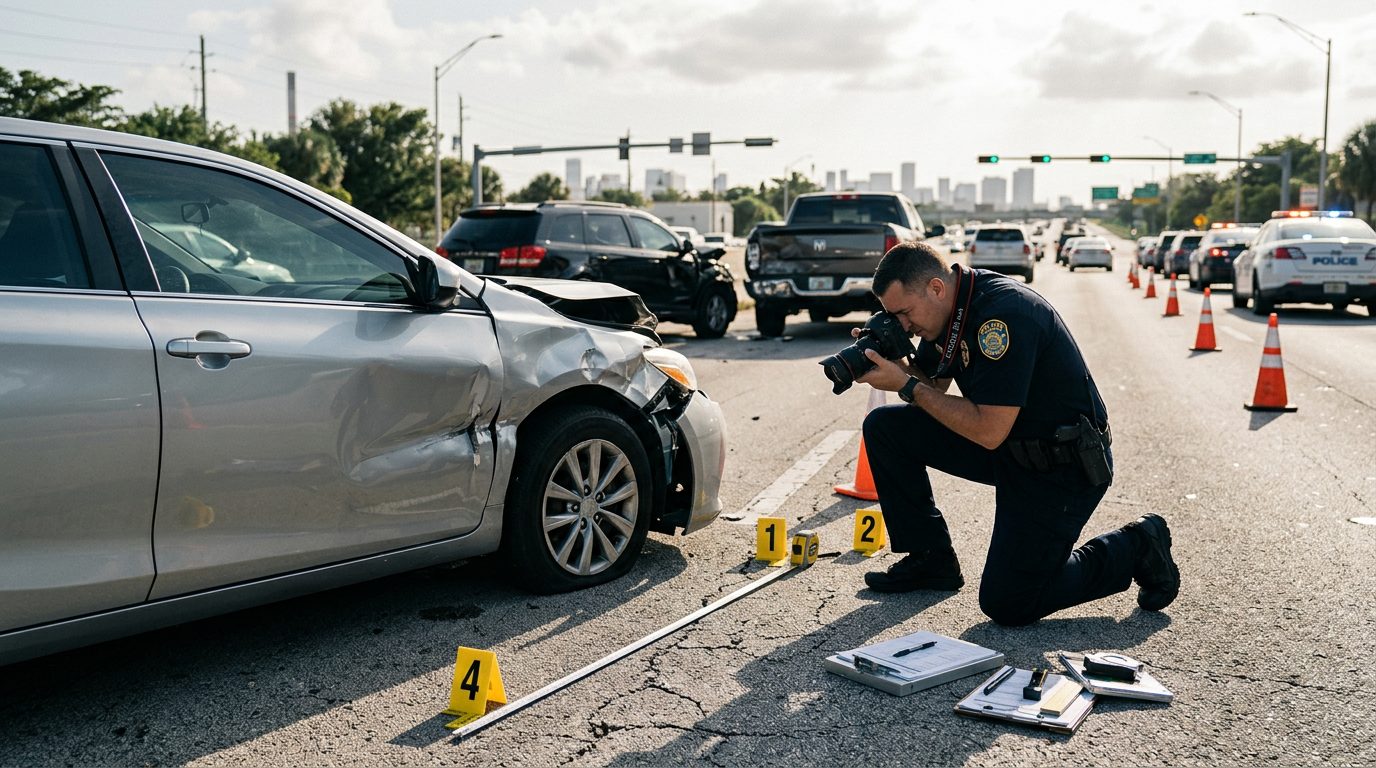
Prosecutors often build their case on vehicle data, skid marks, crash reconstruction and witness accounts. Defense review checks each piece against the others. Key questions include:
- Road and weather conditions
- Brake or mechanical problems
- Sudden hazards in the road
- Other drivers’ actions
- Whether the State’s timeline matches the evidence
Phone evidence needs close review. Florida’s texting law allows billing records to be admitted in a crash that causes death or injury, to decide whether a texting violation occurred (§ 316.305). Timestamps may or may not match the crash time.
After a death or serious bodily injury, an officer with probable cause that an impaired driver caused it must require a blood test (§ 316.1933). Fla. Stat. § 316.1933 reads: “If a law enforcement officer has probable cause to believe that a motor vehicle driven by or in the actual physical control of a person under the influence of alcoholic beverages, any chemical substances, or any controlled substances has caused the death or serious bodily injury of a human being.”
Whether speeding alone supports this charge depends on the facts. The State’s proof of both speed and recklessness gets close review.
Rideshare and Delivery Issues That Change How the Case Is Handled
App status shapes the timeline. Trip start and end times, GPS history, delivery records and in-app messages can all matter. Ask for these records to be preserved early, before the timeline gets harder to rebuild.
A driver’s contractor or employee status with a platform may also matter to the facts being reviewed.
Three mistakes can hurt a case:
- Deleting app history, messages or phone data
- Posting about the crash on social media
- Giving statements to platform support without legal advice
Keep your phone, app account and vehicle information intact. Write down what you remember while it’s fresh, and share it with your lawyer only.
What to Expect: The Process From Arrest Through Resolution
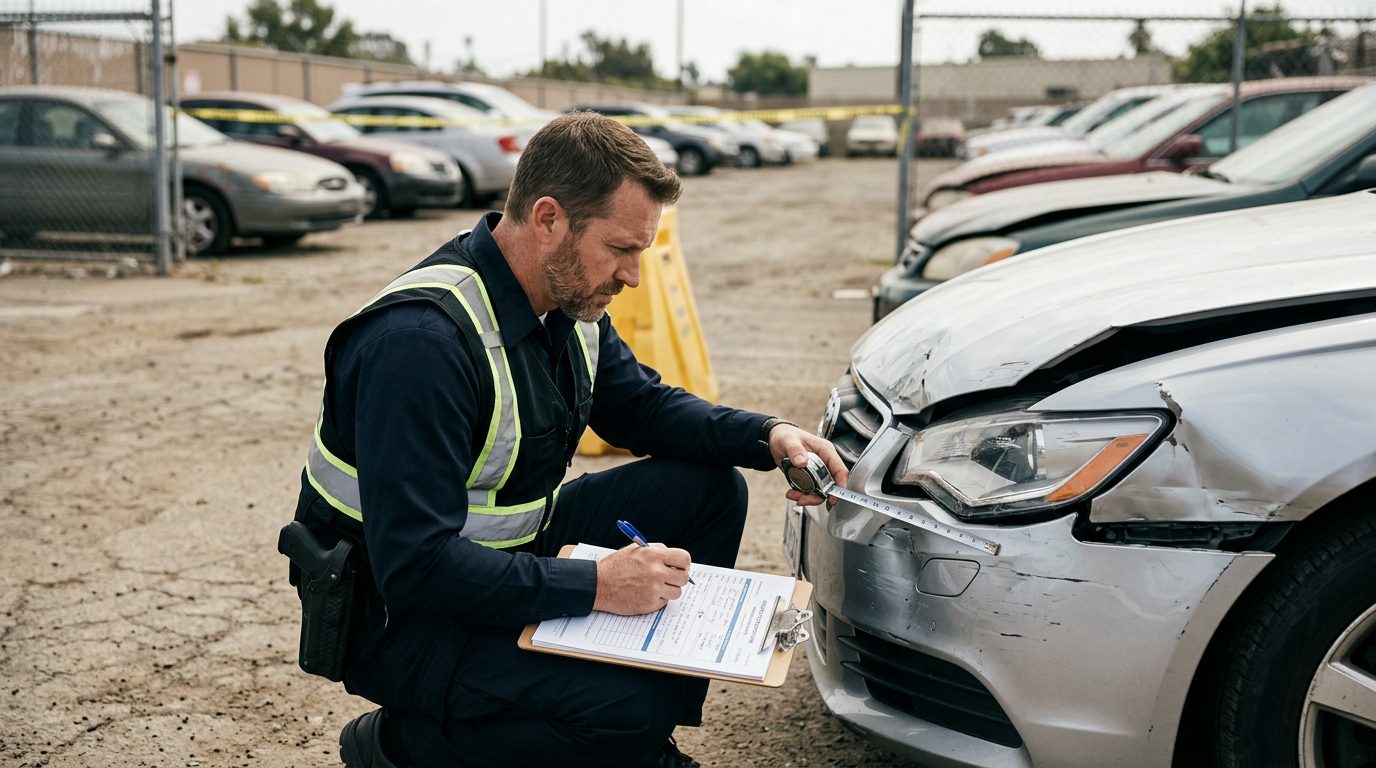
The timeline varies from case to case. Most cases move through these stages:
- First hours. The driver may be arrested, under investigation or contacted by police. Don’t discuss the crash without legal advice.
- Defense investigation and motions. The defense tests the State’s evidence and challenges what it cannot support.
- Negotiation or trial. The timing depends on the complexity of the crash reconstruction and the court’s calendar.
Why Patrick Wilson Law for Fatal Crash Defense in South Florida
Patrick Wilson Law is a Miami criminal defense firm. Its practice focuses on DUI, domestic violence, sexual battery and traffic homicide charges. The firm serves clients across Miami-Dade, Broward and the Florida Keys, including first-time offenders and licensed professionals whose careers can be affected by a charge.
Patrick David Wilson is the lawyer responsible for this page. The firm’s lawyers include Patrick David Wilson and Sahara Fonseca.
The firm reviews each case on its own facts. That means checking vehicle data, app records, phone evidence and the State’s crash reconstruction against each other. If your license or job is at stake, say so at the start.
Not sure what your next step is?
Talk it through with our team — the first consultation is free, confidential, and carries no obligation.
Frequently Asked Questions About Rideshare Driver Vehicular Homicide Charges
How long can someone be jailed for vehicular homicide in Florida?
Under § 775.082, a second-degree felony carries a maximum of 15 years in prison, while a first-degree felony carries up to 30 years. Bond and sentence turn on each case’s facts.
Can someone be charged after an accidental fatal crash?
The statute requires reckless operation, so a crash alone does not establish the charge. The State must prove the reckless conduct the statute describes.
Is vehicular homicide the same as vehicular manslaughter?
Florida’s statute uses the name vehicular homicide (§ 782.071). Use that name when you read the law.
Can speeding alone support the charge?
Whether speeding alone supports this charge depends on the facts and on proof of recklessness.
What is the difference between vehicular homicide and leaving the scene?
Willfully leaving the scene of a crash that causes death is a separate offense under § 316.027, a first-degree felony with a mandatory minimum prison term of 4 years; the defendant may move to depart from that minimum unless the violation was committed while driving under the influence, and the court may grant the motion only if imposing the minimum would constitute or result in an injustice.
Does the app make a rideshare driver’s case different?
App status and records can change the evidence and the timeline. Those records should be reviewed early.
Talk Through Your Driver’s Situation With Our Team
If you’re the driver, you may be replaying the crash every night and wondering what the State will do next. If you’re a family member, you may be trying to understand a charge nobody expected. Call 786-761-1719 or leave us a message to talk through your facts. Your first consultation is free, confidential, and carries no obligation to continue.
How Patrick Wilson Law Approaches Your Case
Review of the Crash Record
We examine the police report, crash data, app records and any available video to understand what happened on the road and in the app.
Defense From the Start
We focus on protecting your rights and your future from the first contact with investigators, so you do not face the process alone.
Protecting Your Livelihood
Many rideshare drivers depend on driving for income. We consider how the charge affects your job, your family and your license.
Clear Communication
We explain each step of the case in plain language, so you know what to expect at every stage.
Speak With a Lawyer Before You Give a Statement
Investigators and insurance adjusters may contact you soon after a fatal crash. Anything you say can be used in your case. Call before you answer questions or sign anything.
What Happens After a Rideshare Crash Charge
Arrest and Bond
Bond conditions can affect your work and daily routine. We address bond early so you understand your obligations.
Investigation and Evidence
Phone records, app activity, vehicle data and witness accounts often shape a vehicular homicide case. We review all of it carefully.
Negotiation and Court
Every case is different. We evaluate your options, discuss them with you and prepare for court when it is needed.
Protecting Your Record
After a case is resolved, we can discuss options for sealing or expunging eligible records, which may matter for future employment.

