
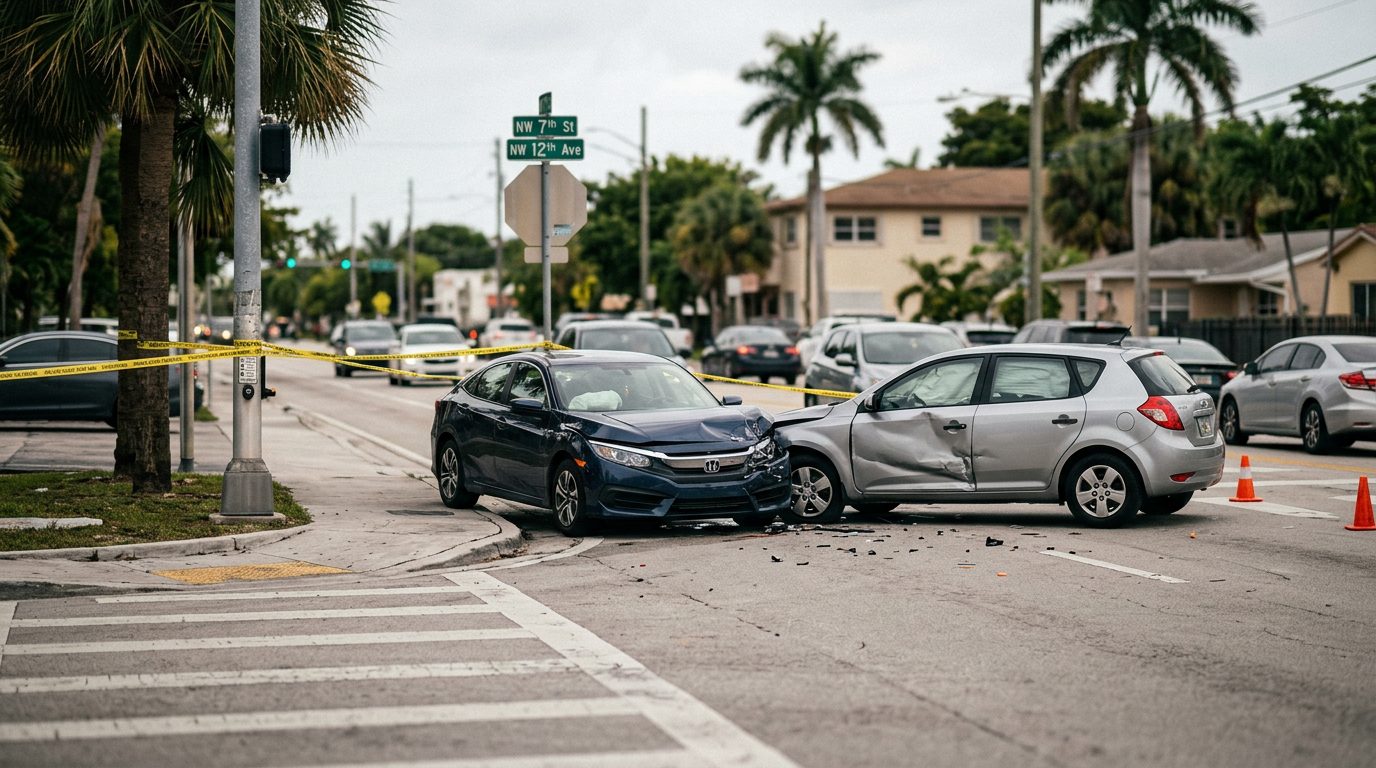
Vehicular Homicide Defense | Miami, Florida
Facing a Fatal Crash While Your License Was Suspended?
Patrick Wilson Law focuses on vehicular homicide and related criminal defense across Miami-Dade, Broward County and the Florida Keys. Call 786-761-1719 for a free, confidential first consultation with no obligation to continue.
By Patrick David Wilson · Published October 26, 2026
A driver who causes a deadly crash while on a suspended license can face several criminal charges in Florida. This page explains the charges, what the State must prove, the defenses that are commonly examined and what the process looks like. Patrick Wilson Law, PLLC is a Miami criminal defense firm that represents people across South Florida, from Broward County to the Keys.
A Fatal Crash on a Suspended License Creates Two Legal Questions
A fatal crash on a suspended license means two sets of criminal questions, and each one can bring its own charge.
The first question is whether the driver knew the license was suspended and drove anyway. Florida treats that as a crime under the driving on a suspended license statute. The second question is whether the driving caused a death. That falls under the vehicular homicide statute.
This page is for the driver. It’s also for the parents, partners and family members who are scared and have a lot of questions. It’s for licensed professionals too, where a charge can put a license, a job or a record at risk. First-time offenders often face these questions with no experience in the court system.
The suspension facts matter as much as the crash. How the suspension was imposed, whether notice went out and what the state record shows can change the case. Under the notice of suspension statute, an order is complete 20 days after e-mail or mailing, except orders issued under chapter 324 or ss. 627.732–627.734, which are complete 15 days after e-mail or mailing. The statute also says a failure to receive the order does not stop the suspension from taking effect. That is why the notice record gets reviewed early.
If you're facing charges after a fatal crash on a suspended license, you don't have to sort it out alone. Our team is ready to talk through your situation. Talk it through with our team — the first consultation is free, confidential, and carries no obligation.
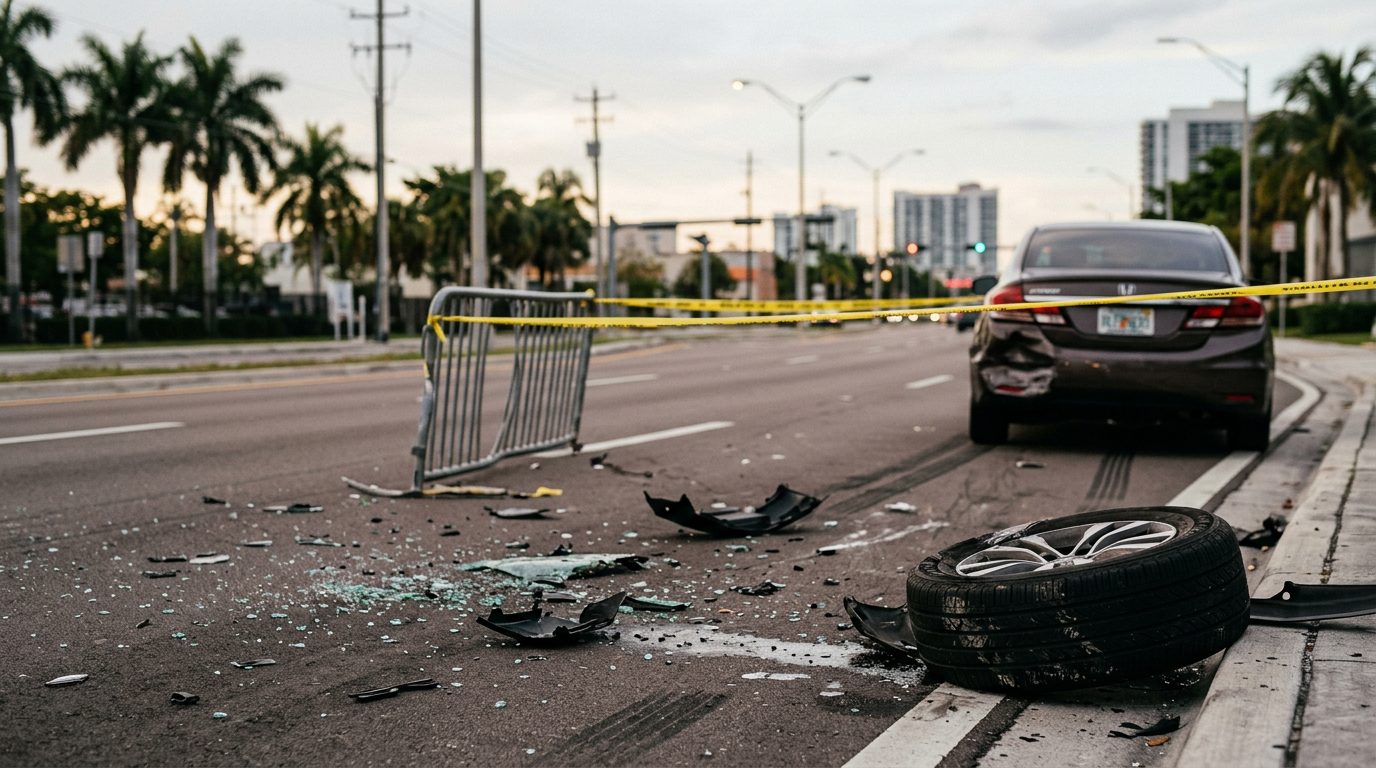
Charges That Can Stack After a Fatal Crash on a Suspended License
Several charges can arise from one crash, and each one has its own elements and penalty range.
- Vehicular homicide. The State generally must show a death caused by operating a vehicle in a reckless manner likely to cause death or great bodily harm. The offense is a second-degree felony. It becomes a first-degree felony in certain cases, such as when the driver knew or should have known a crash happened and failed to give information and render aid (vehicular homicide statute).
- Driving on a suspended license causing death. A driver who knows the license is suspended and causes a death or serious bodily injury through careless or negligent driving commits a third-degree felony (driving on a suspended license statute).
- Leaving the scene. A driver in a crash that causes a death must stop and stay until the duties to give information and render aid are met. Under Fla. Stat. § 316.027, the defendant may move to depart from the mandatory minimum term of imprisonment prescribed in paragraph (c) unless the violation was committed while the defendant was driving under the influence, and the court may grant the motion only if it finds that a factor, consideration, or circumstance clearly demonstrates that imposing a mandatory minimum term of imprisonment would constitute or result in an injustice (crash involving death statute).
- Impairment cases. When alcohol or drugs are alleged, the proof is different. Blood testing can become a central issue (blood test statute).
Each count needs its own review, not one overall label.
Defense Issues Examined in These Cases
Most of these cases turn on a few core questions, and each one needs a close look at the actual record.
- The notice record shows what was sent, where and when.
- Causation. The State must connect the driving to the death. Other drivers, road conditions and a pedestrian’s or cyclist’s own movements can all matter.
- Recklessness. The homicide charge requires a reckless manner of driving. That standard is more than a simple traffic error.
- Scene evidence. Vehicle data, 911 records, photos and witness statements can be lost or overwritten. Early requests help preserve them.
- Defense attorneys can request those results when DUI is alleged.
- Mitigation. A clean history, a first-time offense and the driver’s circumstances can be presented to the prosecutor during negotiations.
Each case gets its own review, because the strongest issue in one case may not be the strongest in another.
What to Expect: Step-by-Step Process
A case moves through set stages, and it starts with a first appearance before a judge.
- Initial review. We review the arrest report, the charges, any citations and the suspension record.
- Evidence requests. Requests for vehicle data, video and 911 recordings go out early, before they’re lost.
- First appearance. The judge must tell you the charge, give you a copy of the complaint and explain that you don’t have to say anything. Anything you say may be used against you. You also have the right to talk with counsel (first appearance rule).
- Pretrial release. A person charged is generally entitled to release on reasonable conditions, with exceptions for the most serious charges (pretrial release rule). Conditions can affect work and travel, so we plan around them.
- Discovery. Discovery is the pretrial stage in which each side may request information about the case. The sides then exchange witness and statement information (criminal discovery rule).
- Negotiation or motions. We review the suspension record and the evidence. We raise challenges where the record supports them.
- Trial preparation. If the case does not resolve, we prepare for trial and explain each stage before it happens.
Timing changes with the evidence and the court’s calendar, and each stage can take its own time.
Criminal Case Versus Civil Claims After a Fatal Crash
The criminal case and a family’s civil claim run on separate tracks, with different goals and different rules.
The State brings the criminal case through the State Attorney. A conviction can bring jail or prison, probation and fines. A civil claim is brought by the family to seek money damages. The vehicular homicide statute says a right to sue for civil damages exists for all deaths described in that section (vehicular homicide statute).
Restitution is a separate part of the criminal case. The court must order restitution to the victim in addition to any punishment, unless it finds clear and compelling reasons not to order it (restitution statute). For a death, that can include necessary funeral services, medical care and lost income. The State Attorney must show the amount of the loss.
Civil claims have filing deadlines set by statute, so timing matters there too.
Statements matter in both tracks. The first appearance rule warns that anything you say may be used against you. Coordinating the two tracks helps protect the driver’s rights.
Why Patrick Wilson Law for These Cases
Patrick Wilson Law, PLLC is a Miami criminal defense firm that represents people across South Florida.
The firm’s criminal defense work covers DUI, domestic violence, sexual battery, traffic homicide and leaving-the-scene matters. It also handles seal and expunge work for criminal records. Patrick David Wilson is the responsible lawyer for this page. The firm’s lawyers include Patrick David Wilson and Sahara Fonseca.
The firm focuses on first-time offenders and licensed professionals, whose careers can turn on how a case ends. Our approach is direct. We start with early evidence work, keep clients updated in plain language and pay close attention to the license, job and record consequences that come with a charge.
The firm represents people in Miami-Dade, Broward, Fort Lauderdale, Kendall, Hialeah, Miami Beach, Homestead and the Florida Keys.
Not sure what your next step is?
Talk it through with our team — the first consultation is free, confidential, and carries no obligation.
Frequently Asked Questions
Here are short answers to common questions about these cases.
Common questions about Florida criminal charges
What happens if you crash with a suspended license?
If the crash causes a death, the State can also pursue vehicular homicide and related counts.
Do I have to stop after a crash that causes a death?
Yes. The driver must give his or her name, address and vehicle registration number and render reasonable assistance to anyone injured in the crash (duty to give information statute).
Can a car be seized in a DUI case with a suspended license?
A vehicle can be subject to seizure when a DUI happens while the license is suspended because of a prior DUI conviction (driving on a suspended license statute).
How long does a case like this take?
Timing changes with the evidence and the court’s calendar. Each stage in the process above can take its own time.

Talk Through Your Situation Before the Next Hearing
Facing a fatal crash charge while on a suspended license can feel overwhelming, especially when family is worried and a court date is close.
You don’t need every answer before you call. Bring the arrest report, any citations and any suspension notice you received. Our team will review them with you.
Our team offers a free, confidential first consultation, with no obligation to continue. Call 786-761-1719, or leave a message through our contact page to ask for a consultation.
How We Approach These Cases
Early Review of the Crash Facts
We look closely at the crash report, the scene, the vehicles and the timeline to understand what the State can prove and what it cannot.
Attention to the License Status
We examine how the suspension came about, what notice was given and whether the driver knew of it, because these details can shape the charges.
Defense Across Related Charges
A suspended-license crash can bring several counts at once, including vehicular homicide, leaving the scene and driving offenses. We address each one.
Clear, Direct Communication
You will know where your case stands, what the next steps are and what you should and should not do while it is pending.
Important: Speak to a Lawyer Before You Talk to Investigators
Do not give a recorded or written statement to police, insurers or anyone else about the crash until you have spoken with a criminal defense lawyer. Anything you say can be used in building the case against you.
Related Criminal Defense Matters
Leaving the Scene of an Accident
Florida law requires drivers involved in a crash to stop and exchange information and to assist anyone who is hurt. We defend charges for failing to do so.
DUI Defense
When alcohol or drugs are alleged in a crash, we review the testing, the stop and the records to challenge the State's evidence.
Super Speeder Defense
We handle charges involving extreme speed on Florida roads and work to address their impact on your driving record and freedom.
Sealing and Expunging Records
For eligible clients, we pursue sealing or expunction of criminal records so past charges have less effect on work, housing and daily life.

