

Vehicular Homicide Defense · Miami, Florida
Vehicular Homicide Background Check Florida: What Shows Up
A felony charge can appear on background searches long after the case ends. Here is what employers and landlords typically see, and how a Miami criminal defense firm can help you plan your next step.
By Patrick David Wilson · Published October 24, 2026
Yes, a vehicular homicide charge usually leaves a felony record that can show up on a Florida background check. Whether it appears, and who can see it, depends on the type of search and how the case ended. This guide explains the main checks, what each one can reveal, and why a conviction is treated differently from a dismissal. Patrick Wilson Law, PLLC is a Miami criminal defense firm that handles vehicular homicide and record-relief matters across South Florida.
What a background check in Florida actually searches
A background check is a general term for several different searches. Each one pulls from different sources, so a charge may appear in one and not in another.
A state criminal history search looks at the state’s own records. A federal search looks at national databases. Court records work differently. The clerk of court in the county where the case was filed keeps the court file. A case filed in Miami-Dade County stays with that county’s clerk. A case filed in Broward County stays with Broward’s clerk.
Commercial screening companies collect public records and sell reports to employers and landlords. They may not update a case when the outcome changes. An old report can show an open case that has already closed. Employers and licensing boards may also run their own reviews.
The scope of a check depends on who asks and why. A review for a job that handles money may look different from a landlord’s rental screen. Knowing which search is in play tells you what is actually visible.
If a vehicular homicide charge is on your record or a family member's, you don't have to sort through the record questions alone. Our team is ready to talk it through with you. Talk it through with our team — the first consultation is free, confidential, and carries no obligation.
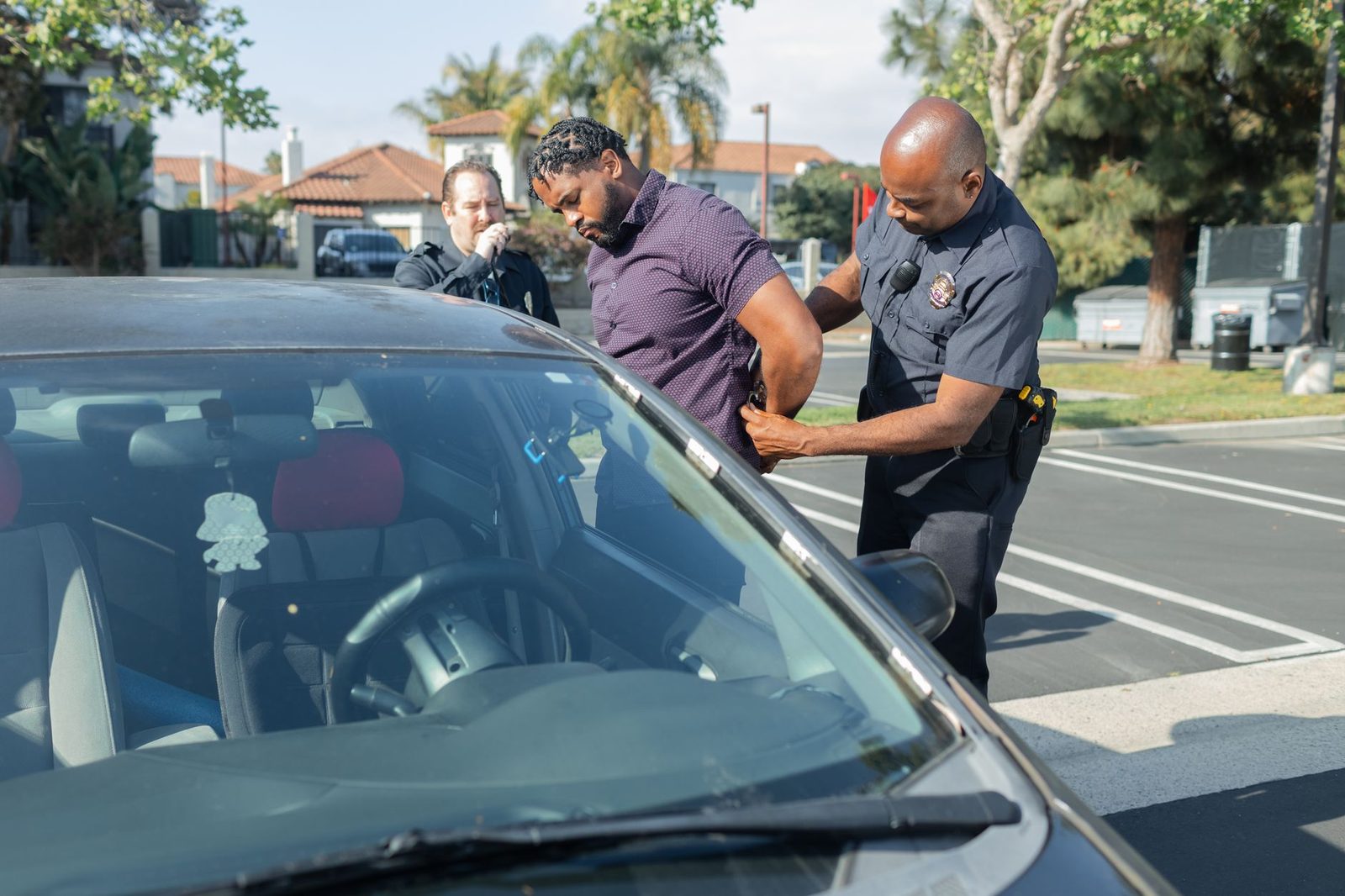
Does a vehicular homicide charge appear on a background check?
Yes. Vehicular homicide is a felony, so the arrest and the court case are generally recorded in state and court systems. They can appear in a search at more than one stage.
A case moves through stages. At arrest, the record shows the arrest. While the charge is pending, the case shows as open. When the case ends, the record shows a final result, such as a conviction, a dismissal, or an acquittal.
Those endings are recorded differently. A dismissal, a nolle prosequi (a prosecutor’s formal decision to drop the charge), or an acquittal is not a conviction. The case file and arrest entry still exist, though, so a search may still find them.
Florida law defines a conviction more broadly than many people expect. It means a finding of guilt after trial or a guilty or no contest plea (nolo contendere), even if adjudication is withheld, or, for a minor, a finding that the minor committed or pled guilty or no contest to a delinquent act, even if adjudication of delinquency is withheld.
Who can see a vehicular homicide record in Florida
For sealed records, the law names who may still see them. The list includes the subject’s attorney, criminal justice agencies for their criminal justice purposes, and certain licensing and employment entities for their licensing, access authorization and employment purposes.
Employers, landlords, and licensing boards may review a background report. What they can see depends on the job, the license, or the housing decision and the rules that apply to it. The same charge may be visible to one party and hidden from another.
How vehicular homicide is defined under Florida law
Vehicular homicide means killing a human being by operating a motor vehicle in a reckless manner likely to cause death or great bodily harm (Fla. Stat. § 782.071). The State has to prove reckless operation. A crash alone does not meet that definition.
The base offense is a second-degree felony. The driver does not have to know that anyone was hurt. The second is when the driver has a prior conviction under the listed statutes.
Leaving the scene adds a separate risk. A driver in a crash that results in injury to or death of any person, or damage to any vehicle or other property, must give their name, address, and vehicle registration number, and render reasonable assistance to an injured person, as required by s. 316.062. Fla. Stat. § 316.062 sets out the driver’s duty to give name, address, and vehicle registration information and to render reasonable assistance after a crash involving injury, death, or property damage. A violation of this section is a noncriminal traffic infraction, punishable as a nonmoving violation as provided in chapter 318. For full penalty details, read our vehicular homicide penalties guide.
How long a vehicular homicide record stays visible, and whether it can be sealed or expunged
A conviction for vehicular homicide cannot be sealed or expunged under Florida law.
Dismissals and acquittals follow a different path. A person may petition a court to expunge a record when no charging document was filed, or when the charge was dismissed or ended in a not guilty verdict or judgment of acquittal, if the person also meets the other conditions, including never having been adjudicated guilty of a criminal offense in Florida and the record not being ineligible under s. 943.0584 (Fla. Stat. § 943.0585).
It must include a valid certificate of eligibility from the Florida Department of Law Enforcement and a sworn statement (Fla. R. Crim. P. 3.692). The court cannot order an agency to expunge or seal a record until the petitioner has received that certificate.
Sealing is always up to the court. The law gives no one a right to sealing, and the court can deny the request at its sole discretion (Fla. Stat. § 943.059). Even after relief, some agencies may still see the record for limited purposes.
What the record means for licensed professionals, job applicants, and non-citizens
A felony record can affect a license or a job. The employer, board, or agency decides how much weight to give it under its own rules.
Read each application and renewal question before you answer it. A common mistake is answering from memory of a case that was dismissed, when the form asks about arrests.
If a record was expunged, a person may generally deny or not acknowledge the arrest. The exception to the right to deny or fail to acknowledge an expunged arrest includes being a candidate for employment with a criminal justice agency.
Non-citizens face a separate question. Federal law lists classes of deportable non-citizens, including non-citizens who, after admission, are convicted of two or more crimes involving moral turpitude that do not arise from a single scheme of criminal misconduct. Any criminal case involving a non-citizen needs immigration review on its own track.
Frequently asked questions
Does vehicular homicide show up on a background check in Florida?
Usually, yes. A felony arrest and court case are generally recorded, and what a search shows depends on the search and how the case ended.
Can a vehicular homicide conviction be sealed or expunged?
No. Florida law lists a conviction for vehicular homicide as ineligible for both.
Can a dismissed vehicular homicide case be expunged?
It may be eligible for a petition to expunge if the charge was dismissed or ended in an acquittal.
Not sure what your next step is?
Talk it through with our team — the first consultation is free, confidential, and carries no obligation.
Talking through your record questions with Patrick Wilson Law
You may be looking into this for a family member, for your own license or job, or while a case is still open. Those are hard situations to research alone. Record questions often come up before anyone knows what a search will show.
Patrick Wilson Law, PLLC is a Miami criminal defense firm that defends people across South Florida, from Broward County to the Keys. Patrick David Wilson is the responsible lawyer for this page.
Your first consultation is free, confidential, and carries no obligation to continue.
Call 786-761-1719 or leave a message through our contact page, and we can talk through the record question that matters for your situation.
How Patrick Wilson Law Can Help
Review your record
We look at what a background search is likely to show for your case, including charges, filings and how the case was resolved.
Defense from the start
Our criminal defense work on vehicular homicide matters begins with a careful review of the facts, the evidence and the charges against you.
Clear options
We explain the record-related questions that matter for your situation, including whether sealing or expunction may be available for your case.
Support for your career
Patrick Wilson Law, PLLC represents licensed professionals and other clients whose work and reputation depend on how their cases are handled.
Don't assume the record is gone
A case that was dismissed, reduced or resolved years ago can still appear on some searches. Speak with a Miami criminal defense attorney before you apply for a job, a license or a lease, so you know what is likely to be seen.
Common Questions About Background Checks
What a search may include
Arrest records, charges, court filings and case outcomes can all appear, depending on the type of search and the sources it uses.
Why the outcome matters
How a case ended affects what a search shows and how it is described. Reviewing the final disposition is an important first step.
Sealing and expunction
Florida law sets specific eligibility rules for sealing and expunging records. We review your case against those rules and explain your options.
Your next step
Bring your charging documents, court papers and any prior records to a confidential consultation so we can review what is likely to be visible.

