
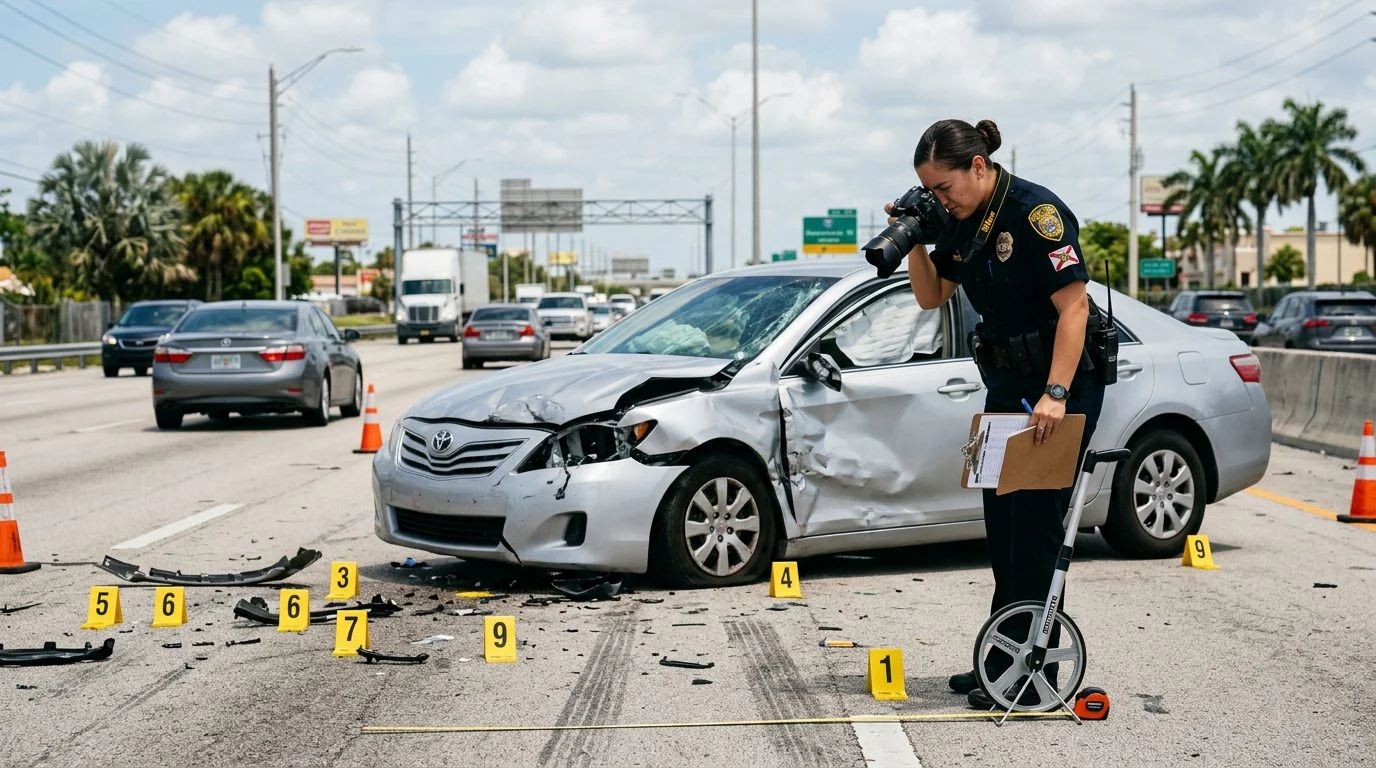
Vehicular Homicide Defense · Miami, Florida
Vehicular Homicide Defense for Licensed Professionals in Miami
A vehicular homicide charge can put a license, a career and a reputation at risk. Our team defends professionals across South Florida, from Miami-Dade and Broward to the Florida Keys.
By Patrick David Wilson · Published November 17, 2026
If you are facing a vehicular homicide charge in Florida, the state alleges that you operated a motor vehicle in a reckless manner likely to cause death or great bodily harm, and that this caused someone’s death. When a vehicular homicide case is filed, the stakes are high: in its basic form, the charge is a second-degree felony that can bring prison time, fines and career consequences. This page explains what the charge means, how it differs from DUI manslaughter, what penalties apply, how a license can be affected, and how a defense is built. It is written for licensed professionals facing a decision they didn’t choose, and for family members researching on their behalf.
What a Vehicular Homicide Charge Means in Florida
Vehicular homicide is a killing caused by a driver who operates a vehicle in a reckless manner likely to cause death or great bodily harm. Fla. Stat. § 782.071 defines the offense this way. The focus is on how the driving was done and what it caused.
Vehicular homicide is not the same as DUI manslaughter. Vehicular homicide centers on reckless driving. A DUI case under Fla. Stat. § 316.193 centers on impairment: the statute applies to a person driving or in actual physical control of a vehicle who is under the influence of alcoholic beverages, a chemical substance or a controlled substance, when affected to the extent that the person’s normal faculties are impaired. One crash can lead to charges under either law. The facts decide which charge fits.
This page is written for two groups. The first is a licensed professional whose work depends on keeping a license, such as a nurse, pilot, commercial driver or tradesperson. The second is a family member or partner trying to understand the charge for someone else. The investigation can begin before any charge is filed, so the first questions asked matter.
A fatal crash may have put your license and career at risk, and you don't have to face that decision alone; our team is ready to talk with you. Talk it through with our team — the first consultation is free, confidential, and carries no obligation.
Penalties and Sentencing Exposure
Vehicular homicide is a felony of the second degree under Fla. Stat. § 782.071, punishable as provided in s. 775.082, s. 775.083, or s. 775.084. A fine for a first- or second-degree felony cannot exceed $10,000 under Fla. Stat. § 775.083, unless a higher amount equal to double the pecuniary gain derived from the offense or double the pecuniary loss suffered by the victim applies, or a statute specifically authorizes a higher amount.
The charge rises to a first-degree felony in two situations. The first is when the driver knew or should have known the accident occurred and failed to give information and render aid. The statute says this does not require knowing anyone was injured or killed. The second is a prior conviction under the listed statutes. A first-degree felony carries up to 30 years in prison under § 775.082, or up to a term of years not exceeding life imprisonment when a statute specifically provides for it.
In addition to other punishment, the court may order 120 hours of community service in a trauma center or hospital.
Leaving the scene adds its own risk.
Florida also uses a points-based scoresheet under Fla. Stat. § 921.0024. When total points are 44 or fewer, the lowest permissible sentence can be a sentence outside state prison, unless the court finds prison is appropriate. Fla. Stat. § 921.0024 reads: “The lowest permissible sentence is any nonstate prison sanction in which the total sentence points equals or is less than 44 points, unless the court determines within its discretion that a prison sentence, which may be up to the statutory maximums for the offenses committed, is appropriate.”
How the Charge Can Reach Your License and Career
For health-care licensees, a conviction, a finding of guilt, or a guilty or no contest plea, regardless of adjudication, to a crime in any jurisdiction that relates to the practice of, or the ability to practice, the licensee’s profession is a ground for discipline under Fla. Stat. § 456.072. The licensee must also report in writing to the board, or the department if there is no board, within 30 days after being convicted or found guilty of, or entering a no contest plea to, any crime in any jurisdiction, regardless of adjudication. The health care fraud provision does not reach unrelated charges, but a separate ground covers any crime that relates to the practice of, or the ability to practice, the licensee’s profession, and that ground can apply to a vehicular homicide case. Florida lists action taken against a license by any jurisdiction’s licensing authority as a ground for discipline, when the violation would also break Florida law. See Fla. Stat. § 456.072.
For commercial drivers, Fla. Stat. § 322.61 lists offenses that trigger disqualification. Those include causing a fatality through the negligent operation of a commercial motor vehicle. Two listed serious violations within 3 years, arising in separate incidents committed in a commercial motor vehicle, can bring a 60-day disqualification.
Ask these questions early:
- Do I have a duty to report this charge to my employer or licensing board?
- Does my employer’s policy require disclosure of a charge or plea?
- Who can see the court file, and when?
- How will the defense plan protect my license from the first day?
Defenses and Evidence Reviewed in Vehicular Homicide Cases
A defense is built from the crash facts, the driving itself and the testing. What helps depends on the facts of your case.
- Causation: The key question is whether the driving caused the death. Other drivers, road conditions and a pedestrian’s own actions can matter.
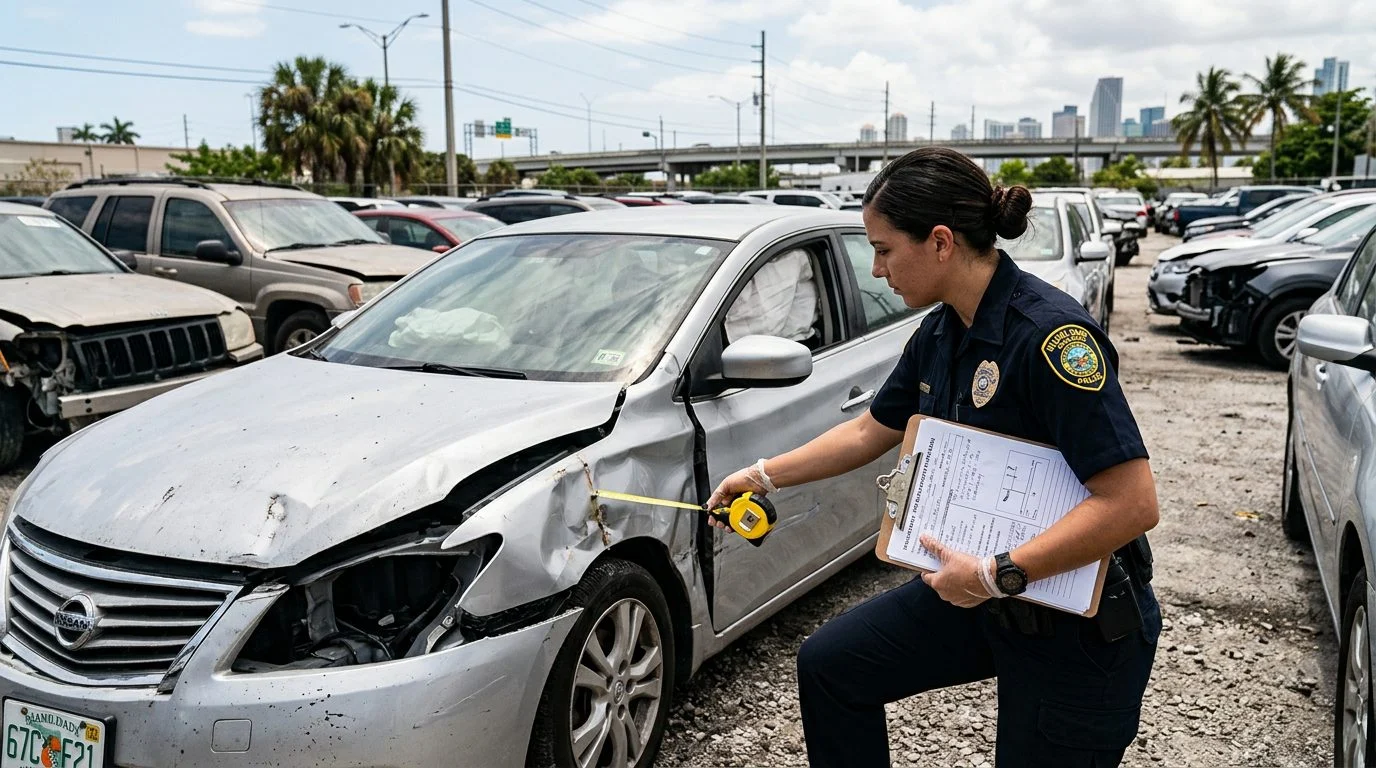
- Crash reconstruction: The review can cover the crash report, scene measurements, vehicle damage and vehicle data where it exists.
- Under Fla. Stat. § 316.1933, a defense attorney can request the blood test information in connection with an alleged violation of s. 316.193.
- Knowledge: Whether the driver knew or should have known a crash occurred can raise the charge to a first-degree felony under § 782.071, but only if the driver also failed to give information and render aid as required by s. 316.062.
- Statements to police: Early statements to investigators can shape the case, and they are hard to take back.
- The court weighs the offense, the penalty, the weight of the evidence and past conduct, including any record of convictions.
What to Expect: The Process Step by Step
The process moves from a first consultation through arrest, discovery, and then either negotiation or trial. Timelines vary by case.
- First consultation. You describe the crash, the charge and your questions about your job or license.
- Preservation requests. Early requests can target crash scene data, vehicle records, medical records and witness information.
- First appearance and release. The court sets release conditions under Fla. R. Crim. P. 3.131.
- Discovery. Under Fla. R. Crim. P. 3.220, if a defendant elects to participate in discovery, the parties exchange names and addresses of people with relevant information, along with the defendant’s statements.
- Motions, negotiations and trial preparation. These stages can run for months, and the pace depends on the case.
Why Clients Choose Patrick Wilson Law
Patrick Wilson Law, PLLC is a Miami criminal defense firm. It defends people across Miami-Dade County, Broward County, Fort Lauderdale and the Florida Keys. The firm handles DUI, domestic violence, sexual battery and traffic homicide charges.
The firm especially serves first-time offenders and licensed professionals, whose careers often depend on a clean record. Patrick David Wilson is the responsible lawyer for this page. Sahara Fonseca is also a lawyer at the firm, and the firm’s lawyers are supported by assistants and office staff.
Every case turns on its own facts. No lawyer can promise a particular result.
Not sure what your next step is?
Talk it through with our team — the first consultation is free, confidential, and carries no obligation.
Frequently Asked Questions
What is the difference between DUI manslaughter and vehicular homicide?
Vehicular homicide focuses on reckless driving, while DUI focuses on impairment. The same crash can sometimes support both kinds of charges.
Can I be charged if I did not know an accident occurred?
The first-degree version asks whether you knew or should have known an accident occurred. It does not require knowing that anyone was hurt, under § 782.071.
Will a vehicular homicide charge automatically cost me my professional license?
The statute does not make that automatic. Florida does list action against a license as a ground for discipline, so the risk is real for many licensed professionals.
Is the first consultation free, and what does it cover?
Yes, the firm offers a free first consultation that is confidential and carries no obligation to continue. It covers the charge, the timeline and your license questions.
Talk With Our Team About Your Situation
A fatal crash can put a decision in front of you that you never chose. You don’t have to sort out the charge, the penalties and the license questions alone. Call 786-761-1719 or leave us a message, and our team will talk with you about where you stand.
How Patrick Wilson Law approaches your defense
Defense built around your career
We look at how a charge could affect your license, your employment and your standing, and we plan the defense with those stakes in view.
Careful review of the crash facts
We examine the driving conduct, the crash evidence and the timeline to identify the issues that matter most in your case.
Clear, direct communication
You will know where your case stands and what the next steps are, in plain language, at every stage.
Confidential from the first call
Everything you share with us is kept confidential, so you can speak openly about what happened.
Speak with a lawyer before you give a statement
Anything you say to investigators, insurers or other parties about the crash can be used later. Speak with a defense lawyer before you give a written or recorded statement.
What we help licensed professionals address
Your professional license
A criminal charge can raise questions about your license and your ability to keep practicing. We keep those questions in view from the first meeting.
Your employment and reputation
Employers, partners and clients may react quickly to news of a charge. We help you plan how to protect your work and your standing.
The evidence in your case
We review police reports, vehicle data, witness accounts and other records to understand what the state must prove.
Your options going forward
We explain the charges you face, the possible paths forward and what each would mean for your career and your life.
Talk to Patrick Wilson Law about your case. The first consultation is free, confidential and comes with no obligation to continue.
Related practice areas
- Vehicular Homicide Defense Attorney in South Florida
- Can I Talk to the Police After a Fatal Crash in Florida? Your Rights Before a Vehicular Homicide Arrest
- Can You Get Bond for Vehicular Homicide in Florida? What a Judge Considers at First Appearance
- Will a Fatal Crash Charge Cost Me My CDL in Florida? Commercial Driver Disqualification Explained

