
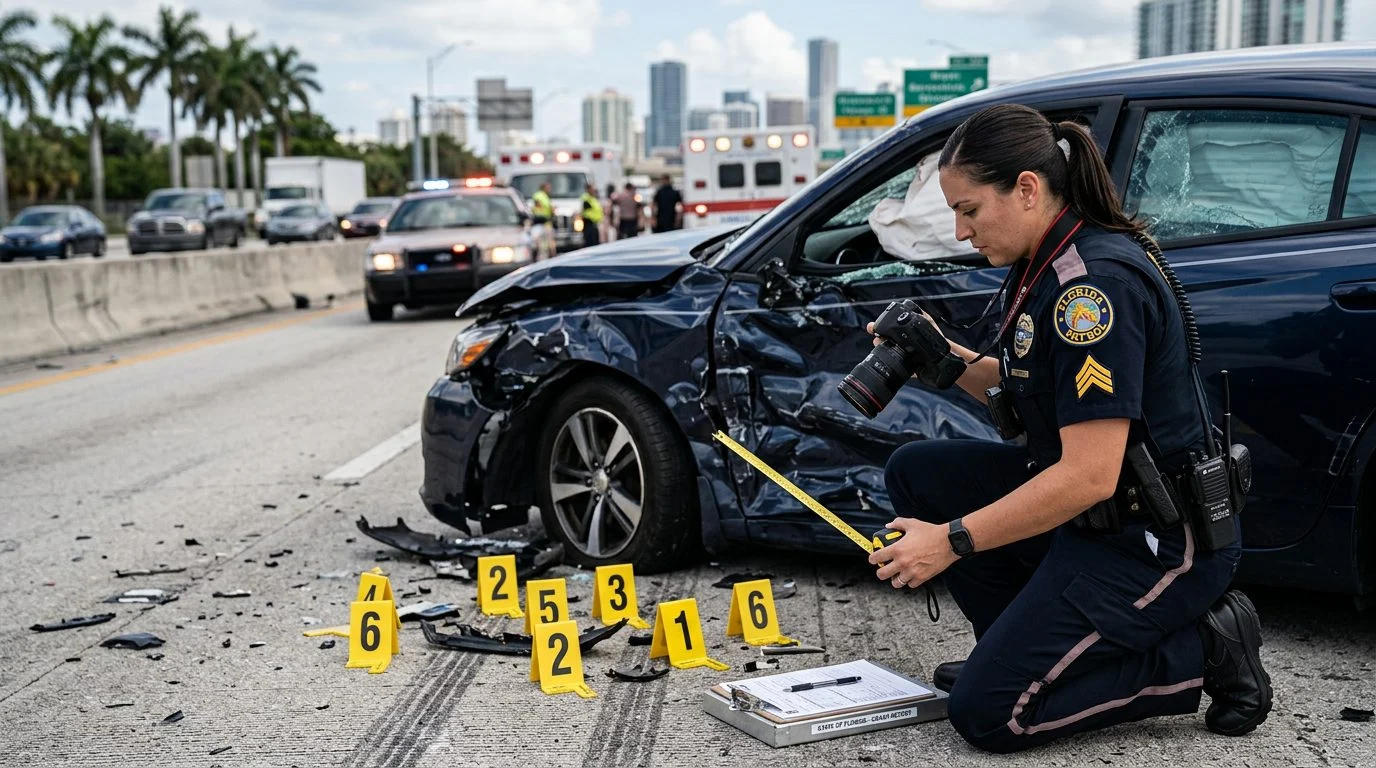
Vehicular Homicide Defense · Miami, Miami-Dade County
Facing a Vehicular Homicide Charge in Miami? Understand Your Sentencing Exposure
Patrick Wilson Law, PLLC focuses on criminal defense across South Florida, including vehicular homicide cases. Learn how Florida penalties work and what shapes your case.
By Patrick David Wilson · Published October 30, 2026
Quick Answer: What a Florida Vehicular Homicide Sentence Figure Means
A Florida vehicular homicide sentence figure is a sentencing range, not one fixed term. The range runs from the lowest permissible sentence up to the statutory maximum for the offense.
People searching for vehicular homicide gain time in Florida often start with one number: the prison term in a news story, charge sheet, or plea offer. That number is only part of the picture. The sentencing code, the defendant’s record, and the facts of the crash all shape where a case lands. The outcome depends on the facts, and no page can predict a specific result.
Patrick Wilson Law, PLLC is a criminal defense firm in Miami, Florida. The firm defends people charged with vehicular homicide across Miami-Dade and Broward counties. Patrick David Wilson is the responsible lawyer for this page.
If a fatal crash has left you with a sentence figure and a decision about pleading or going to trial, we can talk through it in a free, confidential first consultation. Talk it through with our team — the first consultation is free, confidential, and carries no obligation.
What Vehicular Homicide Is Under Florida Statute 782.071
Vehicular homicide is the killing of a human being caused by a driver’s reckless operation of a motor vehicle, one likely to cause death or great bodily harm. Fla. Stat. § 782.071 sets out that definition. The base charge is a felony of the second degree.
The first is when the driver knew or should have known the accident occurred and failed to give information and render aid under § 316.062. The statute does not require proof that the driver knew anyone was hurt or killed. The second is when the driver has a prior conviction under the listed statutes.
Felony degrees set the penalty range. Fla. Stat. § 775.081 sorts felonies into classes. Fines for a first- or second-degree felony generally cannot exceed $10,000, unless a higher amount applies, such as double the pecuniary gain or loss or an amount a statute specifically authorizes; they may be imposed in addition to prison time under § 775.083.
A fine under § 775.083 may be imposed in addition to any punishment described in s. 775.082.
How Total Sentence Points Set the Lowest Permissible Sentence
Total sentence points set the floor of the range, and the formula comes from statute. When a defendant’s total sentence points come to 44 or fewer, Florida’s Criminal Punishment Code makes any nonstate prison sanction the lowest permissible sentence, though the judge keeps the discretion to decide that a prison sentence, up to the statutory maximums for the offenses, is appropriate. The court can still choose prison if it decides that is appropriate.
Above 44 points, the math changes. Subtract 28 points from the total. Then cut the remaining number by 25 percent to get the lowest permissible sentence in prison months.
Here is an illustration of the formula, not a prediction. A total of 60 points leaves 32 after subtracting 28. A 25 percent cut brings that to 24 prison months.
Any sentence to state prison must exceed one year. A total of 363 points or more allows the court to impose life imprisonment. The offense severity chart in § 921.0022 uses 10 offense levels to score each felony.
A scoring error changes the floor, so this review step matters.
When a Judge Can Go Below the Lowest Permissible Sentence
A judge can go below the lowest permissible sentence only with a valid reason. Fla. Stat. § 921.0026 lists the circumstances that can reasonably justify a downward departure.
Several of those circumstances may matter in a fatal crash case. A legitimate, uncoerced plea bargain can justify a departure. So can an offense committed in an unsophisticated manner that was an isolated incident, where the defendant has shown remorse. A defendant’s capacity to appreciate the criminal nature of the conduct can also count if it was substantially impaired.
Intoxication works differently. Substance abuse or addiction, including intoxication at the time of the offense, is not a mitigating factor. It does not justify a downward departure, with one narrow drug-court exception described in the statute.
The statute’s list is not the whole story. A departure still needs a factor the judge finds reasonably justifies it.
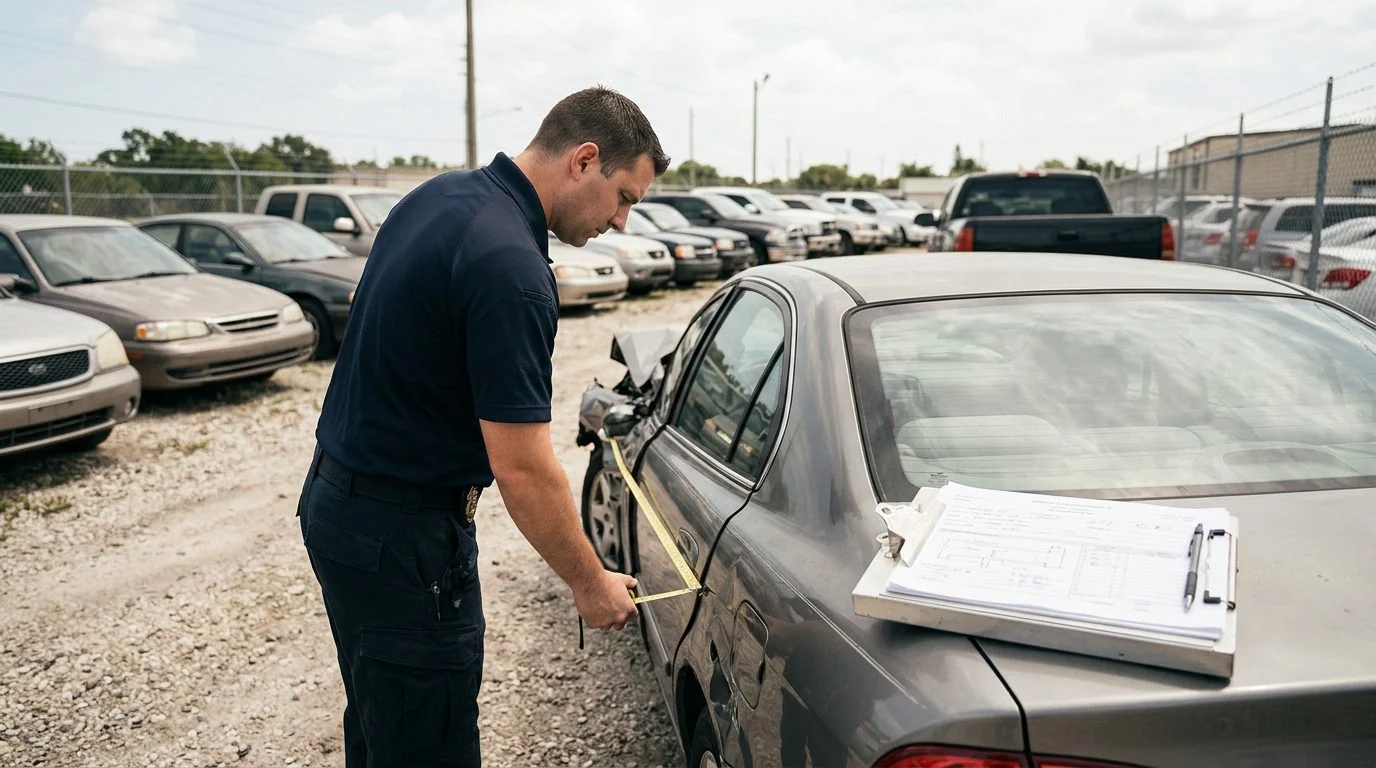
Vehicular Manslaughter vs. Vehicular Homicide: Which Label Matters
Florida’s statute is titled “Vehicular homicide,” and that is the name used in § 782.071. Many people search for “vehicular manslaughter” when they mean a fatal crash charge. The label on a charge sheet matters less than the statute and degree behind it.
DUI manslaughter is a separate offense. The offense severity chart in § 921.0022 lists DUI manslaughter under § 316.193 with its own degree. It also lists a separate entry for DUI manslaughter with a prior conviction for DUI manslaughter, BUI manslaughter, vehicular homicide, or vessel homicide.
The label alone does not set the time a person faces. The degree of the charge, the total sentence points, and the sentence the judge imposes do. Each of those depends on the facts in the case.
Can You Go to Jail for an Accidental Fatal Crash in Florida?
Yes, a fatal crash can lead to a felony charge and prison exposure even when the death was unintended. Vehicular homicide turns on reckless driving likely to cause death, not on intent to kill.
Leaving the scene adds its own risk. Under Fla. Stat. § 316.027, the driver of a vehicle involved in a crash that results in the death of a person must immediately stop the vehicle at the scene, or as close thereto as possible, and remain there until the requirements of s. 316.062 are fulfilled. A person who willfully violates this duty commits a felony of the first degree and must be sentenced to a mandatory minimum term of imprisonment of 4 years. If the driver was under the influence, the court cannot depart from that minimum. Fla. Stat. § 316.027 reads: “(g) The defendant may move to depart from the mandatory minimum term of imprisonment prescribed in paragraph (c) unless the violation was committed while the defendant was driving under the influence.”
The duties at the scene are specific. The driver must give a name, address, and registration number, and must render reasonable assistance to anyone hurt. The duty to make a report or give information to a law enforcement officer making a written report about a crash does not extend to information that would violate the driver’s privilege against self-incrimination.
After a death or serious bodily injury, an officer with probable cause can require a blood test. Under Fla. Stat. § 316.1933, the officer may use reasonable force if needed. Early legal advice helps a driver know which questions must be answered and which can be declined.
Not sure what your next step is?
Talk it through with our team — the first consultation is free, confidential, and carries no obligation.
Talk Through Your Sentence Figure With Patrick Wilson Law
A sentence figure in hand often means a decision is close. That decision might be a plea offer, a trial, or what to say next.
How much time do you get for vehicular homicide in Florida?
The range depends on the degree of the charge, the total sentence points, and the statutory maximum. The facts of the case decide where a sentence falls within it.
Is vehicular homicide a felony in Florida?
Yes. The base charge is a second-degree felony under § 782.071, and some versions are first-degree felonies.
Can you go to jail for an accidental fatal crash?
If a fatal crash has left you facing a sentence figure and a plea or trial decision, call 786-761-1719 or leave a message to set up a free, confidential first consultation. The consultation carries no obligation to continue. You can also reach the firm through its contact page.
How We Approach a Vehicular Homicide Case
Review the Charge Carefully
We examine the charging language, the degree alleged and the evidence behind it, so you understand exactly what the state must prove.
Protect Your Rights from the Start
Early decisions about statements, evidence and communication with investigators can matter. We advise you on those steps from the first call.
Clear Communication
Our team explains the possible penalties, the options available and the reasons behind each recommendation in plain language.
Serving South Florida
From Miami and Miami-Dade County to Broward, Fort Lauderdale, Hialeah, Kendall and the Florida Keys, we represent clients across the region.
Important: Speak with a Lawyer Before You Talk
Do not discuss the crash with investigators, insurance representatives or anyone on social media before you have spoken with a criminal defense lawyer.
Questions to Discuss During Your Consultation
What is the exact charge?
Understanding the degree and statutory basis of the charge is the first step in evaluating your penalty exposure.
What does the evidence show?
Crash reconstruction, witness statements, toxicology and vehicle data can all affect how your case is handled.
What are my options?
Depending on the facts, there may be several paths forward. We walk you through each one, including the risks and trade-offs.
How will my career and record be affected?
For licensed professionals and first-time offenders, we discuss how a conviction could affect employment, licensing and future opportunities.

