
Criminal Defense in Miami, Florida
Involuntary Manslaughter Charges in Florida: Understanding What the Law Requires
Patrick Wilson Law, PLLC focuses on criminal defense across South Florida, from Broward County to the Keys, and helps clients make sense of serious charges from the first call.
By Patrick David Wilson · Published November 14, 2026
Involuntary Manslaughter in Florida: Definition and Penalties
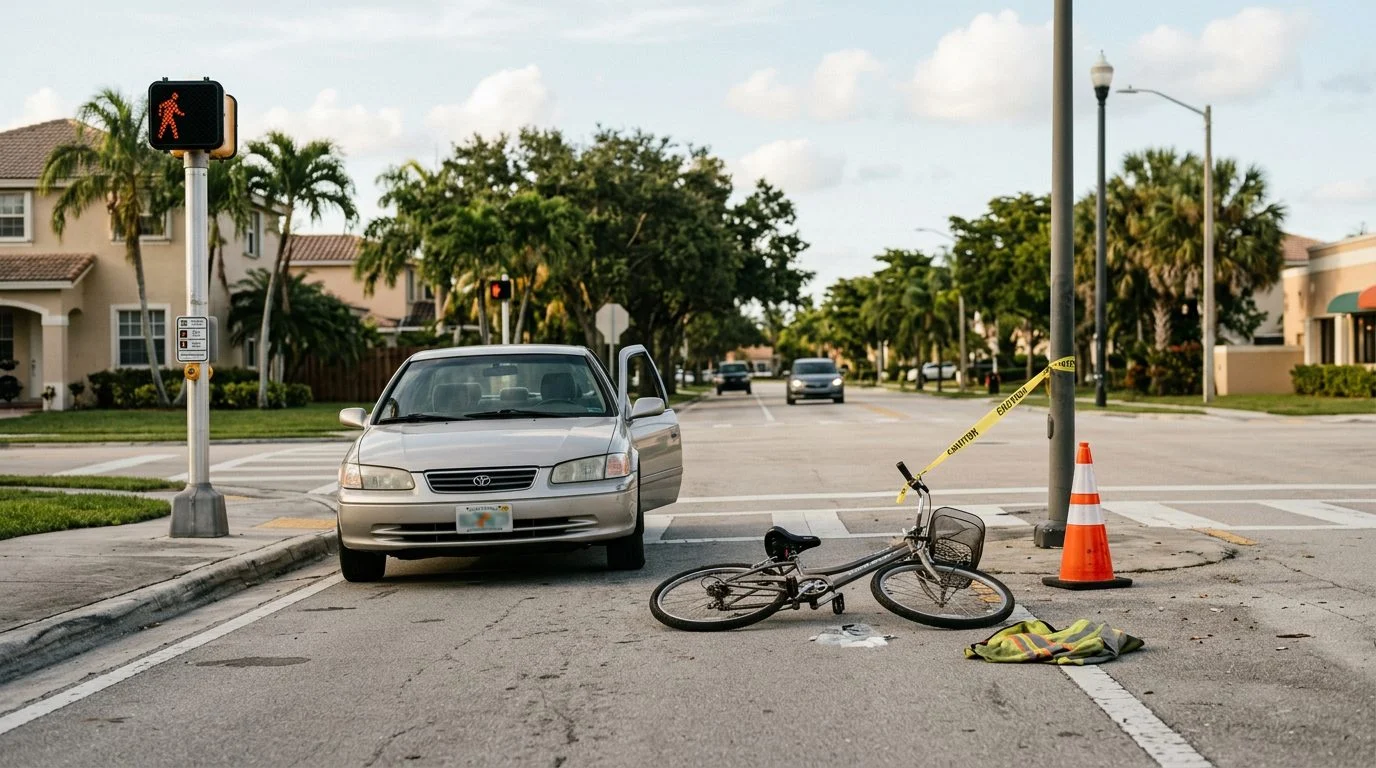
If someone you care about is being questioned after a deadly crash, you probably need a plain answer fast. In Florida, manslaughter is the killing of a human being by the act, procurement, or culpable negligence of another, without lawful justification, when the killing is not excusable homicide or murder. It is a second-degree felony.
If a fatal crash has put someone you care about under investigation, you don't have to work out what comes next alone, and we're glad to talk through the facts with you. Talk it through with our team — the first consultation is free, confidential, and carries no obligation.

What Is Involuntary Manslaughter Under Florida Law?
Florida’s manslaughter statute covers a killing caused by the act, procurement, or culpable negligence of another. The statute defines it as the killing of a human being by the act, procurement, or culpable negligence of another. The killing must be without lawful justification, and it cannot be excusable homicide or murder.
The word “involuntary” points to the missing piece: the person did not intend to cause a death. The death still came from conduct the law can treat as culpable, or blameworthy.
Florida also has a separate vehicular homicide statute for deaths caused by reckless driving. Many traffic deaths are charged under that law instead.
What Does Culpable Negligence Mean in a Florida Case?
It describes conduct a court can treat as blameworthy, not just careless.
Simple negligence is the kind of carelessness behind many civil injury claims.
Consider a driver who keeps going through a dangerous passing maneuver after others have warned them. Or consider one who ignores obvious hazards on a wet road. Whether a court would view conduct like that as culpable negligence turns on its details.
Prosecutors must also connect that conduct to the death. The speeds, road conditions, warnings, and who did what all matter. That link is why the details of how the death happened carry so much weight.
How Does Involuntary Manslaughter Differ From Vehicular Homicide and DUI Manslaughter?
Involuntary manslaughter covers a killing caused by the act, procurement, or culpable negligence of another, while vehicular homicide turns on reckless driving. Under § 782.071, vehicular homicide is the killing of a human being, or of an unborn child by any injury to the mother, caused by operating a motor vehicle by another in a reckless manner likely to cause death or great bodily harm. The basic version is a second-degree felony.
It becomes a first-degree felony when the driver knew or should have known the accident occurred and did not give information and render aid. It also becomes a first-degree felony when the person has a prior conviction under that statute or certain related laws.
DUI manslaughter is different again. Under Florida’s DUI statute, a person commits DUI when driving or in actual physical control of a vehicle within this state and is under the influence to the extent that normal faculties are impaired, or has a blood-alcohol level of 0.08 or more, or has a breath-alcohol level of 0.08 or more grams of alcohol per 210 liters of breath. It has its own elements.
The label matters. A single crash can sometimes lead to more than one charge.
What Are the Penalties for Involuntary Manslaughter in Florida?
Involuntary manslaughter is a second-degree felony, not a first-degree felony. Under Florida’s manslaughter statute, it is punishable as provided in § 775.082, § 775.083, or § 775.084.
Under § 775.083, the fine cap for a first- or second-degree felony is $10,000, unless a higher amount is specifically authorized by statute or equals double the pecuniary gain derived from the offense or double the pecuniary loss suffered by the victim. A felony conviction also carries $50 in court costs under the same section. Prison time is set under § 775.082.
Prior record matters. Under § 775.084, a person with two or more prior felony convictions can face enhanced penalties as a habitual felony offender.
Leaving a fatal crash scene carries its own penalties. Under § 316.027, a willful violation where death results is a first-degree felony with a 4-year mandatory minimum. A defendant may move to depart from that minimum, but not when the driver was under the influence, and the court may grant the motion only if it finds that a factor, consideration, or circumstance clearly demonstrates that imposing a mandatory minimum term of imprisonment would constitute or result in an injustice.
Sentencing turns on the facts, the prior record, and the exact charge. A conviction can also affect work, professional licensing, and daily life.
Can an Accidental Death Lead to a Manslaughter Charge?
An accidental death can lead to a manslaughter charge when the state believes the conduct was culpably negligent. Not every death in a crash leads to charges, however.
After a fatal crash, investigators usually document the scene and take witness statements. They also collect physical evidence and may order toxicology testing. Each piece can shape how the state reads what happened.
People often answer questions at the scene before they know what charge may apply. Early statements can be used later. Speaking with a lawyer before giving detailed answers is a common step.
Leaving a fatal crash is a separate offense under § 316.027. It has its own elements, apart from the death itself.
Not sure what your next step is?
Talk it through with our team — the first consultation is free, confidential, and carries no obligation.
Can a Manslaughter Record Be Sealed or Expunged Later?
Possibly, but only through a court petition, and only if the record meets eligibility rules. Under Florida Rule of Criminal Procedure 3.692, all relief must be sought by written petition filed with the clerk.
Each path has its own requirements. Sealing under § 943.059 requires that the person not have been adjudicated guilty of, or adjudicated delinquent for, any acts from the arrest. It also requires that the person has never been adjudicated guilty in Florida of any criminal offense, and has never been adjudicated delinquent in Florida for any felony or certain listed misdemeanors, unless that juvenile record has been expunged. Expunction under § 943.0585 has separate eligibility rules, including cases where no charging document was filed.
Withholding adjudication matters too. Under § 775.08435, a court may not withhold adjudication on a second-degree felony unless the state attorney requests it in writing or the court makes written findings, and never if the person has a prior withheld adjudication for a felony from a different transaction.
A petition must include a certificate of eligibility from the Florida Department of Law Enforcement and a sworn statement. Section 775.08435 does not address a court’s discretion to deny a petition; it limits when a court may withhold adjudication of guilt for a felony. The petitioner pays for certified copies unless indigent.
If You Are Facing a Charge or Investigation, Talk With Patrick Wilson Law
If you or someone close to you is facing this charge, a conversation about the facts is a reasonable next step.
A death in a crash can turn a household upside down. You may be the one being questioned, or you may be worried about a spouse, son, or employee who is. The decisions in front of you can feel urgent and unfamiliar.
Is involuntary manslaughter a felony in Florida?
Yes. Under Florida’s manslaughter statute, it is a second-degree felony.
Can a manslaughter record be sealed?
Sometimes. Sealing and expunction require a court petition and must meet eligibility rules.
Is leaving a fatal crash scene a separate charge?
Yes. Under § 316.027, it is a separate offense.
Patrick Wilson Law, PLLC is a Miami criminal defense firm. Patrick David Wilson is the responsible lawyer for this page. The firm’s lawyers include Patrick David Wilson and Sahara Fonseca.
Our team serves Miami-Dade County, Broward County, and the Florida Keys. The firm focuses on vehicular homicide, DUI, and related defense.
For the broader overview, read our vehicular homicide defense overview. Call 786-761-1719 or leave us a message to schedule your free first consultation. It is confidential and carries no obligation to continue.
How Our Firm Approaches These Cases
Early Defense Planning
Serious charges move quickly. We begin by reviewing the facts, the reports and the evidence so that your defense takes shape from the start.
Attention for First-Time Offenders
Many of our clients have never faced criminal charges before. We explain each step of the process in plain language so you know what to expect.
Support for Licensed Professionals
A manslaughter charge can threaten a license and a career. We consider how the case may affect your professional life as well as your freedom.
Confidential Conversations
Your first consultation is free, confidential and carries no obligation to continue. Our team will answer your questions directly.
Speak With a Lawyer Before You Make Statements
Investigators and prosecutors may ask for your account of a fatal incident. Talk with a criminal defense attorney before you give a statement or sign any documents.
Questions People Ask Us Most
Is involuntary manslaughter a felony?
Florida treats manslaughter as a serious felony offense. The exact classification and penalties depend on the facts of the case, and we explain them during your consultation.
Can a manslaughter record be sealed?
Sealing and expunction are court processes with specific eligibility rules. We review whether your record may qualify and what a petition would involve.
Is leaving a fatal crash scene a separate charge?
Leaving the scene of a crash involving death or serious injury can lead to its own charge, separate from any homicide allegation. Each charge requires its own defense analysis.

