
Vehicular Homicide Defense | Miami and South Florida
Charged After a Bicyclist's Death? Talk With a Miami Defense Lawyer Today
Patrick Wilson Law, PLLC focuses on vehicular homicide and related driving charges for people across Miami-Dade, Broward County and the Keys. Your first consultation is free, confidential and comes with no obligation to continue.
By Patrick David Wilson · Published October 29, 2026
Yes. A driver in Florida can be charged after a bicyclist is killed in a crash. Charging is not automatic, though. Whether a driver is charged depends on the facts: how the crash happened, what the driver was doing, and what the evidence shows.
Patrick Wilson Law, PLLC is a Miami criminal defense firm. Patrick David Wilson is the lawyer responsible for this page. This guide explains the charges, fault questions, and evidence in plain terms.
Short Answer: Yes, a Driver Can Be Charged After a Cyclist Dies
Florida law lets prosecutors bring a DUI manslaughter charge when a person who, by reason of such operation of a vehicle, causes the death of any human being or unborn child. A cyclist’s death is included. Prosecutors review the crash before deciding whether a charge fits.
Florida’s vehicular homicide law covers killing a person by operating a motor vehicle in a reckless manner likely to cause death or great bodily harm (Fla. Stat. § 782.071). Reckless driving is a higher bar than an ordinary mistake. Many cases turn on that difference.
Prosecutors also look at impairment, whether the driver stopped, and what the physical evidence shows. Each of these can change the charge. This page covers the possible charges, fault questions, how the defense reads the same evidence, and what to do next.
Not sure what your next step is?
Talk it through with our team — the first consultation is free, confidential, and carries no obligation.
Charges That May Apply When a Cyclist Is Killed
Several charges can apply to one crash. Prosecutors can file more than one.
Vehicular homicide is a second-degree felony under § 782.071. It becomes a first-degree felony if the person knew or should have known the accident occurred and failed to give information and render aid, or if the person has a prior conviction under this section, s. 316.193(3)(c)3., s. 327.35(3)(a)3.c., or s. 782.072. The statute does not require knowing that the accident caused injury or death.
DUI is covered by § 316.193. A person commits DUI by driving or being in actual physical control of a vehicle within this state while under the influence to the extent that normal faculties are impaired, or with a blood-alcohol level of 0.08 or more grams of alcohol per 100 milliliters of blood. In a death case, blood and breath results and officer observations become central. When an officer has probable cause that an impaired driver caused a death or serious bodily injury, the officer must require a blood test, and may use reasonable force if needed (§ 316.1933).
Leaving the scene is its own duty. A driver in a crash that causes death must stop and stay at the scene until the reporting duties are met (§ 316.027). Fla. Stat. § 316.027 reads: “The court may grant the motion only if it finds that a factor, consideration, or circumstance clearly demonstrates that imposing a mandatory minimum term of imprisonment would constitute or result in an injustice.” That option does not apply when the driver was driving under the influence.
Fault, Visibility, and Right-of-Way: What Prosecutors Examine
Prosecutors ask who had the legal right to move at the point of impact. They also ask whether the driver could have seen and avoided the cyclist.
At an intersection, a driver must yield to a vehicle that already entered from a different road. When two vehicles enter at the same time, the driver on the left yields to the driver on the right (§ 316.121). Bicyclists have the same rights and duties as other drivers, except as to special regulations in this chapter, so these general rules run in both directions (§ 316.2065).
When a driver passes a bicycle in the same lane, the driver must keep at least 3 feet of clearance or stay behind until passing is safe (§ 316.083). Florida also requires careful and prudent driving that does not endanger anyone (§ 316.1925).
Visibility matters too. A bicycle ridden between sunset and sunrise must carry a white front lamp visible from 500 feet. It also needs a red rear lamp and reflector visible from 600 feet. Prosecutors look at lighting, glare, weather, and the driver’s line of sight. A bicyclist’s failure to wear a helmet may not be considered evidence of negligence (§ 316.2065).
How the Defense Uses the Same Physical Evidence
The defense reviews the same physical evidence the State uses. It checks whether that evidence fits the timeline the State describes.
Many vehicles store crash data in an event data recorder. The National Highway Traffic Safety Administration explains this type of evidence. Preserving the vehicle early matters, because repairs or a sale can change or erase that data.
Crash reconstruction uses skid marks, debris, rest positions, and vehicle damage. A reconstruction analyst can test whether those marks match the State’s account of speed and position.
Traffic cameras, business surveillance, and signal timing records can show the order of events. Scene photos can show markings, sight lines, and lighting. Early witness statements are compared with this physical evidence to see where they fit and where they don’t.
The same evidence can support more than one explanation. It may show a crash was sudden, or that another factor played a part. No result can be promised from any review of evidence.
Hit-and-Run Cases Where the Driver Left the Scene
A driver who leaves the scene of a fatal bicycle crash faces a separate charge. That charge carries its own penalties. Florida’s hit-and-run safety guidance explains the duty to remain at the scene.
Knowledge matters. For the first-degree version of vehicular homicide, the question is whether the driver knew or should have known the accident occurred and whether the driver failed to give information and render aid as required by s. 316.062. Investigators look at impact, sound, vehicle damage, and what the driver did next.
A driver who did not know a person was struck faces a different analysis than one who knew and left. Later conduct, such as contacting police, can also matter to how the case is reviewed.
What Happens in the First 72 Hours After an Arrest
The first days after an arrest shape much of what follows. Early choices matter.
Florida’s rule on first appearance requires that, except when previously released in a lawful manner, every arrested person be taken before a judge, in person or by video, within 24 hours of arrest. The judge must state the charge. The judge must also say the defendant is not required to say anything, that anything said may be used against him or her, and that if unrepresented the defendant has a right to counsel, and, if financially unable to afford counsel, that counsel will be appointed (Fla. R. Crim. P. 3.130).
Speak with a lawyer before giving any recorded statement. Do not delete messages, photos, or call logs. Ask that the vehicle and scene evidence be kept. Our guide on the first 72 hours after a vehicular homicide arrest covers these steps in more detail.
Not sure what your next step is?
Talk it through with our team — the first consultation is free, confidential, and carries no obligation.
Driver’s License and Commercial Driving Consequences
A fatal crash case can affect a driver’s license. Licensing questions run on their own timeline.
Florida’s DUI rules include administrative license actions. The Florida Department of Highway Safety and Motor Vehicles describes these DUI license rules. An administrative action can start on a different schedule than the criminal case.
Commercial drivers face added risk. Under § 322.61, two listed serious traffic violations within 3 years, arising in separate incidents committed in a commercial motor vehicle, shall, in addition to any other applicable penalties, result in disqualification from operating a commercial motor vehicle for 60 days; for a commercial license holder, violations in a noncommercial vehicle also count if they result in a license suspension, revocation, or cancellation. One listed violation is a traffic-control violation arising from a crash that resulted in death.
Civil damages are a separate track. The vehicular homicide statute provides a right of action for civil damages for all deaths it covers (§ 782.071).

Talk With Patrick Wilson Law About a Crash That Killed a Cyclist
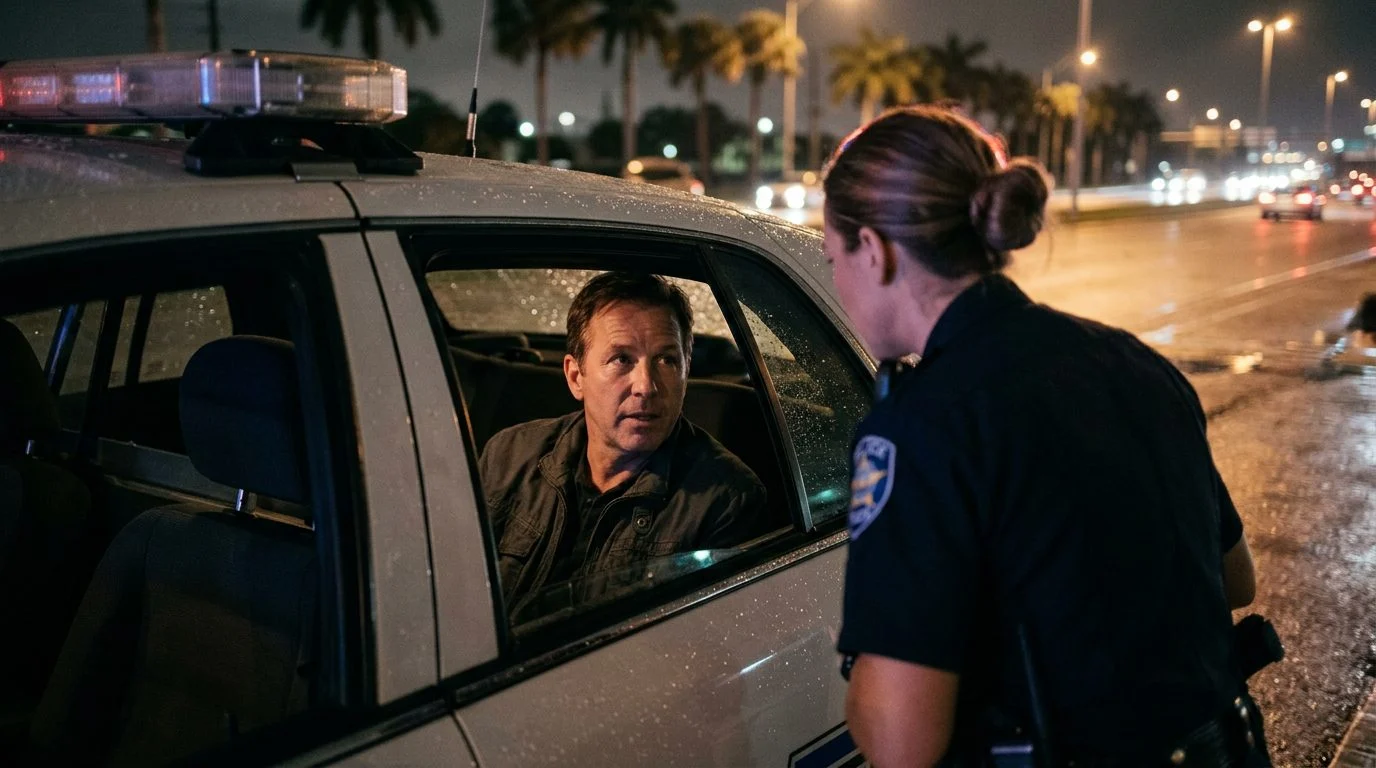
If you may be under investigation after a bicyclist died in a crash, your next decisions are time-sensitive. You may need to decide whether to speak with investigators, how to preserve vehicle and scene evidence, and when to get legal advice.
Patrick Wilson Law, PLLC is a Miami criminal defense firm serving Miami-Dade, Broward County, and the Florida Keys. Patrick David Wilson is the responsible lawyer for this page. Request a free first consultation or call 786-761-1719. The first consultation is confidential and carries no obligation to continue.
Frequently Asked Questions
Can a driver be charged if a bicyclist dies in Florida?
Yes. Prosecutors can file charges when a crash causes a death. Charging is not automatic.
Is leaving the scene charged separately?
Yes. A driver in a fatal crash must stay at the scene under § 316.027. Penalties for leaving the scene of a crash vary with the injuries involved.
Who has the right of way?
The intersection rules in § 316.121 decide who must yield. Bicyclists have the same rights and duties as other drivers.
Can police require a blood test after a fatal crash?
Yes. When an officer has probable cause that an impaired driver caused a death, the officer must require a blood test.
How Our Lawyers Approach a Bicycle Crash Case
Review of the Crash Record
We look at police reports, diagrams and statements to understand how the crash happened and what the charges are based on.
Evidence Preservation
Dashcam video, phone data, vehicle information and roadway conditions can change quickly. Our team works to identify what may still be available.
Plain-Language Guidance
We explain each charge, the possible penalties and the next steps in terms you can understand, so you know what to expect.
Attention for First-Time Offenders
Many of the people we represent have never faced criminal charges before. We focus on the details that matter most to their future.
Be Careful Before You Speak About the Crash
Statements to police, insurance adjusters or others after a crash can be used later. Speak with a lawyer before answering questions about what happened.
Common Questions After a Fatal Bicycle Crash
Can the driver be charged?
Yes, a driver can be charged after a cyclist dies. Charges are not automatic, and they depend on the facts of the crash and what the evidence shows.
What is vehicular homicide?
Vehicular homicide is a serious felony charge that involves a death caused while operating a vehicle. The prosecution must prove specific elements, and the details of each case matter.
What about leaving the scene?
Leaving the scene of a crash can lead to separate charges in some situations. Each charge carries its own issues, and they should be reviewed together.
What evidence is reviewed?
Crash reports, witness accounts, dashcam footage, phone records and roadway conditions can all shape how a case is evaluated.

