
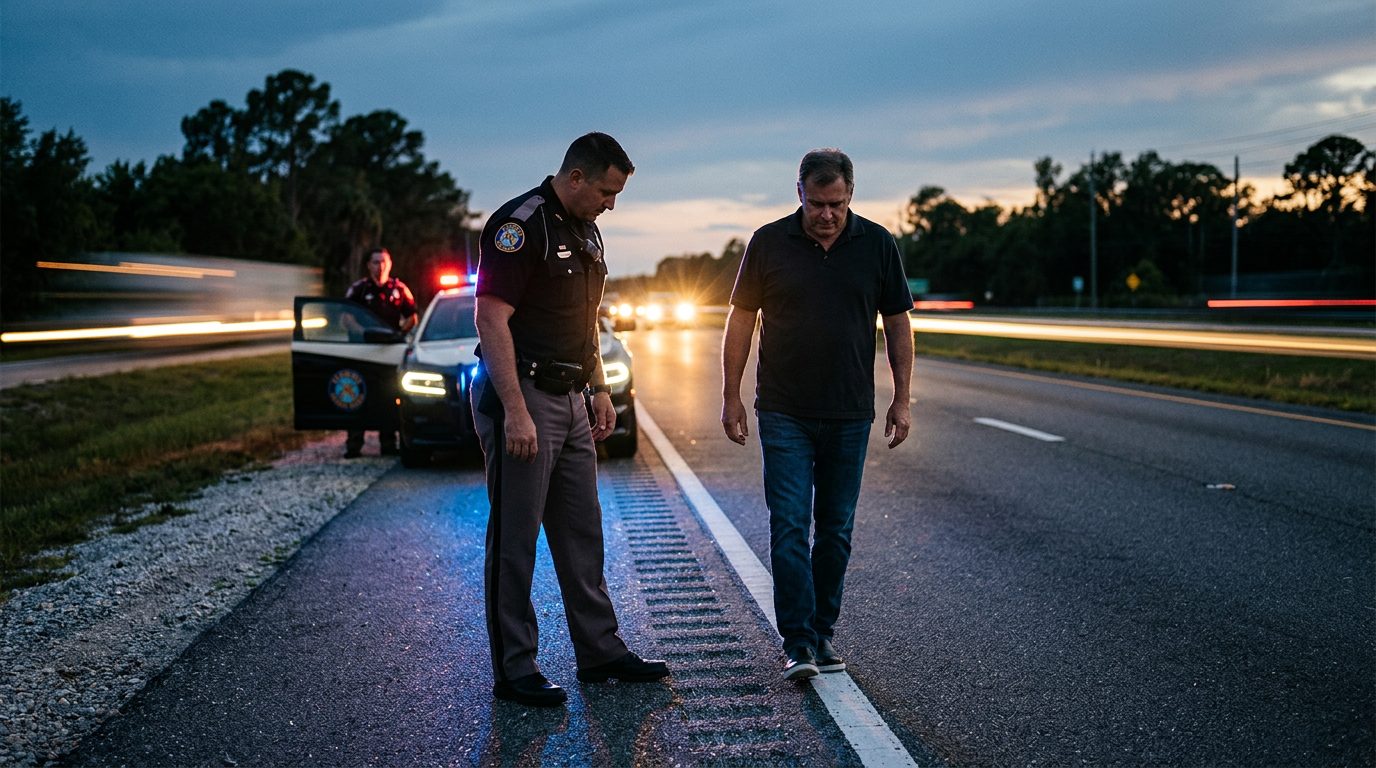
Vehicular Homicide Defense | Miami-Dade and Broward Counties
Blood Test After a Fatal Crash in Florida: Know Where You Stand
A blood draw after a deadly crash raises serious legal questions about consent, probable cause and how the sample was handled. Patrick Wilson Law, PLLC focuses on criminal defense for drivers facing vehicular homicide charges across South Florida.
By Patrick David Wilson · Published October 22, 2026
Can Police Take Your Blood After a Fatal Crash Without Your Consent?
Yes, in many cases police can require a blood test after a crash that causes a death or serious bodily injury, even if the driver says no, but only if the officer has probable cause to believe the driver was under the influence of alcoholic beverages, chemical substances, or controlled substances. Under § 316.1933, an officer who has probable cause to believe an impaired driver caused a death or serious bodily injury must require a blood test. The officer may use reasonable force if needed.
This rule works differently from a routine roadside stop. A DUI stop falls under the implied consent rules, which carry their own refusal consequences; § 316.1933 applies only where a motor vehicle has caused the death or serious bodily injury of a human being. A crash involving a death or serious injury puts the blood draw on a separate track. A common mistake is assuming that a refusal ends the matter.
This page is for drivers, passengers, and family members who have just learned that a blood draw was requested or taken. It covers implied consent, the mandatory blood test rule, how results are read, and how the evidence is challenged.
Patrick David Wilson is the lawyer responsible for this page. Patrick Wilson Law, PLLC is based in Miami and defends people across South Florida, from Broward County to the Keys.
If police asked for your blood after a crash that caused a death, you do not have to sort out the law alone, so contact us for a free, confidential first consultation with no obligation to continue. Talk it through with our team — the first consultation is free, confidential, and carries no obligation.
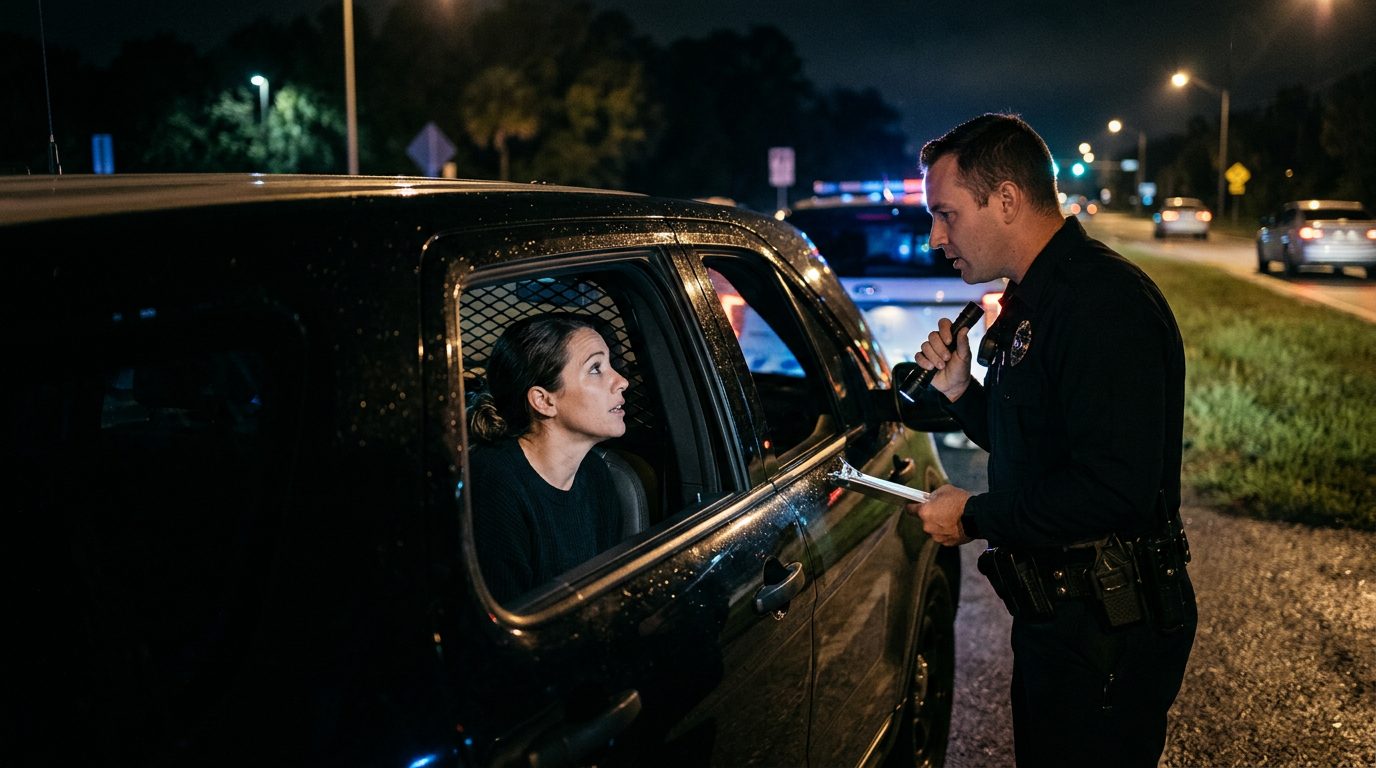
How Does Florida’s Implied Consent Law Work?
Florida’s implied consent law treats driving on Florida roads as agreement to an approved chemical test in certain cases. The rule appears in § 316.1932.
The test applies when the person goes to a hospital, clinic, or other medical facility, and a breath or urine test is impractical or impossible. A person who cannot refuse, because of unconsciousness or another condition, is deemed not to have withdrawn consent.
Refusal has consequences. A person who can refuse must be told that the driving privilege will be suspended for 1 year for a first refusal, or 18 months after a prior suspension or fine. A refusal to submit to a blood test is admissible in evidence in any criminal proceeding.
Refusing a breath or urine test is a crime on its own. Implied consent is not the same as a test you agreed to after thinking it over.
What Does Section 316.1933 Require After a Death or Serious Injury Crash?
Florida law requires a blood test when an officer has probable cause to believe that an impaired driver’s vehicle has caused a death or serious bodily injury. § 316.1933 sets out this rule apart from the general DUI rules.
The statute defines serious bodily injury as an injury to any person, including the driver, that consists of a physical condition that creates a substantial risk of death, serious personal disfigurement, or protracted loss or impairment of the function of any bodily member or organ. That definition decides whether this rule applies, so it is one of the first things to check.
Only certain people may draw the blood. The list includes a physician, a certified paramedic, a registered nurse, a licensed practical nurse, other personnel a hospital authorizes, and licensed clinical laboratory staff acting at an officer’s request. A draw by anyone outside that list is a question to examine.
The statute says the test “shall be performed in a reasonable manner.” It also says the officer “may use reasonable force if necessary.” The test does not need to be tied to a lawful arrest. Each draw rests on what the officer knew at the scene, and a defense review starts there. A North Miami Police Department DUI guide describes how officers handle blood requests after serious-injury or fatal crashes.
Breath Test or Blood Test: What Does Each Result Show?
A breath test and a blood test measure alcohol in different samples, so their results are not interchangeable. The rules for each are set out in § 316.1934, which covers presumptions and testing methods.
The statute refers to a blood-alcohol level or breath-alcohol level of 0.05 or less. A blood or breath alcohol level of 0.05 or less creates a presumption that the person was not under the influence to the extent that normal faculties were impaired. A level above 0.05 but below 0.08 creates no presumption either way. That number can be weighed with other evidence.
A blood sample can be analyzed for more than alcohol. The affidavit rule in § 316.1934 covers the alcohol content of the blood or breath. The blood test rule in § 316.1933 also covers chemical substances and controlled substances. Fla. Stat. § 316.1933 reads: “If a law enforcement officer has probable cause to believe that a motor vehicle driven by or in the actual physical control of a person under the influence of alcoholic beverages, any chemical substances, or any controlled substances has caused the death or serious bodily injury of a human being.” A breath test, by contrast, is a test of breath alcohol.
Because the two tests are collected and analyzed differently, a defense review looks at each result on its own terms. A number alone does not settle the question of impairment. The full record, including the method used, sits behind every figure.
Why Does the Timing of a Blood Draw Matter?
The time between driving and the draw shapes how a result is read. The timeline is one of the first things a defense review builds.
A hospital blood test can reach police later than the crash. Under § 316.1932, a health care provider treating a crash victim may notify law enforcement if a treatment blood test meets the level in the statute. Fla. Stat. § 316.1932 reads: “Notwithstanding any provision of law pertaining to the confidentiality of hospital records or other medical records, if a health care provider, who is providing medical care in a health care facility to a person injured in a motor vehicle crash, becomes aware, as a result of any blood test performed in the course of that medical treatment, that the person’s blood-alcohol level meets or exceeds the blood-alcohol level specified in s. 316.193(1)(b), the health care provider may notify any law enforcement officer or law enforcement agency.” That notice must be given within a reasonable time after the result is received.
Results also move through the license process. § 322.2615 requires the officer or agency to send blood results to the Department of Highway Safety and Motor Vehicles within 5 days after receipt.
To build the timeline, look at the crash report, the officer’s notes, and any hospital or collection records. Dates and times on each document show when each step happened.
How Are Chain of Custody and Lab Testing Reviewed?
The defense checks who collected the sample, how it was labeled, stored, and moved, and whether the lab followed approved methods. Chain of custody is the written record of every handoff of the sample.
Florida law requires that a blood alcohol analysis be done substantially in accordance with methods approved by the Department of Law Enforcement, by a person holding a valid permit. A request for a formal review hearing or an informal review hearing does not stay the suspension of the person’s driver license. A review looks for differences that go beyond that line.
An affidavit with test results can serve as presumptive proof under § 316.1934 if it discloses, among other things, the type of test and the procedures followed, and the type and status of any permit issued by the Department of Law Enforcement which was held by the person who performed the test. That is one of the first documents to read.
Discovery is how the defense gets the full testing file. Rule 3.220 governs criminal discovery, including statements made by the defendant and whether there was any search or seizure. Challenges are raised through a motion under Rule 3.190. A motion to suppress must be filed before trial or by a court deadline unless there is good cause for the delay or the state does not object.
Not sure what your next step is?
Talk it through with our team — the first consultation is free, confidential, and carries no obligation.
What Should You Do After a Blood Draw Request?
Keep every paper you receive, and write down what happened while it is fresh. Note the date, time, and the names of officers and medical staff involved in the draw. Limit what you say about the crash details.
Leaving the scene is a separate and serious problem. Florida drivers must remain at a crash scene, as the Florida Department of Highway Safety and Motor Vehicles explains. Under § 316.027, a willful violation after a crash causing death is a first-degree felony. If a driver willfully fails to stop and remain at the scene of a crash that results in a death, the statute requires a 4-year mandatory minimum term of imprisonment, and the same 4-year minimum applies when the violation is committed while driving under the influence. Vehicular homicide is addressed in § 782.071.
Patrick Wilson Law defends vehicular homicide and related charges across South Florida, including review of blood test evidence and chain of custody.
Can police take blood without consent after a fatal crash in Florida?
Yes, when an officer has probable cause that impairment caused a death or serious bodily injury, the blood test is required. The officer may use reasonable force if needed.
What happens if I refuse a blood test in Florida?
Can a blood test result be challenged?
A motion to suppress may be filed for evidence obtained unlawfully.
If police asked for your blood after a crash that caused a death, you do not have to work through the legal questions alone. Call 786-761-1719 or request a free first consultation. The first consultation is free, confidential, and carries no obligation to continue.
How our team approaches these cases
Reviewing the Legal Basis for the Draw
We examine the reports and records to understand what the officer relied on when requesting or obtaining a blood sample.
Evaluating Possible Challenges
Where the facts support it, we assess whether a motion to suppress may apply to evidence obtained unlawfully.
Tracking the Chain of Custody
We look at how the sample was collected, labeled, stored and tested, and whether those steps were documented.
Clear Communication From the Start
We explain each stage of the case in plain language so you know what to expect and what decisions lie ahead.
Speak with a lawyer before you answer questions
Statements made at the scene or afterward can shape a vehicular homicide case. Contact a criminal defense lawyer before discussing the crash in detail with investigators.
Questions to raise after a fatal crash
Was there a warrant or documented consent?
The paperwork and recorded circumstances of the blood draw are central to evaluating the case.
Who collected and handled the sample?
Training, procedures and record-keeping of the people involved can matter as much as the test result itself.
Was the crash scene and timing documented?
Reports, timelines and witness statements help show what happened before and after the blood draw.

