
Vehicular Homicide Defense | Miami-Dade and Broward Counties
Crash Reconstruction Takes Time. Here Is Why.
A vehicular homicide case moves through several stages of evidence gathering before anyone can say what happened. Knowing those stages helps you plan your next steps.
By Patrick David Wilson · Published November 16, 2026
If someone you care about faces a vehicular homicide charge, you may be waiting on crash evidence and wondering how long it will take. There is no single answer. How long accident reconstruction takes depends on the facts of the crash, how quickly the evidence is protected, and how much data must be pulled from the vehicles.
Short Answer: Why There Is No Single Number
Accident reconstruction has no fixed timeline because each crash is different. Many people expect a quick answer, since the crash itself happened in seconds. The analysis and paperwork take much longer. The phrase covers several stages, from scene work to a written report, and each stage can run at its own pace. A criminal case moves on its own clock too. Under Florida’s criminal procedure rules, the state must file formal charges within 30 days of arrest for a defendant in custody, and within 60 days for a defendant on pretrial release (Fla. R. Crim. P. 3.134). That means the charging clock can run while reconstruction work is still underway.
If you're waiting on crash evidence for someone you care about, we can talk through what may still be preserved, so call 786-761-1719 or leave us a message. Talk it through with our team — the first consultation is free, confidential, and carries no obligation.
What Accident Reconstruction Involves
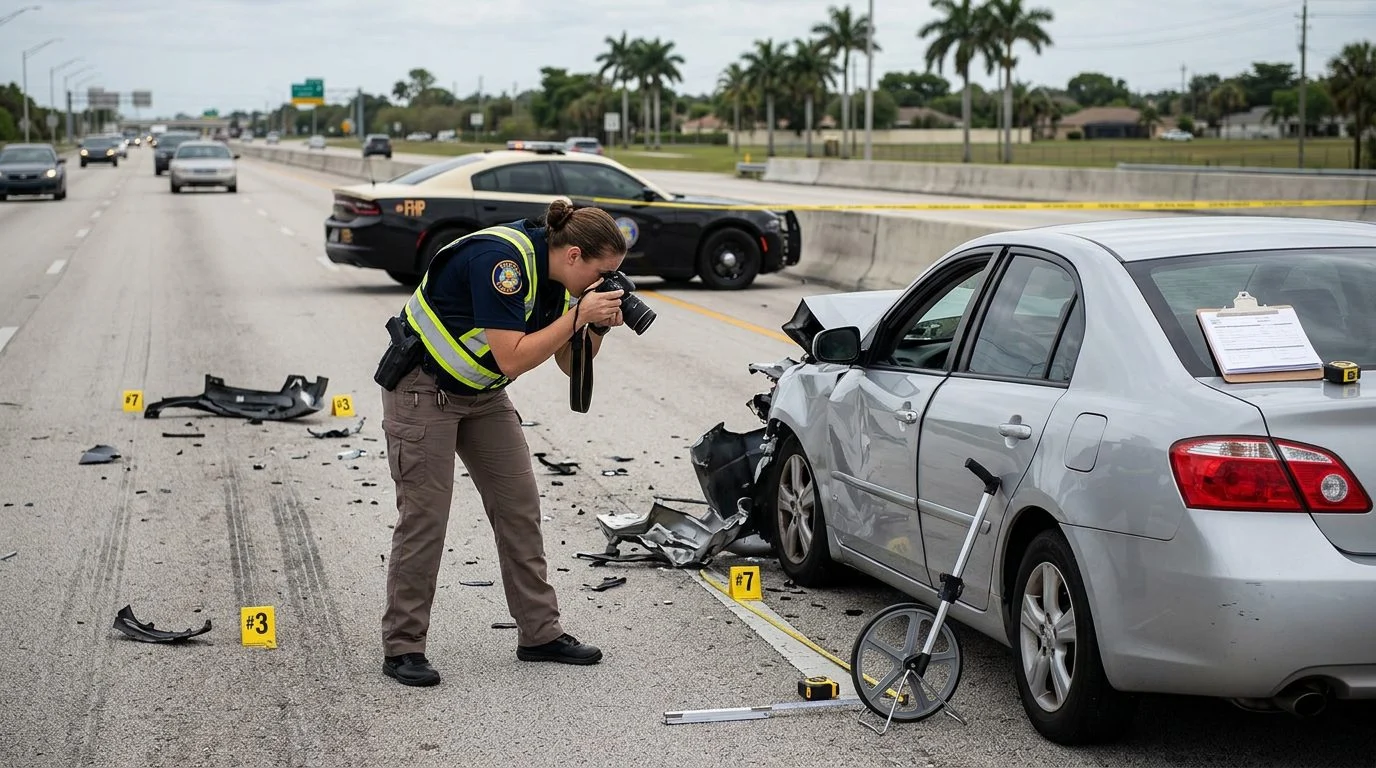
A crash reconstructionist uses physical evidence and data to work out how a crash happened. That includes speed, path of travel, and the order of events. Common inputs are scene measurements, skid and gouge marks, vehicle damage, photographs, roadway and lighting conditions, and witness statements. Many vehicles also store crash data in an event data recorder. That data has to be retrieved and read with the right tools. The analyst then applies physics and calculations to the evidence and writes a report. Reconstruction is not a single test. Analysts pull together many small pieces, and each piece must fit the others.
Each input depends on the evidence still being there. Traffic can smear marks, and road crews may repave a damaged stretch. Once a car is repaired, sold, or salvaged, some of the proof may be gone for good. Measurements taken later may not show the scene the way the crash left it. That is why early work matters so much.
Factors That Change the Timeline
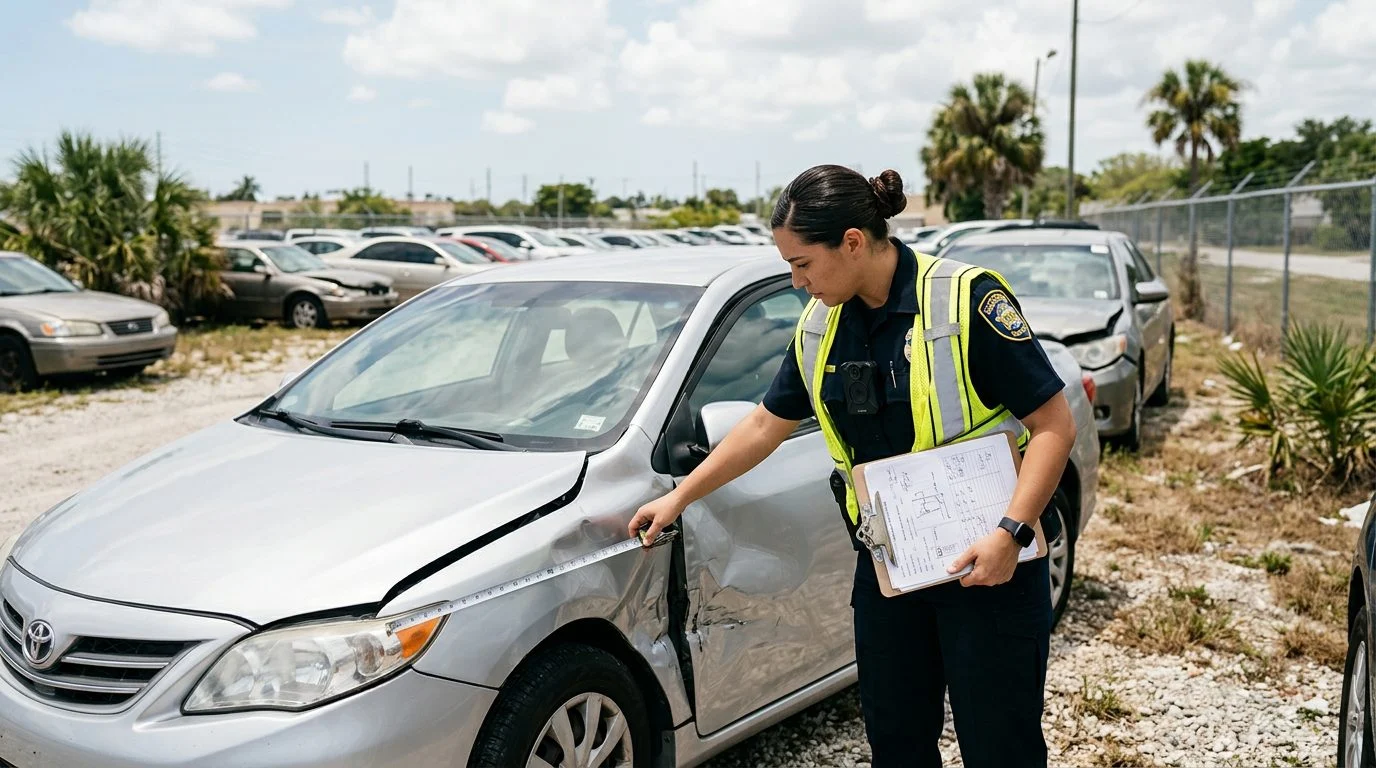
The biggest factor is how soon the scene and vehicles are documented. Weather, traffic, or road work can change marks before anyone measures them. Vehicle custody matters as well. A car held for inspection follows a different path than one already repaired, sold, or salvaged. Data retrieval adds time when a recorder must be downloaded, read, and checked. More vehicles, witnesses, video sources, and injuries mean more work to sort through.
Records set the pace too. Under Fla. Stat. § 316.066, the long-form Florida Traffic Crash Report must be submitted within 10 days after the investigating officer completes the investigation of a crash that resulted in death, personal injury, or any indication of complaints of pain or discomfort. Under Fla. Stat. § 316.066, crash reports that reveal the parties’ personal information are generally kept confidential for 60 days after filing, but the statute still allows the agency to release them right away to the people involved in the crash, their legal representatives and their insurers, among others (Florida Department of Highway Safety and Motor Vehicles). Delays at this step can push back everything that follows.
The Typical Stages From Start to Final Report
Work usually moves through five stages, and they often overlap. Stage one is evidence preservation, which secures scene data, vehicles, and records. Stage two is data collection, including measurements, inspections, photographs, and downloads. Stage three is analysis and modeling, where calculations are compared with the physical marks and damage. Stage four is draft and review, when findings are checked and refined as new information arrives. Stage five is the final written report, which documents conclusions, data, and methods.
Stage one sets the limits for everything after it. If the scene or a vehicle is lost during that stage, later stages cannot recover that data. A later stage can also send the work back to an earlier one. If new evidence turns up, a report that looked finished may change. Each case has its own unknowns, and each unknown can add time.
How the Timeline Affects a Vehicular Homicide Case
Under Fla. Stat. § 782.071, vehicular homicide is a killing caused by someone operating a motor vehicle in a reckless manner likely to cause death or great bodily harm. The key question is often how the crash happened, and reconstruction evidence can answer it. The base offense is a second-degree felony. It becomes a first-degree felony if the driver knew or should have known the accident occurred and failed to give information and render aid as required by section 316.062.
Timing matters because physical evidence can change as vehicles are repaired, moved, or released. Witness memories can fade. Both the prosecution and the defense may need their own reconstruction work, and records requests take time to process. Our Miami team defends these cases across South Florida. You can read more on our vehicular homicide defense page.
Steps Families and Drivers Can Take While the Investigation Is Underway
Start by keeping every document in one place. That includes the crash report, citations, insurance letters, photos, and medical paperwork. Don’t release or repair a vehicle until you understand what evidence it may still hold. Be careful about posting about the crash online, and think before giving statements to insurers. Write down what you remember while it is fresh, along with the names of anyone else who was present.
Two constitutional points matter too. The Fifth Amendment protects a person in a criminal case from being compelled to be a witness against oneself (U.S. Constitution, Fifth Amendment). Police also generally need a warrant to search a cell phone seized during an arrest (Riley v. California). This is general information, not legal advice for your situation.
Not sure what your next step is?
Talk it through with our team — the first consultation is free, confidential, and carries no obligation.
Talk With Patrick Wilson About Your Situation
If you’re waiting on a crash report or worried about a family member under investigation, you don’t have to sort out the timeline alone. Patrick David Wilson is the responsible lawyer for this page, and we defend people across South Florida, from Broward County to the Keys, in cases ranging from DUI to traffic homicide. Call 786-761-1719 or leave a message, and we’ll talk through what evidence may still be preserved. The first consultation is free, confidential, and carries no obligation to continue.
How long does accident reconstruction take?
There is no fixed number. Timing depends on how fast the evidence is preserved, the vehicles’ condition, and how much data must be retrieved.
How long does the state have to file charges?
A defendant in custody must be charged within 30 days of arrest. A defendant on pretrial release has 60 days.
What Shapes the Reconstruction Timeline
Speed of Evidence Preservation
Vehicles, roadway markings and electronic data can change or disappear quickly, so early preservation affects how long the work takes.
Condition of the Vehicles
Damaged, impounded or repaired vehicles often require more time to inspect, document and test.
Data Retrieval
Event data recorders, phone records and surveillance footage each require separate requests, and some take weeks to obtain.
Outside Analysts
Independent reconstruction analysts must measure the scene, model the collision and prepare findings that can withstand scrutiny.
Important: Do Not Give a Statement Alone
Anything you say about the crash, to police, insurers or anyone else, can become part of the evidence. Speak with a defense lawyer before you discuss the events.
How the Process Typically Unfolds
1. Securing the Scene and Vehicles
Measurements, photographs and vehicle inspections are gathered as early as possible, before conditions change.
2. Collecting Digital Records
Data from vehicle modules, phones and traffic cameras is requested, preserved and reviewed for accuracy.
3. Analysis and Modeling
Analysts reconstruct speeds, positions and sight lines, then test their conclusions against the physical evidence.
4. Review by the Defense
Our team reviews every finding, identifies gaps and decides how the reports should be used in your case.
Facing a Vehicular Homicide Charge in South Florida?
Talk to Patrick Wilson Law. The first consultation is free, confidential and comes with no obligation to continue. Call 786-761-1719 or leave us a message.

