
Vehicular Homicide & Leaving the Scene | Miami-Dade, Broward & the Keys
Your Teen Faces a Fatal Crash Charge. Here's What Adult Court Could Mean.
Patrick Wilson Law defends young drivers and their families across South Florida, and we start by explaining where the case stands.
By Patrick David Wilson · Published November 21, 2026
Can a Teen Driver Be Charged With a Crime After a Fatal Crash in Florida?
Yes. A teen driver involved in a fatal crash in Florida can face criminal charges. The case may be heard in juvenile court or in adult criminal court, depending on the charge, the teen’s age and the facts.
A death does not automatically send a case to adult court. The route depends on how the state files the charges, and it can change as the case develops.
This guide covers the main questions behind teen driver fatal crash charges Florida families face. It is a general overview for parents and teens in Miami-Dade, Broward and South Florida. The outcome of any case turns on its own facts. For the full picture, read our vehicular homicide overview for South Florida.
If your teen is facing charges after a fatal crash, you don't have to weigh juvenile and adult court alone. Our team can talk it through with you. Talk it through with our team — the first consultation is free, confidential, and carries no obligation.

Charges a Fatal Crash Can Lead To in Florida
A fatal crash can lead to more than one charge. Prosecutors can file several counts from the same crash. For a teen, the charges usually fall into three groups.
Vehicular homicide. Fla. Stat. § 782.071 defines the offense as killing a person, or an unborn child by injury to the mother, by operating a motor vehicle in a reckless manner likely to cause death or great bodily harm. The basic charge is a second-degree felony. It becomes a first-degree felony if the driver knew or should have known the crash occurred and failed to give information and render aid. The statute does not require that the driver knew the crash caused injury or death. It also reaches a first-degree felony when the driver has a prior conviction under that section, certain impaired-driving or boating laws, or vessel homicide.
DUI manslaughter. Fla. Stat. § 316.193 makes it a crime to drive or be in actual physical control of a vehicle while impaired to the extent that his or her normal faculties are impaired. Impairment can come from alcohol, a chemical substance or a controlled substance. When that impairment causes a death, DUI manslaughter is a second-degree felony with a mandatory minimum of 4 years in prison.
Leaving the scene. Fla. Stat. § 316.027 requires a driver in a crash that results in death to stop at the scene. The driver must stay until the duties under § 316.062 are fulfilled. A willful violation is a first-degree felony. It carries a mandatory minimum of 4 years in prison.
For how these charges are formally filed, see how Florida vehicular homicide cases are filed.
Juvenile Court vs. Adult Court: How the Case Route Is Decided
A felony traffic charge after a fatal crash points toward circuit court, not traffic court. Under Fla. Stat. § 316.635, a traffic court has original jurisdiction over a minor accused of a traffic violation. But any traffic offense punishable as a felony falls under the circuit court.
Teen driver fatal crash charges Florida cases often turn on this one question: which court hears the felony. Circuit court is Florida’s trial court for felony cases. Juvenile court handles young people under its own procedures, which differ from adult criminal court.
Felony charges are filed by indictment or information. Fla. R. Crim. P. 3.140 says offenses punishable by death must be prosecuted by indictment. Other offenses in circuit and county courts must be prosecuted solely by indictment or information, except certain county-court ordinance and misdemeanor cases that may proceed by affidavit, docket entry, or notice to appear.
Several things shape the route. These include the exact charge, the teen’s age, the crash facts and any prior record. A prior DUI conviction can be shown through state driving records. Under Fla. Stat. § 316.193, those records are sufficient by themselves, though the evidence can be rebutted. The first filing is not always the final word.
Can You Go to Jail for Accidentally Killing Someone in a Crash in Florida?
Yes. A felony charge can bring prison time even when the driver never meant to hurt anyone. Vehicular homicide focuses on reckless driving, not on an intent to kill. Fla. Stat. § 782.071 asks whether the driving was reckless and likely to cause death or great bodily harm.
Felony levels are punishable under the sentencing rules in Fla. Stat. § 775.082. Under § 775.082, a person convicted of a noncriminal violation may not be sentenced to a term of imprisonment or to any other punishment more severe than a fine, forfeiture, or other civil penalty, except as provided in chapter 316 or by ordinance.
Under Fla. Stat. § 316.027, a defendant may move to depart from the 4-year mandatory minimum for leaving the scene of a fatal crash, unless the violation was committed while driving under the influence. The state may object, and the court may grant the motion only if imposing the minimum would result in an injustice. That is why this count can change the sentencing picture quickly.
A common mistake is to assume a teen’s age removes real exposure. It does not change what the charge says. The juvenile system has its own options, and they differ from adult sentences.
What Happens After a Teen Is Charged: Steps Parents Should Understand
The first step is a court appearance within 24 hours of arrest, except when the person was previously released in a lawful manner. Under Fla. R. Crim. P. 3.130, except when previously released in a lawful manner, every arrested person must be taken before a judge within 24 hours. The appearance can be in person or by audio-video, as the court decides.
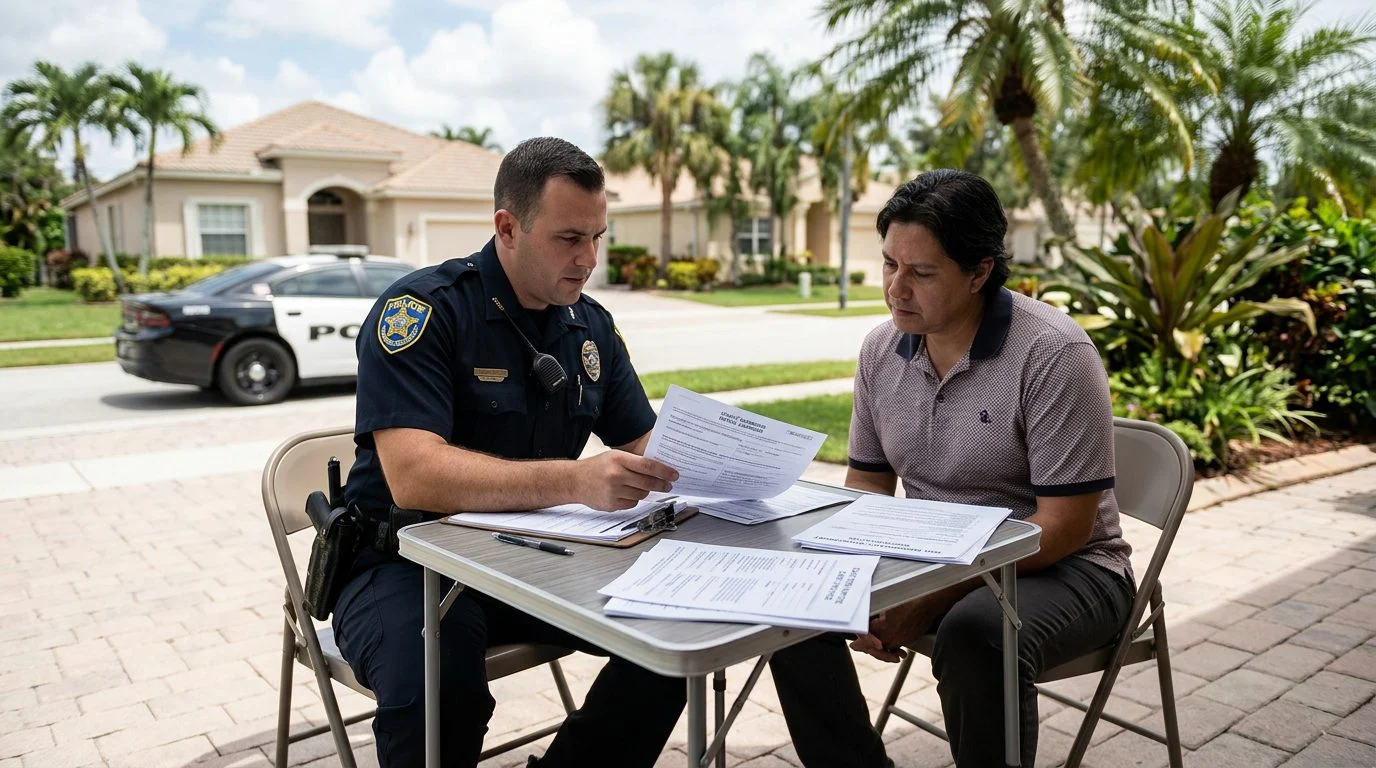
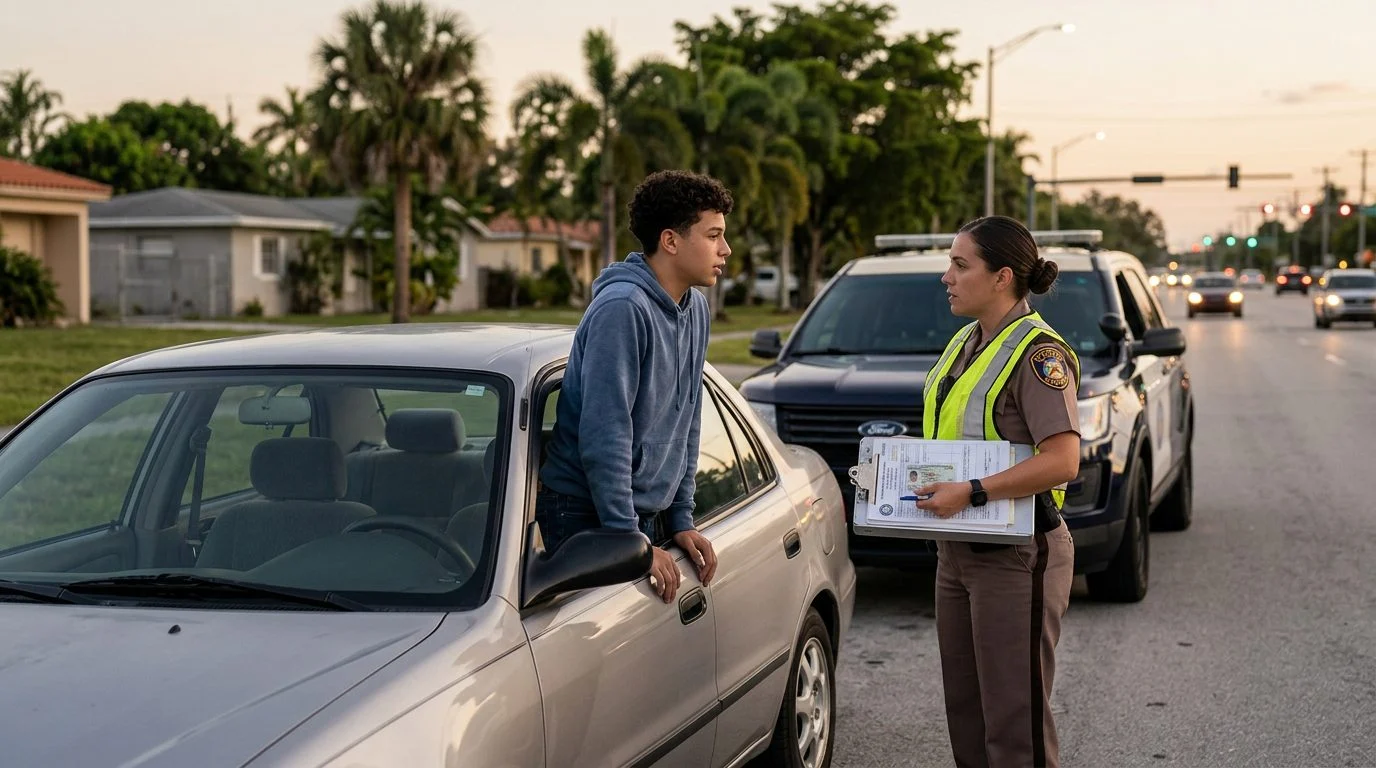
At that first appearance, the judge must say the defendant is not required to say anything. The judge must also warn that anything the defendant says may be used against them. That warning matters at the roadside too. A frightened teen may want to explain the crash to police right away. Words spoken at the scene can become evidence. A teen should not answer questions until a lawyer is involved.
Parents get notice. Under Fla. Stat. § 316.635, when a minor is taken into custody for a criminal traffic offense and does not demand to be taken before a trial court judge or civil traffic infraction hearing officer, the officer must immediately notify the parents, guardian or responsible adult relative.
Blood testing can follow a deadly crash. Fla. Stat. § 316.1933 reads: “(1)(a) If a law enforcement officer has probable cause to believe that a motor vehicle driven by or in the actual physical control of a person under the influence of alcoholic beverages, any chemical substances, or any controlled substances has caused the death or serious bodily injury of a human being, a law enforcement officer shall require the person driving or in actual physical control of the motor vehicle to submit to a test of the person’s blood for the purpose of determining the alcoholic content thereof or the presence of chemical substances as set forth in s. 877.111 or any substance controlled under chapter 893.” The officer may use reasonable force if necessary.
Bond is the next decision. Fla. R. Crim. P. 3.131 starts with a right to pretrial release, subject to the exceptions in the rule. Bail is set separately for each crime charged when a judge sets or grants monetary bond.
Parents’ Exposure: Signing the License, Unlicensed Driving and Civil Liability
A parent who signed a minor’s license application can be held responsible for that minor’s negligent driving. Under Fla. Stat. § 322.09, the minor’s negligence or willful misconduct on a highway is imputed to the person who signed. That person is jointly and severally liable with the minor for resulting damages. That means each can be held liable for the full amount.
Letting an unlicensed minor drive is also a problem. Fla. Stat. § 322.35 says no person shall cause or knowingly permit a child or ward under 18 to drive on a highway when the minor is not authorized by chapter 322. A parent’s exposure depends on the facts. It is separate from the teen’s own charges.
Not sure what your next step is?
Talk it through with our team — the first consultation is free, confidential, and carries no obligation.
The 51% Rule Is a Civil Issue, Not a Criminal Charge
It does not decide whether a criminal charge is filed.
Criminal and civil cases can run at the same time. The criminal case asks whether the state can prove a crime. The civil claim asks who was at fault and who can recover money. Under Fla. Stat. § 782.071, a civil right of action for damages exists under § 768.19 for all deaths described in that section.
Victim Families, Sentencing and Public Attention
Restitution is a key sentencing tool in these cases. When a driver violates the stop-and-stay duty, the court must order the driver to make restitution to the victim for any damage or loss unless the court finds clear and compelling reasons not to. The court may skip it only if it finds clear and compelling reasons not to.
Restitution can be monetary or nonmonetary. The court makes payment a condition of probation. The order does not remove the duty to pay the Crimes Compensation Trust Fund under chapter 960.
Families on both sides often attend hearings. News coverage can shape how the public sees a family, even before the facts are tested. The case is still decided in court, on the evidence.
Talk Through Your Teen’s Case With Patrick Wilson Law
Patrick Wilson Law is a Miami criminal defense firm. It represents people across South Florida, from Broward County to the Keys. Patrick David Wilson is the responsible lawyer for this page. Our lawyers include Patrick David Wilson and Sahara Fonseca, and our team works with them.
Parents dealing with teen driver fatal crash charges Florida prosecutors have filed face decisions quickly. These include whether the case may move to adult court, what the teen should say to police and what the first court dates will require.
Quick answers
Can a teen be charged with vehicular homicide in Florida?
The vehicular homicide statute sets no age limit, so a teen can face the charge if the facts fit.
Is there jail time for leaving the scene of a fatal crash?
A willful violation is a first-degree felony with a 4-year mandatory minimum under Fla. Stat. § 316.027.
Can a parent be held responsible for a teen’s crash?
A parent who signed the teen’s license application may be jointly liable for damages under Fla. Stat. § 322.09.
If your teen has been charged after a fatal crash, you don’t have to sort through juvenile and adult court options alone. Call 786-761-1719 or contact our office online to leave a message. Your first consultation is free and confidential, with no obligation to continue.
How We Approach a Teen Driver Case
Review the Charging Decision
We examine the crash report, the charging documents and the facts that will decide whether the state's theory holds up.
Protect Your Teen's Future
We look at how a juvenile or adult charge could affect school, employment and a record that follows a young person for years.
Keep Families Informed
Parents and guardians receive clear explanations at each stage, so decisions are made with full information.
Plan Early
The sooner an attorney reviews the facts, the more options may be available before key decisions are made.
Talk to a Lawyer Before Speaking With Investigators
Statements made to police after a fatal crash can shape the charges your teen faces. Contact an attorney before answering questions or signing anything.
Services for Young Drivers and Their Families
Vehicular Homicide Defense
Defense against vehicular homicide charges, including cases where a young driver is accused of causing a death.
Leaving the Scene of an Accident
Defense for drivers charged with leaving the scene of a crash, including cases involving injury or death.
First-Time Offender Defense
Representation for drivers facing their first criminal charge, with attention to long-term consequences.
Seal and Expunge Records
Help exploring whether a criminal record can be sealed or expunged once a case is resolved.

