
Vehicular Homicide Defense | Miami-Dade, Broward and the Keys
Before You Talk to an Insurance Adjuster After a Fatal Crash, Talk to a Lawyer
Patrick Wilson Law, PLLC focuses on criminal defense in South Florida. A statement to an insurer can become evidence in a criminal case, so get guidance before you answer questions about the crash.
By Patrick David Wilson · Published October 29, 2026
Should you talk to the insurance company after a fatal crash in Florida? Pause before you give any recorded or detailed statement. After a death, what you say can affect an insurance claim and a criminal case at the same time. This guide explains why, in plain words, for drivers and for the family members who often take these calls.
The Short Answer: Slow Down Before Giving Any Statement
Pause before you agree to a recorded or detailed statement after a fatal crash. The questions often sound routine, and the call may feel friendly. A fatal crash is still a serious event, and it can lead to a criminal investigation.
Early calls often come before anyone has reviewed the police report or the scene. That is when mistakes are easiest to make. Waiting while the facts get sorted out is a common and reasonable step.
Pausing is not the same as ignoring the insurer. You can tell the adjuster you will follow up. You can ask for a name and a callback number, then make a plan with legal advice.
If you are calling for a spouse, parent, adult child or friend, remember that the decision belongs to the person involved. You can help them think it through. The choice to speak, and what to say, is still theirs.
If a family member is now getting calls from adjusters after a fatal crash, you don't have to face those calls alone. Our team can talk through what to say, and what to hold back, before anyone gives a statement. Talk it through with our team — the first consultation is free, confidential, and carries no obligation.
Who the Insurance Adjuster Works For
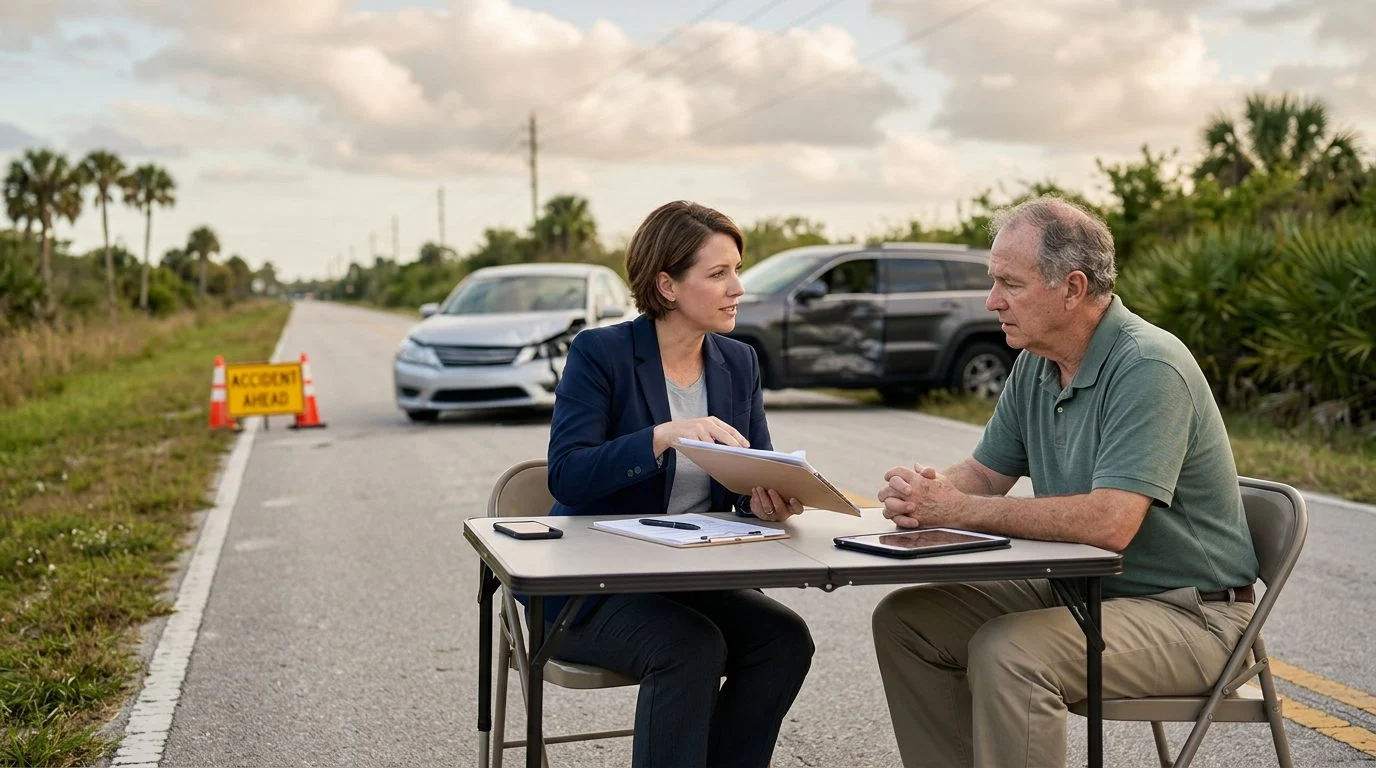
An insurance adjuster works for the insurance company, not for you or your family. The adjuster’s job is to decide who is responsible, limit what the insurer pays, and set a value for any injury or death claim. A friendly voice still has a clear goal. Every question helps the insurer build its file.
Two kinds of calls usually follow a crash. Your own insurer may contact you to open a claim under your policy. The other driver’s insurer may contact you if you are a claimant or a family member of someone hurt in the crash. Each company asks for information in its own way, so treat both calls with the same care.
Florida personal auto coverage can include bodily-injury liability and uninsured or underinsured-motorist coverage. The Florida Department of Financial Services describes these coverages. Which policy applies is a question worth raising with a lawyer.
Why a Statement Can Matter in a Criminal Case
A statement about how the crash happened can matter in a criminal case, even when it goes to an insurer. Florida treats some fatal crashes as crimes. Vehicular homicide is generally a second-degree felony in Florida, but certain circumstances can raise it to a first-degree felony. It becomes a first-degree felony if the person knew or should have known the crash occurred and did not give information and render aid under § 316.062.
Crash information also moves quickly. Under Fla. Stat. § 316.066, crash reports may be made available to the parties, their legal representatives, their insurers and law enforcement. The official file and the insurance file can overlap.
Details given early can cause trouble later. For that reason, talk with a criminal defense lawyer before you describe how the crash happened.
Reporting the Crash to Your Own Insurer Without Delay
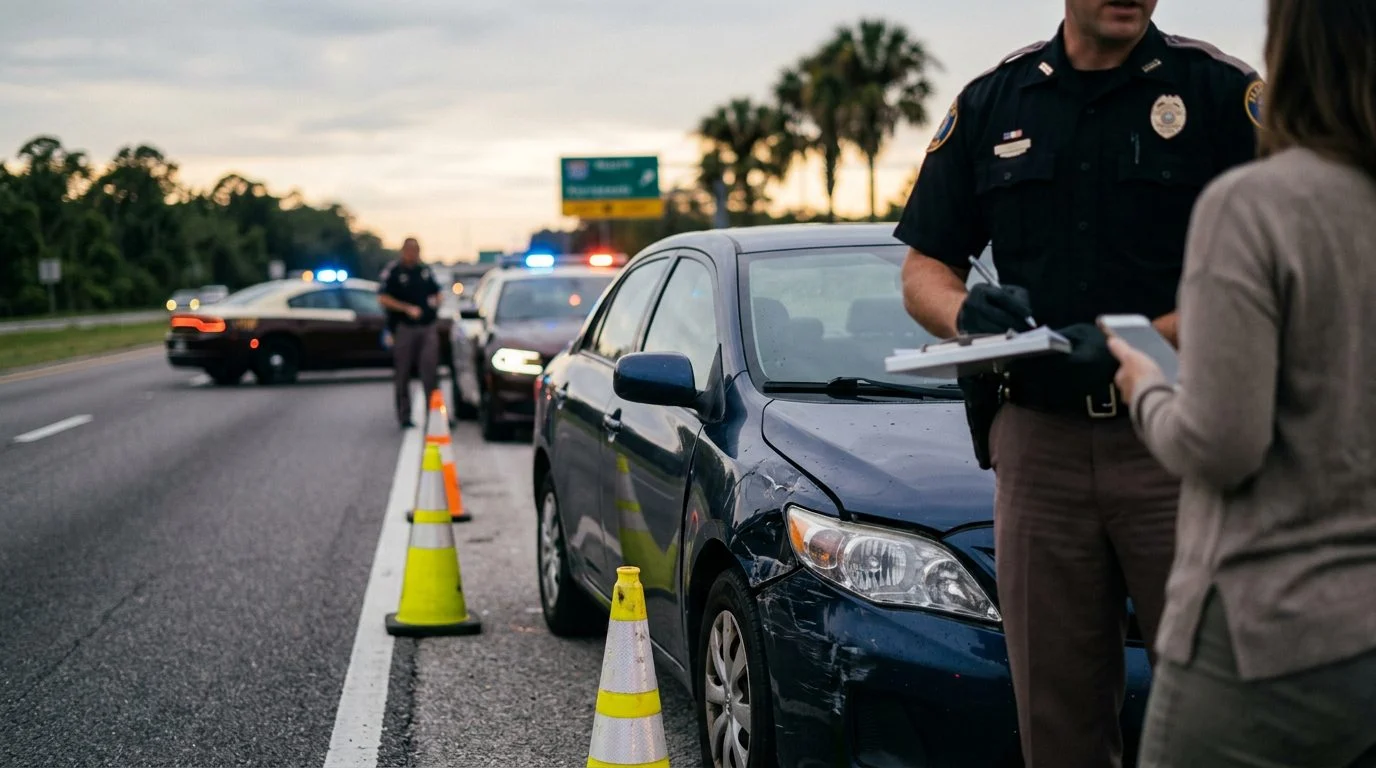
Report the basic facts to your own insurer promptly. Leave the details of fault for a lawyer to review. Florida law also requires quick notice to police. Under § 316.065, the driver of a vehicle in a crash resulting in injury or death must immediately, by the quickest means of communication, give notice to the local police department if the crash occurs within a municipality; otherwise, to the county sheriff or the nearest Florida Highway Patrol office.
Late or incomplete notice can create problems.
The details depend on the policy and the facts, so review them with a lawyer. Reporting the date, place and parties does not decide who is criminally responsible.
What Not to Say and What to Avoid Putting in Writing
Avoid guessing about speed, admitting fault, or describing what the driver was doing before the crash. These three areas cause the most trouble. A guess can look like a fact later.
Show respect without addressing fault. A simple “I’m so sorry for your loss” offers sympathy without describing what happened. Avoid phrases that could be read as an admission.
Do not post about the crash, the victim or the driver on social media. Do not delete existing posts without first getting legal advice. Deleting can raise its own questions.
Keep a private, factual log of calls. Write down who called, which company they represent, the date and time, and what they asked. Keep this log separate from any statement you give. It helps you and your lawyer track what has been said.
How Florida’s 51% Rule Affects an Injury or Death Claim
Because fault is often the central question, early statements matter. A remark about speed or a lane change can shift how fault is viewed. How fault is divided depends on the facts of the crash, the evidence and the claims involved.
Timing matters too. The same facts that shape an insurance claim can also shape a criminal case, so the two should be weighed together.
Not sure what your next step is?
Talk it through with our team — the first consultation is free, confidential, and carries no obligation.
When to Bring in a Florida Criminal Defense Lawyer
Bring in a criminal defense lawyer before you speak with an insurer about how the crash happened. A lawyer can handle communication with the insurer, so you do not have to speak with an adjuster directly. A lawyer can also review the police report, check what has already been said, and advise on what to share.
A lawyer can explain three separate tracks. The criminal investigation looks at whether a crime occurred. The insurance claim addresses payments under a policy. A civil lawsuit seeks damages from the other party. Each has its own rules and timing.
The choice to speak or stay quiet with insurers is one you make with legal advice, not alone. The firm’s vehicular homicide defense and leaving-the-scene pages cover the criminal side in more depth.

Talk With a Miami Criminal Defense Team Before You Speak With the Insurer
A criminal defense lawyer can help you decide what to say before you give any statement. Patrick Wilson Law, PLLC is a Miami criminal defense firm serving Miami-Dade County, Broward County and the Florida Keys. Patrick David Wilson is the responsible lawyer for this page. The firm’s lawyers, including Sahara Fonseca, and its support staff handle vehicular homicide defense matters.
Do I have to give a recorded statement after a fatal crash?
Pausing before a recorded statement is a common step. Talk with a criminal defense lawyer before you describe how the crash happened.
Can an insurance statement be used in a criminal case?
Early details can be used to question later accounts, so consistency matters. Crash reports can also reach insurers and law enforcement under Florida law.
If a family member is getting calls from adjusters after a fatal crash, you don’t have to face them by yourself. Contact Patrick Wilson Law or call 786-761-1719 to leave a message. The first consultation is free, confidential and comes with no obligation to continue.
Warning: Speak With a Lawyer First
Insurance adjusters may ask for a recorded statement soon after a fatal crash. Anything you say can be repeated, compared with the police report, and used in a criminal investigation. Speak with a criminal defense lawyer before you give a statement.
How Our Firm Helps After a Fatal Crash
Criminal defense focus
Our firm concentrates in criminal defense, including vehicular homicide, leaving the scene of an accident and related charges in South Florida.
Guidance on insurer contact
We help you decide what to say to an insurance company, when to say it, and whether to say anything at all while an investigation is open.
Review of the crash record
Our lawyers review police reports, statements and other records so you understand how they may be used.
Early attention to the case
Early decisions about insurer communication can affect the rest of a criminal case, so our team encourages you to reach out promptly.
Plain-language answers
We explain the process in clear terms and answer your questions honestly, without pressure.
Support for families
Losing someone in a crash is painful. Our team treats each family with patience, respect and confidentiality.
Common Questions After a Fatal Crash
Do I have to give a recorded statement?
Pausing before a recorded statement is a common step. Talk with a criminal defense lawyer before you describe how the crash happened.
Can an insurance statement be used in a criminal case?
Early details can be used to question later accounts, so consistency matters. Speak with our firm before you give any account.
What about the crash report?
Crash reports can reach insurers and other parties. We can review what is in the report and how it may affect your case.
Can I talk to the insurer without a lawyer present?
Every situation is different. Our firm offers a free, confidential first consultation to discuss your options with no obligation to continue.
Get Confidential Guidance Before You Speak to an Insurer. Our Free First Consultation Has No Obligation to Continue.
Related practice areas
- Vehicular Homicide Defense Attorney in South Florida: Charges, Penalties and How the Defense Is Built
- Restitution in Florida Vehicular Homicide Cases

